Wood Fence Installation Terms Explained: A Plain-English Glossary
If you are reading fence quotes in Anchorage and keep hitting words like "frost line" or "stringer," this wood fence installation glossary is for you. It explains the terms a fence company will use when you ask about a cedar fence, a privacy fence, or a gate. Each entry gives you a plain definition first, then tells you why the term matters for your quote. Use it to read an estimate line by line and ask sharper questions.
- Fence post: the upright that holds everything
- Post hole: the dug hole the post sits in
- Frost line: how deep the ground freezes
- Frost heave: frozen ground pushing posts up
- Footing: the concrete base under a post
- Rail (stringer): the horizontal board between posts
- Picket: the vertical board you see
- Panel: a pre-built fence section
- Privacy fence: a solid fence you cannot see through
- Gate hardware: hinges, latches, and locks
- Snow load: the weight of snow against a fence
- Grade: the slope of your yard
- Property line: the legal edge of your lot
- Fence estimate: the written price and scope
- Linear foot: how fence length gets priced
- Tear-out: removing the old fence first
- Permit: written permission from the city
- Setback: required distance from the property line
Parts of a Wood Fence
These are the pieces a fence company names when they describe the build. Knowing them helps you compare two quotes for the same job.
Fence Post in Wood Fence Installation Glossary
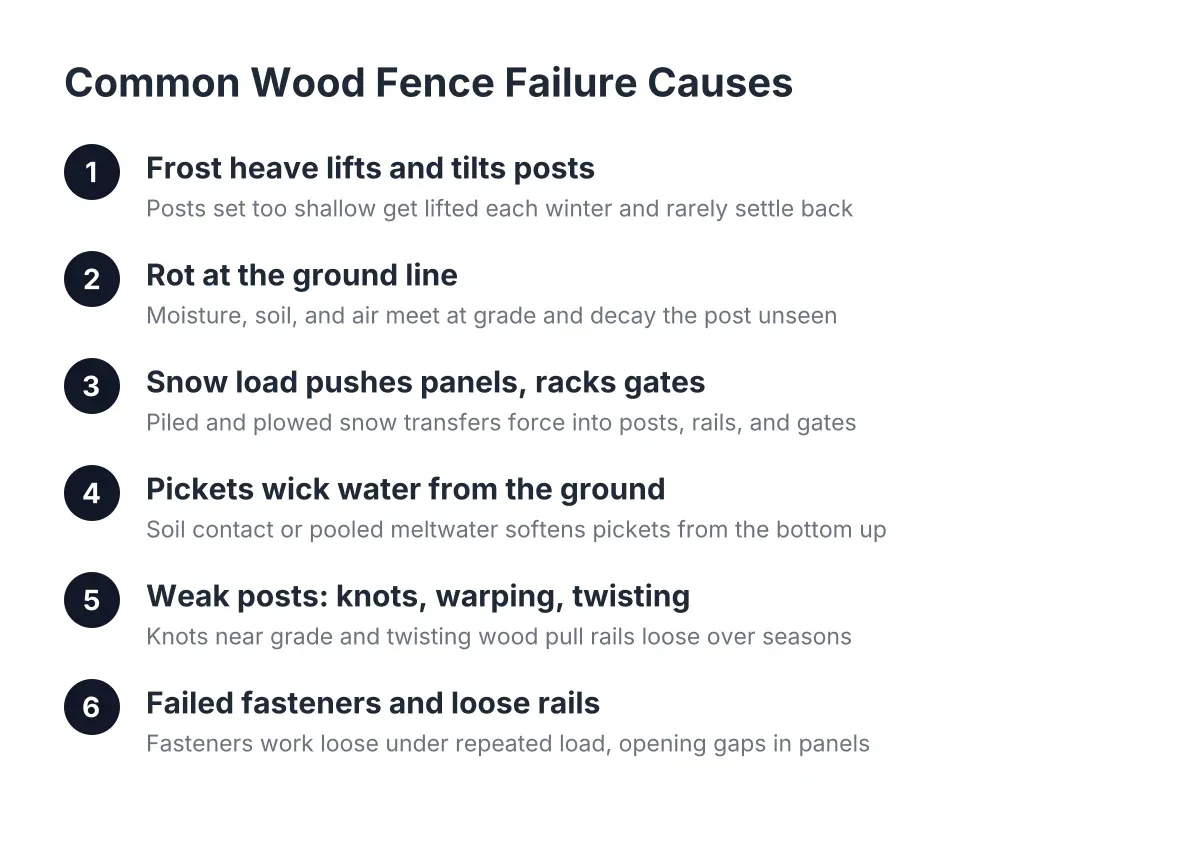
A fence post is the vertical support that anchors the whole fence to the ground. Posts carry the weight of the rails and pickets, so if a post fails, the section around it leans or falls. In Anchorage, posts take extra abuse from frost heave and snow load, so how deep they are set matters more here than in most places. When a quote lists post size and spacing, that tells you how sturdy the fence will be.
Post Hole
A post hole is the hole dug into the ground to hold a fence post. The depth and width of post holes decide how well the fence stands up to wind, snow, and ground movement. Deeper holes cost more labor but hold better through Alaska winters. If a quote mentions digging depth, that is a good sign the installer is planning for local ground conditions, not just national defaults.
Frost Line
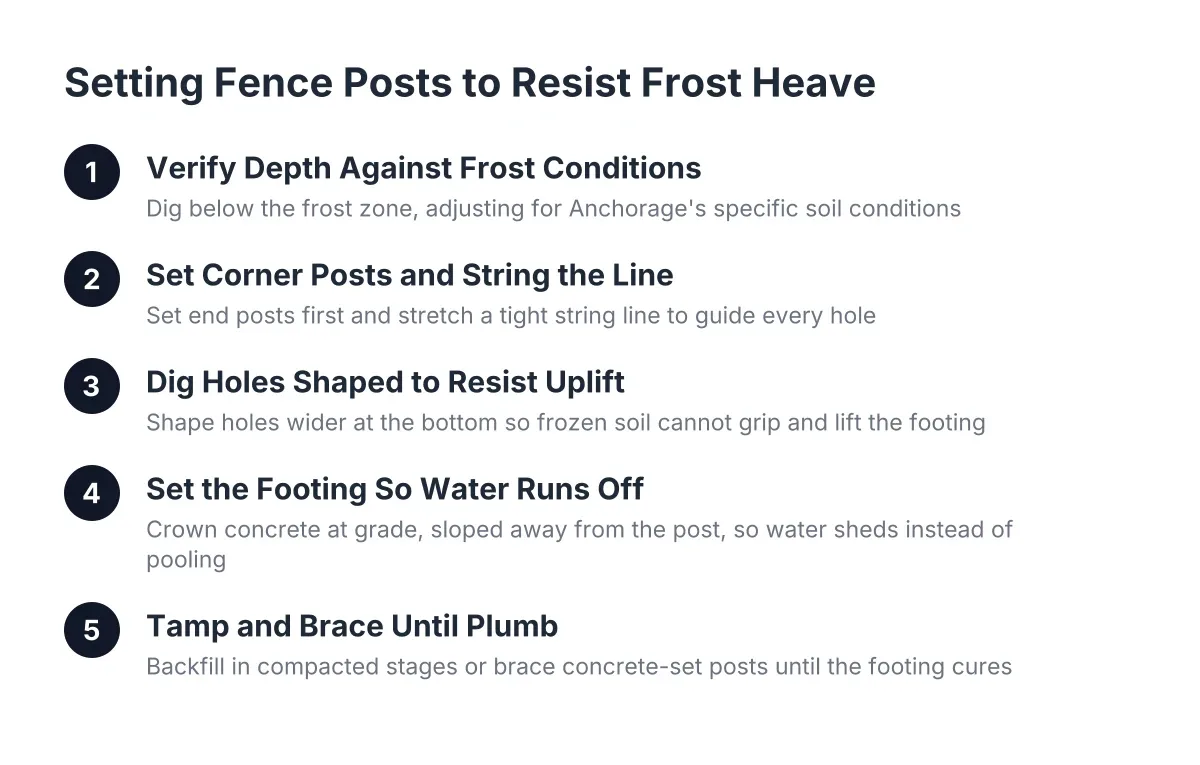
The frost line is the depth in the ground where soil stops freezing in winter. Fence posts need to be set below it, because soil above the frost line freezes, expands, and shoves anything sitting in it. Anchorage has a deep frost line compared to the Lower 48, which is why digging here is a bigger part of the job. For a fuller picture, see our guide to frost line depth for fence posts in Anchorage.
Frost Heave
Frost heave is the upward push that happens when water in the soil freezes, expands, and lifts whatever is in its way. It is the main reason fence posts in Anchorage tilt or pop up after a few winters. A post set too shallow gets lifted a little each freeze-thaw cycle until the fence leans. If your installer talks about frost heave unprompted, they are planning for the ground you actually have. Our post on wood types that survive frost heave covers the material side.
Footing
A footing is the base, usually concrete, that a fence post sits in below ground. The footing spreads the post's load and helps hold it in place against wind and frost heave. Some installers set posts in gravel instead, which drains better in certain soils. Ask which method your quote includes and why, because the right answer depends on your lot's drainage.
Rail (Stringer)
A rail, also called a stringer, is the horizontal board that runs between posts and holds the pickets. Most wood fences use two or three rails per section. More rails mean a stiffer fence that handles snow leaning against it better. If one quote has two rails and another has three, that difference explains part of the price gap.
Picket
A picket is the vertical board attached to the rails; it is the part of the fence you actually see. Picket width, spacing, and wood type set the look and most of the material cost. Tight or overlapping pickets give you privacy, while spaced pickets let light and wind through. Cedar pickets are a common choice here because cedar resists rot without constant treatment.
Panel
A panel is a pre-built fence section, pickets and rails already assembled, that gets attached between posts. Panels install faster than building board by board, but stick-built fences follow sloped ground more cleanly. If your yard has grade changes, ask whether the quote is for panels or stick-built. The answer affects both the look and the labor line on your estimate.
Privacy Fence
A privacy fence is a fence built solid enough that people cannot see through it, usually six feet tall with pickets set tight together. It is one of the most common requests for backyards in town. A solid face also catches more wind and holds more drifted snow than an open design, so the posts and rails have to be built for that. If privacy is the goal, say so early; it shapes the whole design.
Gate Hardware
Gate hardware means the hinges, latches, and any locks that make a gate swing and close. Gates are the hardest-working part of a fence and the first place problems show up, especially after the ground shifts in spring. Heavier hinges and an adjustable latch cost more up front but save repair calls later. A quote that itemizes gate hardware is being straight with you about where quality lives.
Site and Ground Conditions
Half of wood fence installation in Anchorage is about the ground, not the wood. These terms cover what the site itself adds to the job, and they come up in glossary discussions more than anywhere else because they drive cost here.
Snow Load
Snow load is the weight that snow puts on a structure, including a fence. In Anchorage, snow piles against fence panels for months and pushes sideways on posts and gates. A fence built without snow load in mind can rack, lean, or pin a gate shut by midwinter. Installers here plan post depth, rail count, and gate swing around it.
Grade
Grade is the slope of the ground where the fence will run. On a sloped yard, the fence either steps down in level sections or follows the slope with angled rails. Each approach looks different and takes different labor, so grade changes show up in the price. Walk the fence line with your installer so you both see the same slopes before the quote is final.
Property Line
A property line is the legal boundary of your lot, and your fence needs to sit on or inside it. Building past the line can mean tearing out finished work, so confirming the boundary before digging protects you. Older in-town Anchorage lots sometimes have fuzzier boundaries than newer subdivisions, so do not assume the old fence sat in the right spot. A survey or plat map settles the question.
Setback
A setback is the minimum distance a structure, sometimes including a fence, must sit from a property line or street. Rules vary by location and by fence height, so check your local code before finalizing the layout. Corner lots often have extra rules so fences do not block sight lines for drivers. Your installer should raise this during planning, not after the posts are in.
Pricing and Paperwork
These terms show up on the estimate itself. They tell you what you are paying for and what the job includes.
Fence Estimate
A fence estimate is the written description of the work, materials, and price a fence company proposes before the job starts. A good estimate names the wood type, post depth, rail count, gate count, and whether tear-out of the old fence is included. Vague one-line estimates make fair comparison impossible. Our wood fence cost guide walks through the factors that move the number up or down.
Linear Foot
A linear foot is a measure of fence length along the ground, one foot at a time, and it is how most fence pricing is calculated. A per-foot price makes quotes easier to compare, but only if both quotes include the same height, materials, and gates. Corners, slopes, and gates add work that a bare per-foot number hides. Ask what the per-foot price does and does not include.
Tear-Out
Tear-out means removing and hauling away an existing fence before the new one goes in. Old posts set in concrete take real labor to pull, so tear-out is a separate line on most fence replacement quotes. If your estimate does not mention it, ask whether removal and disposal are included. Finding out on install day is the expensive way to learn this term.
Permit
A permit is written permission from your local government to build a structure like a fence. Whether you need one depends on fence height, location on the lot, and local rules, so check your local code or ask your installer. Skipping a required permit can force changes after the fence is built. A fence company that handles this question up front saves you a headache later.
Using These Terms
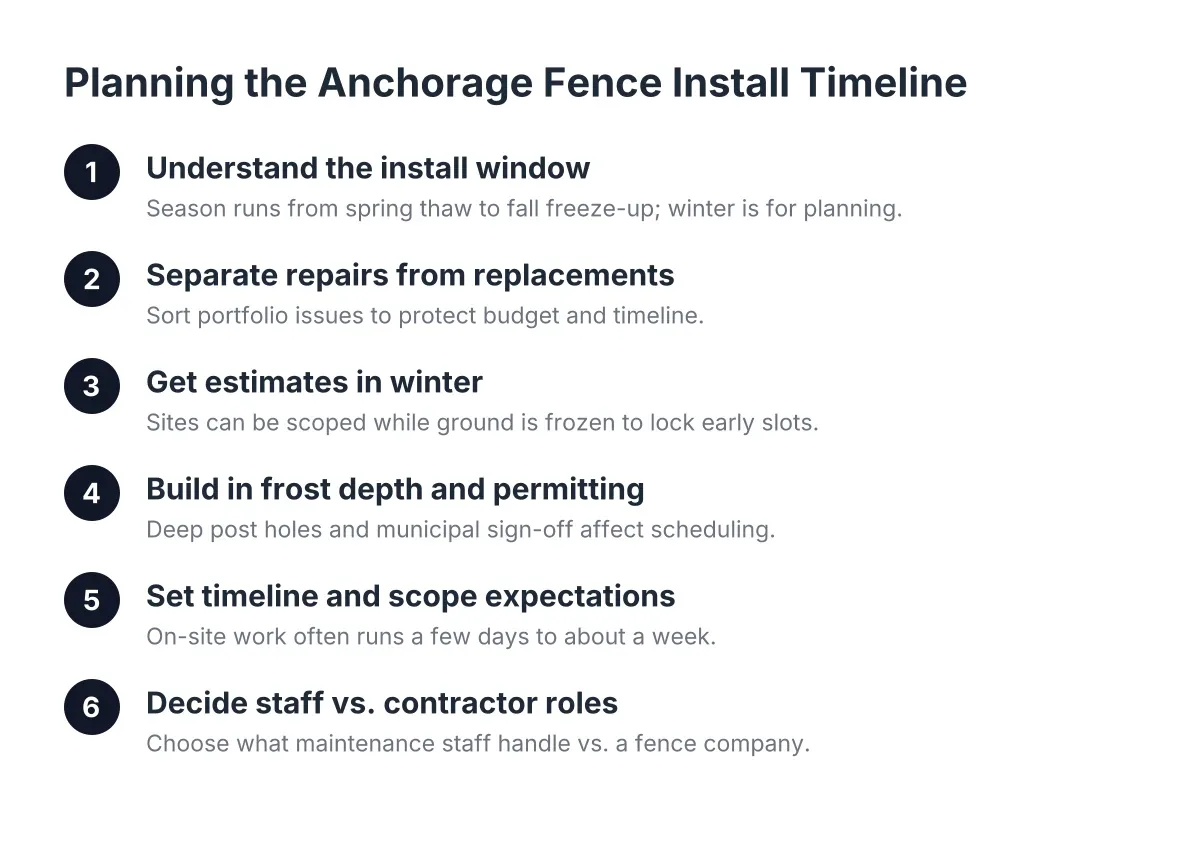
You now have the vocabulary to read a fence quote line by line instead of skimming to the total. This wood fence installation glossary gives you the ability to ask specific questions: how deep the posts go, how many rails per section, whether tear-out is included. If a quote cannot answer those, that silence tells you something too. And if winter is coming, our post on planning a fence install around Alaska winter helps you time the project right.
Prefer to talk it through? Call (907) 312-2862 — a quick call is usually the fastest way to get a straight answer for your situation.