Anchorage Wood Fence Installation: How to Plan the Season Before Crews Book Up
If you manage rental properties in Anchorage, fence problems rarely show up on your schedule. A tenant reports a leaning perimeter section in October, or a new building joins your portfolio with a rotted cedar fence already sagging into the parking lot. The hard truth about Anchorage wood fence installation is that the work window is short. Understanding fence installation scheduling timeline matters because the ground freezes, the daylight disappears, and crews that were wide open in April are booked solid by July. This guide walks you through planning the timeline step by step, so you are scheduling work on your terms instead of reacting to the calendar.
The steps below are written for a property manager coordinating one site or ten. The logic is the same either way: know your window, get your sites assessed early, and lock in a slot before the season compresses.
Step 1: Understand the Anchorage Install Window Before You Do Anything Else
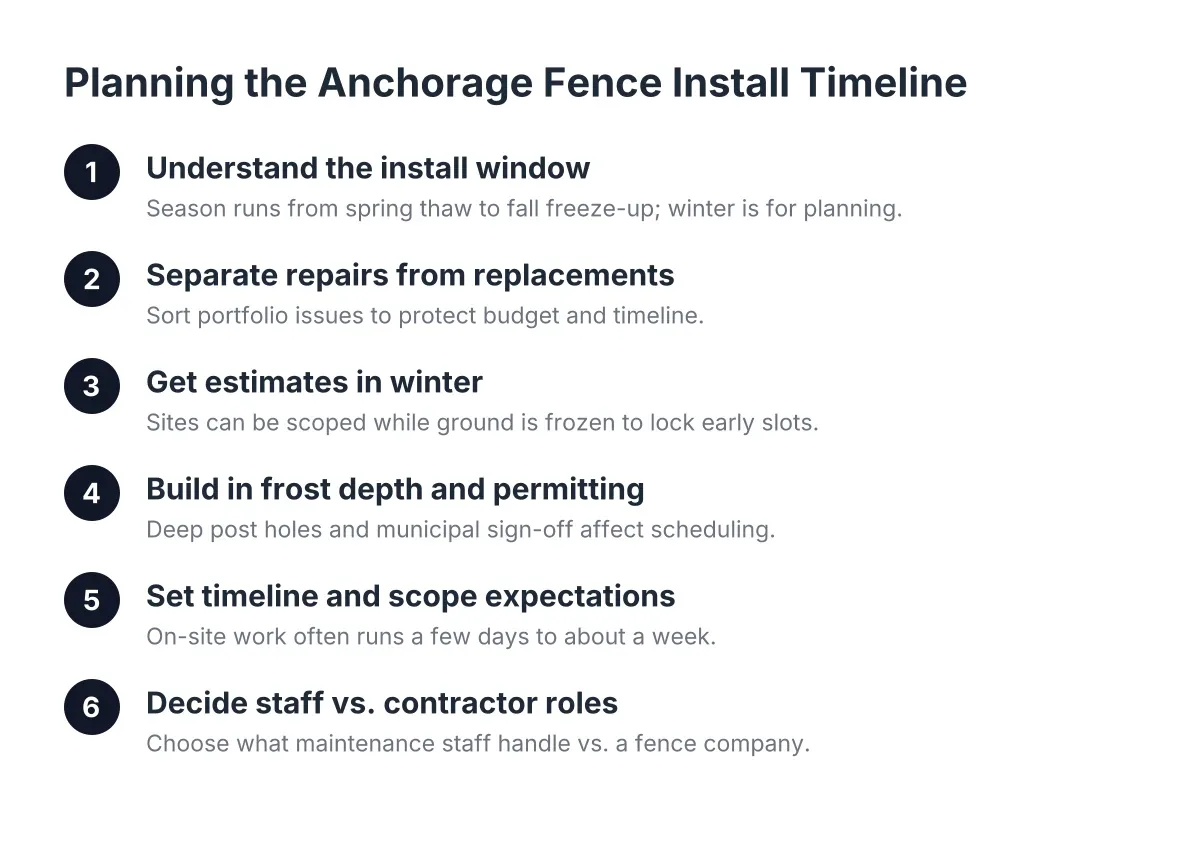
Wood fence installation in Anchorage runs on the ground, not the calendar. Posts need holes dug below the frost line, and you cannot dig frozen soil efficiently or set concrete well in it. That means the realistic install season opens when the ground thaws in spring and closes when it refreezes in fall.
For planning purposes in 2026, think of the year in three bands:
- Spring thaw to early summer: The ground opens up, crews start digging, and the first wave of booked winter estimates gets built. Availability tightens fast.
- Mid to late summer: Peak season. Long daylight, workable ground, and the busiest schedules of the year. New requests often wait weeks for a crew.
- Fall before freeze-up: The last stretch for setting posts. Jobs scheduled here carry weather risk; an early freeze can push post work to spring.
Winter is not dead time, though. It is when smart managers get sites walked, measured, and quoted so they hold a spot in the first wave of spring digs. More on that in Step 3.
Step 2: Separate Repairs From Full Replacements Across Your Portfolio
Not every fence complaint needs a full rebuild, and sorting them correctly protects both your budget and your timeline. Walk each property, or have a fence company walk it with you, and put every issue in one of two buckets.
Repairs that can often happen outside peak season include broken pickets, a dragging gate, a loose rail, or a single leaning post. Fence repair work like this needs less digging, so it fits into shoulder seasons when full installs cannot.
Full replacement signs look different. Watch for:
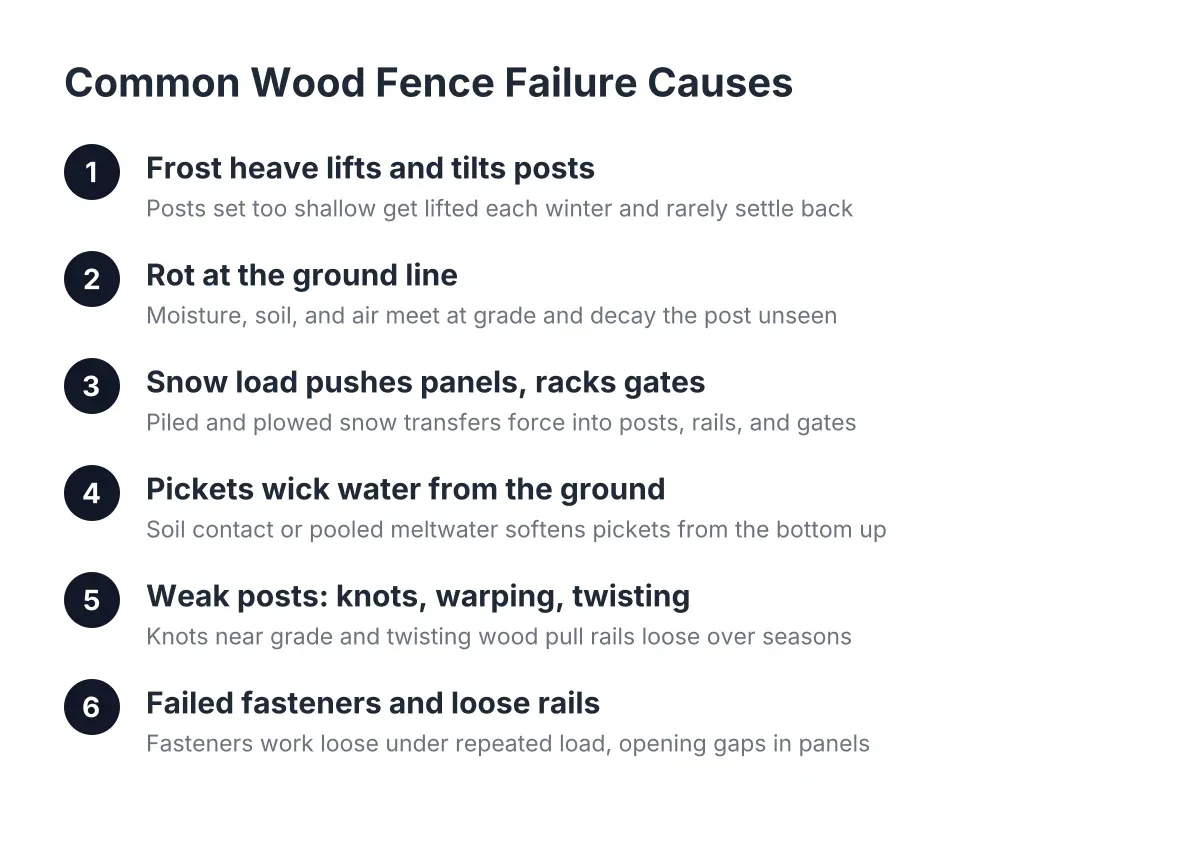
- Multiple posts rotted at the ground line, even if the panels above look fine after repainting
- Sections that heave or lean more each spring as frost pushes the posts
- A fence line where every repair call fixes one panel and the next tenant complaint is two panels down
Wood posts fail from the bottom up. Rot at grade is the usual culprit, and it hides under panels that still look maintained. However, an interim post repair that preserves the existing concrete footings can keep a fence standing safely for a season or two. That buys you time to budget a proper replacement instead of paying for an emergency rebuild in the wrong month.
Step 3: Get Estimates in Winter for Fence Installation Scheduling Timeline Decisions
Here is the single biggest timeline lever a property manager controls: when you ask for the fence estimate. A site can be measured, scoped, and priced while the ground is frozen. The estimate does not need a thawed yard; only the dig does.
Suppose you manage three complexes and plan to replace the perimeter fence at one and repair gates at the other two. If you request walkthroughs in January or February, you can have approved numbers in front of your owner or asset manager before spring, then book an early-season slot. If you start that process in June, you are competing with every homeowner in the municipality for the same crews, and your project may slide toward fall and its freeze-up risk.
Winter estimating also fits how portfolio budgets work. Capital improvement approvals take time to move up the chain. Starting the paperwork in the dark months means the money and the thaw arrive together.
Step 4: Build Frost Depth and Permitting Into Your Schedule
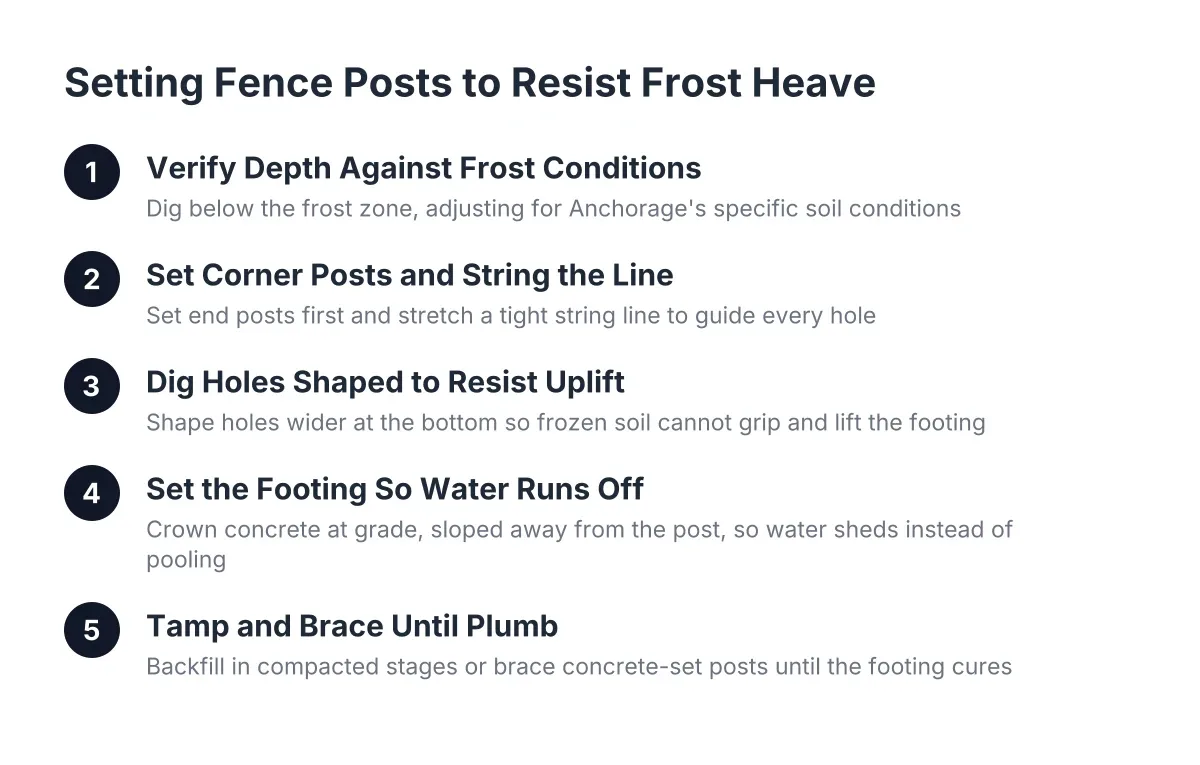
Anchorage ground moves. Seasonal frost heave and freeze-thaw cycles will push shallow posts out of plumb within a few winters, which is why deep post setting matters here more than in milder states. As a general reference point, Anchorage's building code amendment sets the minimum exterior footing depth at 42 inches below finished grade for frost protection, according to PermitsGuide.com. Treat that as context for why post holes here go deep, not as a spec for your specific fence; your installer should confirm what your site and project require.
Deep holes take longer to dig, especially on older in-town lots where rocky fill, old footings, or buried surprises slow an auger down. Newer subdivision lots tend to dig faster. Build that variability into your timeline rather than assuming every site moves at the same pace.
In addition, confirm whether your project needs municipal sign-off before work starts. Height limits, setbacks, and sight-line rules near driveways can affect commercial and multi-unit sites. A fence company that works in Anchorage regularly can tell you what applies, but verify requirements for your specific parcel; rules differ by zone and this article is not a substitute for checking them.
Step 5: Timeline and Scope for Fence Installation Scheduling Work
How long does a wood fence installation take in Anchorage? For a straightforward residential-scale job, the on-site work often runs from a few days to about a week once the crew starts, covering layout, post digging and setting, cure time for concrete, and panel hanging. Multi-property or long perimeter jobs take longer, and the wait for a crew slot is usually the larger share of the total timeline.
When you talk scope with a fence contractor, confirm what the quoted timeline includes. A complete wood fence install generally covers:
- Site layout and marking the fence line, including utility locates
- Digging post holes below frost depth and setting posts in concrete
- Cure time before panels go up, which adds calendar days even when no one is on site
- Hanging rails and pickets, with cut sections placed in less visible stretches so full panels face the street or courtyard
- Gate installation and hardware adjustment
Items that are often extra include tearing out and hauling away the old fence, clearing brush along the line, regrading a washed-out section, and staining or sealing. Ask about each one so your invoice matches your approval.
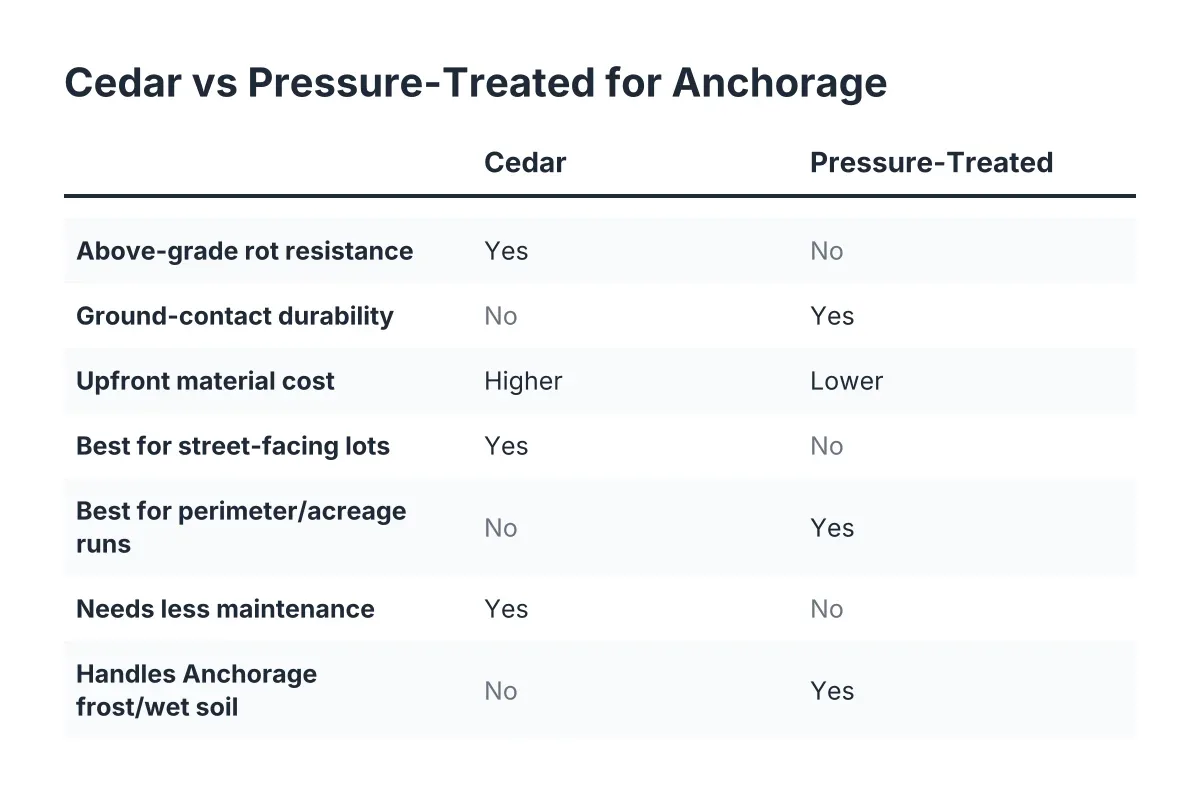
On cost, expect wood to run above chain link for the same footage. Installing a wood fence typically costs 20% to 30% more than a comparably sized chain-link fence, according to Angi, which also puts a similar-sized wood fence at roughly $1,790 to $4,560 against $1,300 to $3,540 for chain link. Treat those as national reference ranges, not Anchorage quotes; your real cost factors are footage, height, wood choice, gate count, demolition, and site access.
Step 6: Decide What Your Own Maintenance Staff Should Handle
Your maintenance tech can reasonably handle small jobs: tightening gate hinges, replacing a cracked picket, or re-securing a loose rail. Those fixes keep tenants happy between visits from a fence company.
Call a professional when posts are involved. Setting posts below frost depth, replacing a rotted post without disturbing the line, or straightening a heaved section is dig work, and a shallow patch fails by the next spring thaw. The pattern most managers recognize is the handyman fix that holds six months, generates another tenant complaint, and ends up costing more than one proper repair would have. The cheapest fix on paper is often the most expensive one across a few winters.
Call now, not next season, if a fence section borders a parking area or walkway and is actively leaning, if a gate on a secured perimeter will not latch, or if a fence failure creates a liability exposure after an incident on site.
Step 7: Choose a Fence Company That Can Carry Your Whole Portfolio
For a multi-unit manager, the goal is one reliable vendor, not a new search every time a tenant calls. When you compare companies for Anchorage fence installation with attention to scheduling timeline and ongoing repair work, three questions sort them quickly:
- How deep do you set posts here, and why? The answer should reference frost heave and local ground conditions, not a generic national standard.
- Can you handle both scheduled installs and recurring fence repair calls across multiple properties, and will you invoice in a way that works for property management accounting?
- What does your spring schedule look like, and when do I need to commit to hold a slot?
A fair quote itemizes footage, post count, gates, demolition, and haul-away, and it states what is excluded. Vague lump sums make it hard to compare bids and harder to explain the spend to an owner. Also be direct that these are multi-unit sites; you want commercial scope and scheduling, not a residential one-yard process stretched across your portfolio.
The Takeaway: Plan in the Dark, Build in the Light
Anchorage compresses fence work into a short season, and property managers who plan around that reality get first pick of crew time. Walk your sites and sort repairs from replacements now. Request estimates in winter. Budget for deep posts and the cost factors that come with Anchorage ground. Then book early, before the thaw starts the race.
If you have a fence problem waiting at one of your properties, or a portfolio of them, Anchorage Fence Co can walk the sites, scope wood fence replacement or repair, and give you a clear estimate built for Anchorage ground and your schedule. Reach out before the season opens and get your projects on the calendar.
If you need wood fence installation, Anchorage Fence Co can help.
Prefer to talk it through? Call (907) 312-2862 — a quick call is usually the fastest way to get a straight answer for your situation.