Cedar vs. Pressure-Treated Wood: Which Fence Lasts Longer in Anchorage, AK?
Choosing between cedar and pressure-treated fence materials is the single biggest decision in a wood fence project, and in Anchorage the answer is not the same as it is in the Lower 48. Frost heave, heavy snow load, and long freeze-thaw cycles punish each material differently. This guide walks you through the decision step by step, so whether you are replacing a fence a storm flattened last week or fencing several acres before winter, you end up with the wood that holds up here.
The short version up front: most Anchorage fences that last use both materials. Pressure-treated wood goes in the ground, cedar goes above it. The steps below explain why, and how to apply that rule to your own project in 2026.
Step 1: Know What Each Wood Actually Does
Start by separating looks from job. Cedar and pressure-treated lumber solve different problems, and most of the confusion online comes from treating them as interchangeable.
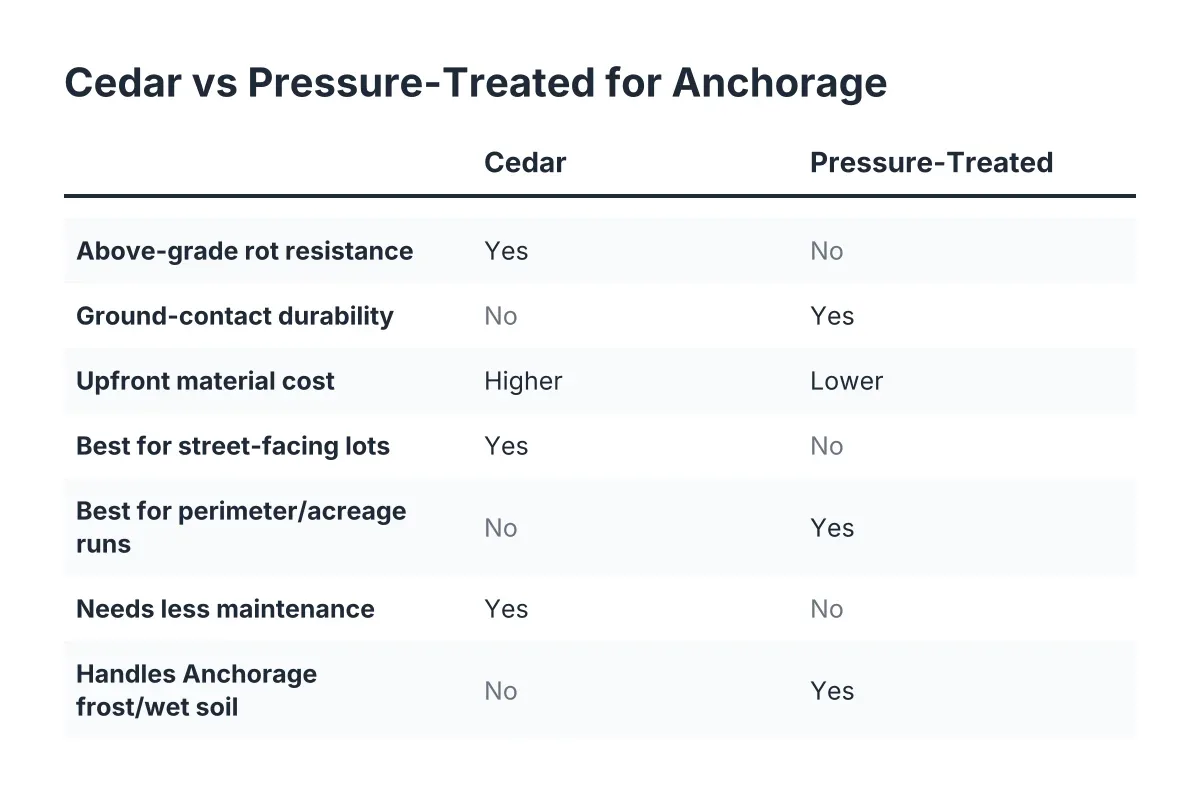
Cedar is naturally rot resistant, holds its appearance for years, and needs less maintenance than untreated pine. It is the material people picture when they imagine a warm, reddish privacy fence. Its downsides: it costs more, and it can absorb stain unevenly, so finish work takes some care.
Pressure-treated wood is pine or spruce infused with preservatives under pressure. It resists rot and insects even in direct ground contact, which cedar does not handle as well over decades. It starts out greenish, weathers to gray, and can twist or warp as it dries. Cedar tone pressure treated wood exists too; it is stained at the mill to mimic cedar's color, but the grain and texture still read as pine up close.
Therefore, the real question is not "cedar or pressure-treated" for the whole fence. It is "which parts of my fence touch the ground, and which parts do people see."
Step 2: Match the Material to Anchorage Ground and Weather
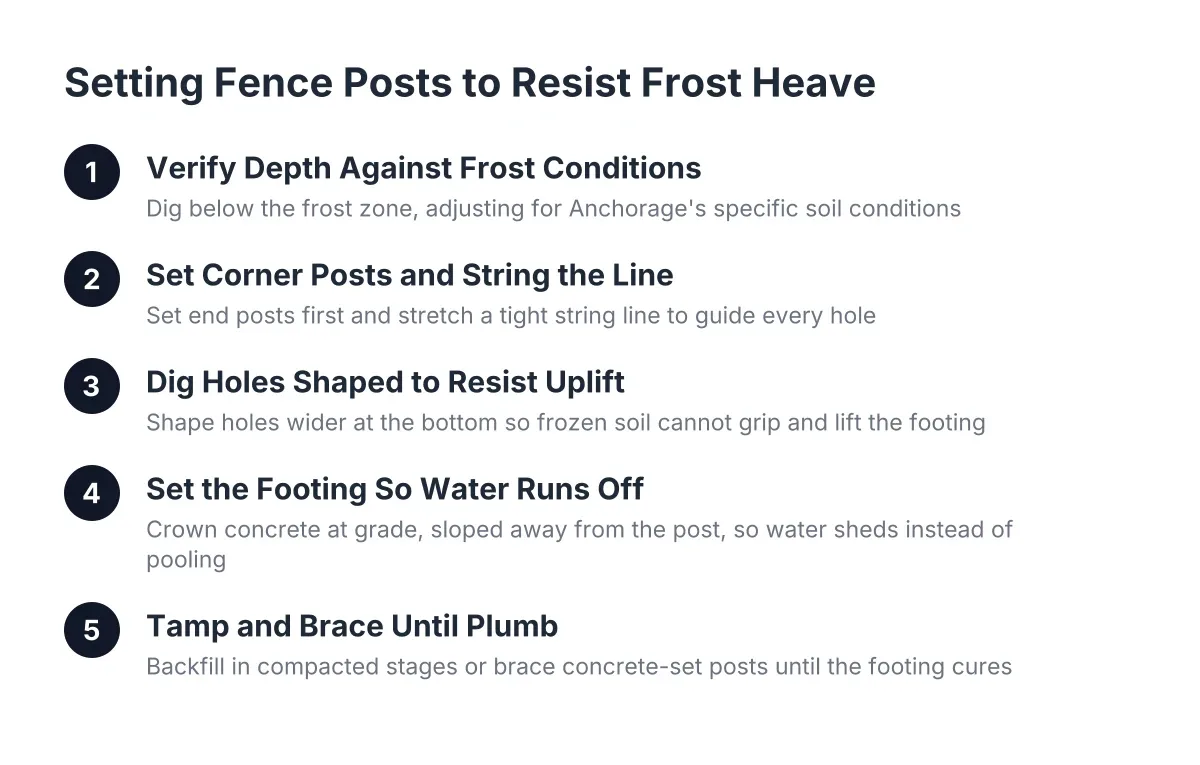
Anchorage ground conditions make this decision for you more than personal taste does. Fence posts here must be set deep to get below seasonal frost movement. For reference, Anchorage's building code amendment sets the minimum exterior footing depth at 42 inches below finished grade for frost protection, according to PermitsGuide.com. That depth means your posts sit in cold, wet soil for most of the year.
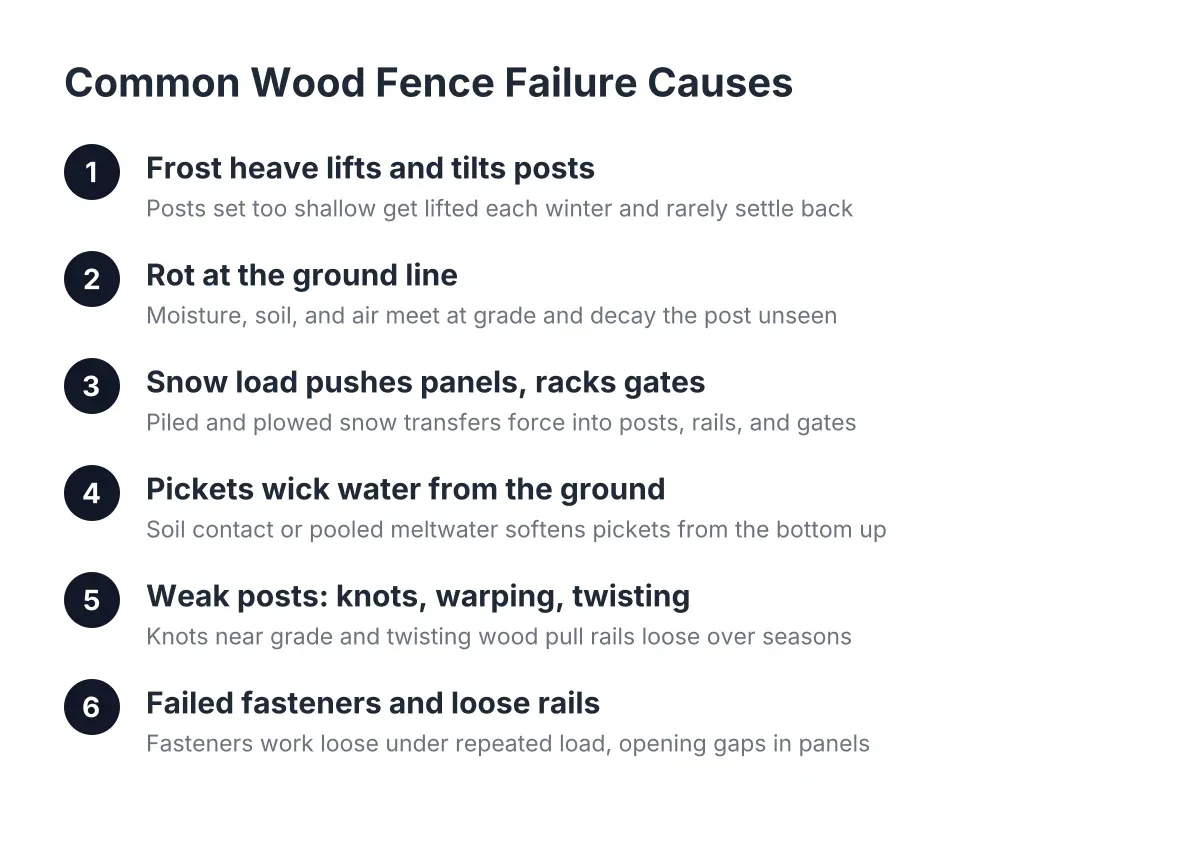
Wet soil is where cedar loses. Cedar resists rot above grade, but buried in saturated ground through a freeze-thaw cycle, it breaks down faster than treated lumber. Pressure-treated posts rated for ground contact are built for exactly that environment. This matters because posts are where most wood fences fail; homeowners repaint panels for years while the posts rot quietly at the soil line, and then one heavy snow load finishes the job.
Snow load is the other local factor. Snow piled against panels all winter pushes moisture into the bottom of the fence. A practical detail that extends fence life: run a pressure-treated rot board along the bottom of a cedar fence. That sacrificial board sits against the snow and pooled meltwater, so the cedar pickets above it never wick moisture up from the ground.
Step 3: Compare Cedar and Pressure-Treated Fence Costs Honestly
Is pressure treated wood cheaper than cedar? Yes, in nearly every market, including Anchorage. Pressure-treated pickets and rails typically run noticeably less per board than cedar, and on a long fence line that gap compounds fast. On a large rural parcel, the cost difference between cedar and pressure treated wood can decide whether the project fits the budget at all.
For context on wood fencing overall, installing a wood fence typically costs 20% to 30% more than a comparably sized chain-link fence, according to Angi. Angi also puts a typical wood fence at $1,790 to $4,560 total for a standard residential run, versus $1,300 to $3,540 for chain link. Treat those as national reference points, not Anchorage quotes; local material freight, linear footage, gate installation, and ground conditions all move the number, and a written fence estimate is the only figure worth planning around.
Here is where each material tends to make financial sense:
- All pressure-treated: long perimeter runs, pasture lines, and acreage fencing where footage is the whole battle and nobody is judging the grain.
- Cedar pickets on pressure-treated posts and rot board: front yards, privacy fences, and anywhere the fence is part of the home's look.
- Cedar tone pressure treated wood: a middle path when you want warmer color at treated-lumber cost, accepting that it will not fool anyone standing next to it.
- All cedar, including posts: rarely the right call in Anchorage; you pay the premium and still give up ground-contact durability.
Suppose a homeowner in Eagle River is pricing 150 feet of 6-foot privacy fence. As an illustrative estimate, going all pressure-treated instead of cedar pickets might save in the range of $1,000 to $2,500 on materials for a run that size. Whether that trade is worth it depends entirely on Step 4.
Step 4: Decide Based on Who Sees the Fence and Who It Contains
Next, be honest about what the fence is for. The Anchorage area covers two different fence buyers, and the right wood differs for each.
If you own acreage in Knik-Fairview, Wasilla, or Meadow Lakes and need hundreds of feet of perimeter to contain animals or mark a property line, pressure-treated wood on pressure-treated posts is usually the practical answer. The budget math favors it, moose do not care about grain patterns, and treated lumber shrugs off ground moisture on undeveloped land. Spend the savings on deeper post settings and sturdier gate hardware instead.
If the fence faces the street on an in-town lot, cedar above grade earns its premium. It weathers to an even silver or holds a stain well, and it keeps its structural integrity for decades when it never touches soil or standing snow melt. One buying tip for the treated posts underneath: skip boards where the heart of the growth rings sits at the edge of the board. That orientation twists and warps as it dries, which is how a straight fence turns wavy by its second summer.
In addition, check your height rules before ordering lumber. Anchorage Municipal Code sets front-yard residential fence height limits at 4 feet in most zones, rising to 6 feet in R-6, R-8, and R-9 districts, according to Municipality of Anchorage.
Step 5: Build the Hybrid Cedar and Pressure-Treated Fence Most Anchorage Pros Recommend
Now put the materials in the right places. The hybrid build is the standard for a reason: each wood does the job it is best at.
- Posts: ground-contact pressure-treated lumber, set below the frost-affected zone in concrete or gravel per your soil. This is your defense against frost heave lifting posts out of plumb.
- Rot board: one pressure-treated board running along grade at the bottom of the fence line.
- Rails: pressure-treated or cedar; treated rails add strength against snow load pressing on panels.
- Pickets: cedar, starting on top of the rot board, never in contact with soil.
- Stay board for horizontal designs: if you are building a horizontal cedar fence, add a vertical stay board mid-span between posts, or the long pickets will bow in and out over time.
- Gates: cedar face on a rigid frame, since gates take the most abuse from snow, sag, and daily use.
This matters doubly if you are rebuilding after damage. Say a snow load event flattened three panels of an older fence over the weekend and the dog is testing the gap by Monday. In that scenario, a repair crew checks the posts first, not the panels. If the posts are treated, plumb, and solid at the soil line, new cedar panels on the existing posts is a repair, not a replacement. If the posts snapped or rotted at grade, the panels were never the real problem, and a patch just postpones the next collapse. A straight answer on that question is what separates useful fence repair from a sales pitch.
Step 6: Stain It, Both Sides, and Protect the Investment
Finally, plan the finish before the first winter. Staining both sides of a wood fence is not cosmetic; it meaningfully extends the fence's life and the return on what you spent. The neighbor-facing side takes the same weather yours does.
Match the stain to the wood. Oil-based stains suit pressure-treated pine and older, weathered fences, soaking in and sealing against moisture. Cedar can drink stain unevenly, so test a section first and expect to apply with more care. Give pressure-treated lumber time to dry out after installation before staining, since it arrives saturated from treatment.
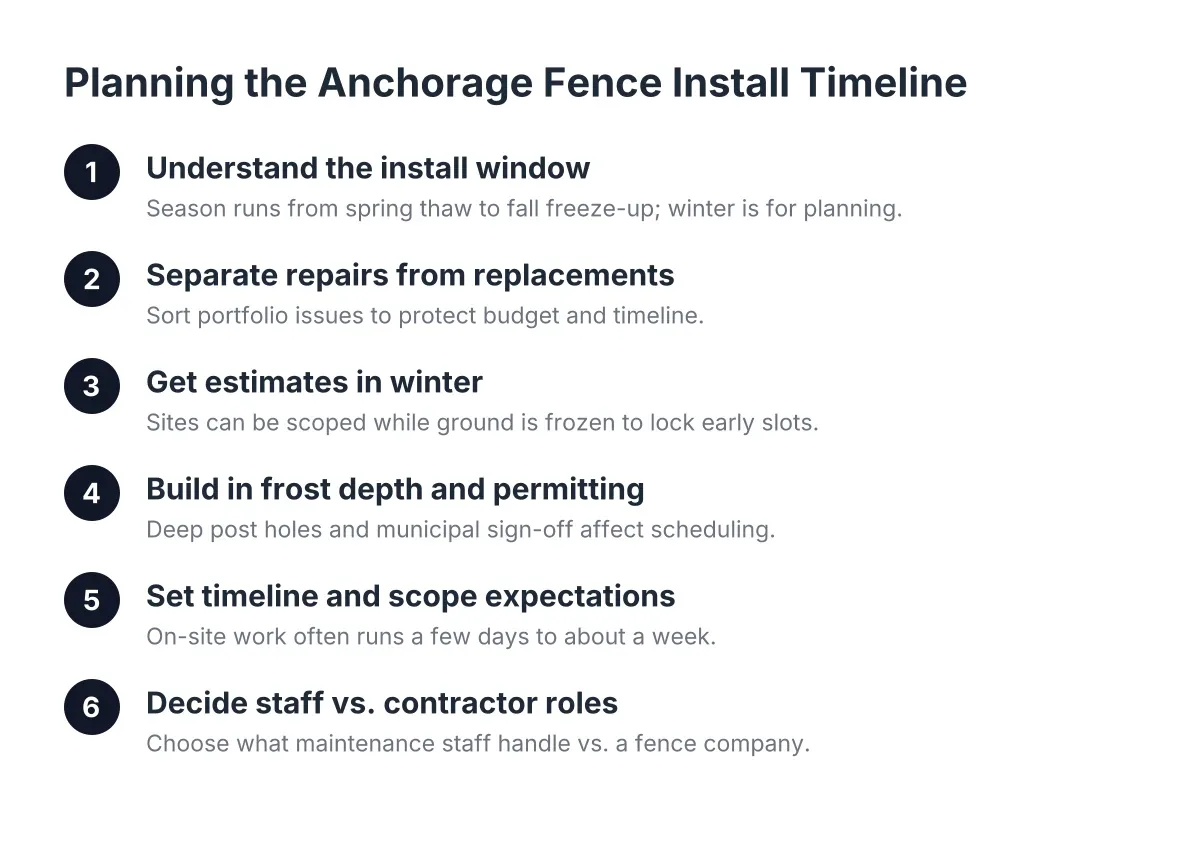
Anchorage's short install season also shapes timing. A fence finished in late fall may need to wait until the next dry stretch for stain, which is fine; just do not skip it entirely. Also know the limits of a guide like this: soils vary lot to lot across the municipality and the Valley, and a wet lowland parcel in Meadow Lakes needs a different post plan than a gravelly bench lot in Eagle River. A professional wood fence installation includes a site assessment for exactly that reason, and it is worth having before you commit a large material budget.
The Bottom Line for Anchorage Fences
Cedar vs. pressure treated wood is a false choice when you frame it as either-or. In Anchorage's climate, treated lumber belongs in the ground and against the snow line, and cedar belongs where you can see it. Build it that way, set the posts deep, run a rot board, stain both sides, and the fence outlasts the one it replaced. Price it by linear footage and purpose, not by whichever material a national chart says wins, because Alaska ground gets the final vote.
If you need fence installation in Anchorage, AK, Anchorage Fence Co can help.
Prefer to talk it through? Call (907) 312-2862 — a quick call is usually the fastest way to get a straight answer for your situation.