Corrugated Metal Fence Cost in Anchorage: Materials, Labor, and Ground Prep
Corrugated metal fence cost comes down to three buckets: the panels and frame, the labor to set posts and hang everything, and the ground prep that Anchorage soil forces on every fence job. Most national price lists skip that third bucket. In Alaska, it can swing your total more than the panels themselves. This guide walks through pricing a corrugated metal fence step by step, so you can read an estimate line by line and know what belongs there and what does not.
This matters whether you are a homeowner pricing a replacement after snow load flattened a wood fence, or a property manager budgeting a perimeter upgrade across a few sites in 2026. The process below works the same either way. Only the scale changes.
Step 1: Measure the Fence Line and Count the Gates
Start with a tape measure or a measuring wheel and walk the full run. Write down the total linear feet, because almost every cost in a fence estimate scales off that number. Note corners, slopes, and any spot where the line jogs around a shed, a cobblestone border, or a property pin.
Count gates separately. A walk gate and a drive gate are not fence; they are hardware, hinges, latches, and extra posts, and they price out as their own line items. For example, a backyard with one walk gate prices differently than a storage yard that needs a double drive gate for truck access.
While you measure, mark the visible areas and the hidden ones. Installers put full, uncut panels where people see them and tuck cut sections into back corners. Knowing your sight lines now helps you talk through layout later.
Step 2: Break Down the Corrugated Metal Fence Cost by Component
A corrugated metal fence has more parts than it looks like from the street. Price each one, because an estimate that lumps them together hides where your money goes. The main components are:
- Corrugated metal panels, priced by gauge, coating, and height
- Framing, either steel posts and rails or a wood frame around the metal
- Fence posts, plus concrete or gravel for the footings
- Fasteners and trim, including cap rail and edge covers for cut panels
- Gate hardware, hinges, latches, and gate frames
- Tear-out and haul-away of the old fence, if you are replacing one
Panel gauge matters more here than in milder climates. Heavier gauge sheet metal costs more per panel but resists denting from snow load shed off a roof or pushed by a plow. Thin panels look identical on day one and show every winter afterward.
Height drives cost too. A privacy-height fence takes taller panels, longer posts, and deeper footings than a low accent fence. If you are pricing a corrugated metal privacy fence against a shorter version, expect the per-foot number to climb with every added foot of height.
Step 3: Choose Between All-Metal and a Wood-Frame Combination
A corrugated metal and wood fence pairs metal panels with a cedar or treated-wood frame. It is a popular look on new builds and renovations because the warm wood softens the industrial metal. However, it changes your cost math in both directions.
The wood frame adds material and labor. Horizontal rails, top caps, and trim boards all take lumber and time to cut and fit. Custom touches like a stained cedar cap read as expensive because they genuinely take more material and more hours, the same way board-on-board costs more than a flat-face privacy fence.
An all-metal build with steel posts skips the lumber but gives a plainer look. The trade-off runs the other way on maintenance: wood framing needs stain or seal over time, while the metal itself mostly needs nothing. For a property manager standardizing across several sites, all-metal usually pencils out better. For a homeowner matching a modern house, the wood-frame combination often wins on looks and resale appeal.
Step 4: Price the Ground Prep, the Line Anchorage Estimates Live or Die On
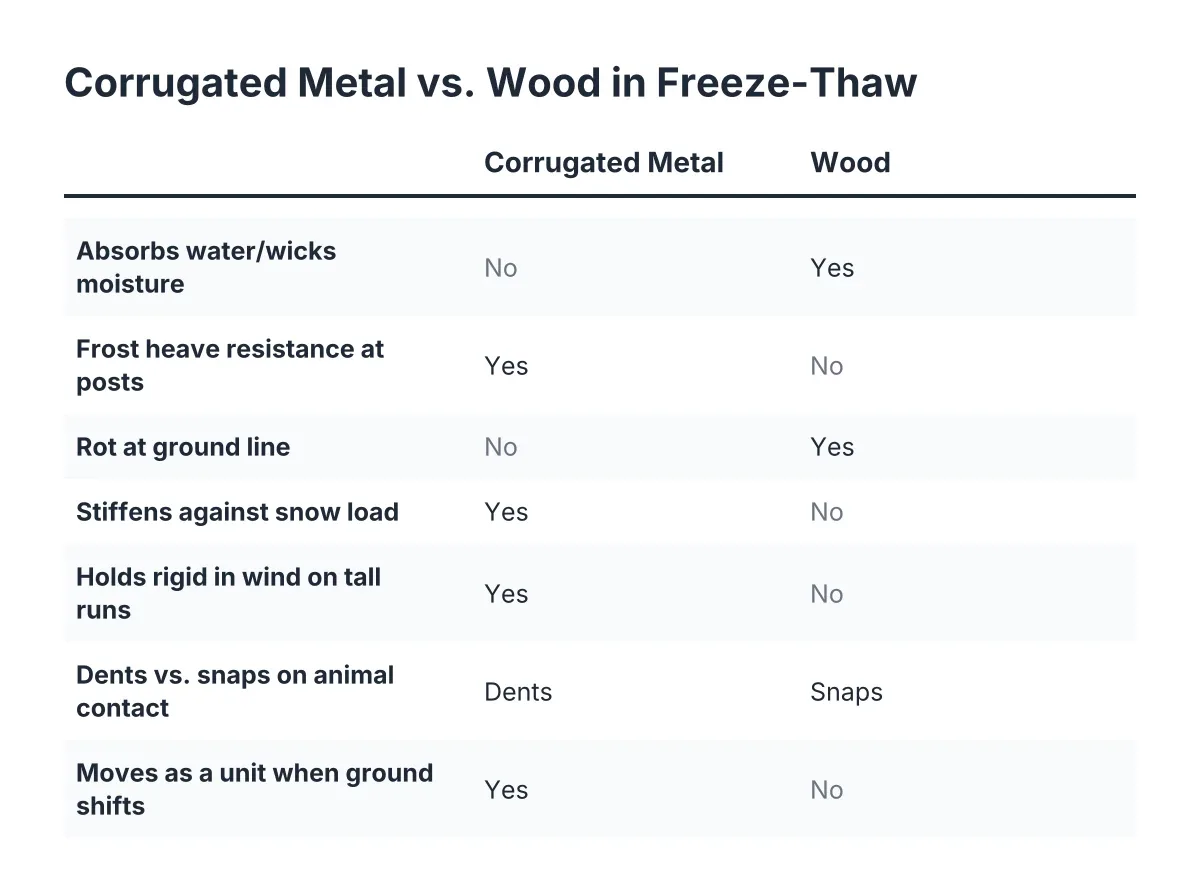
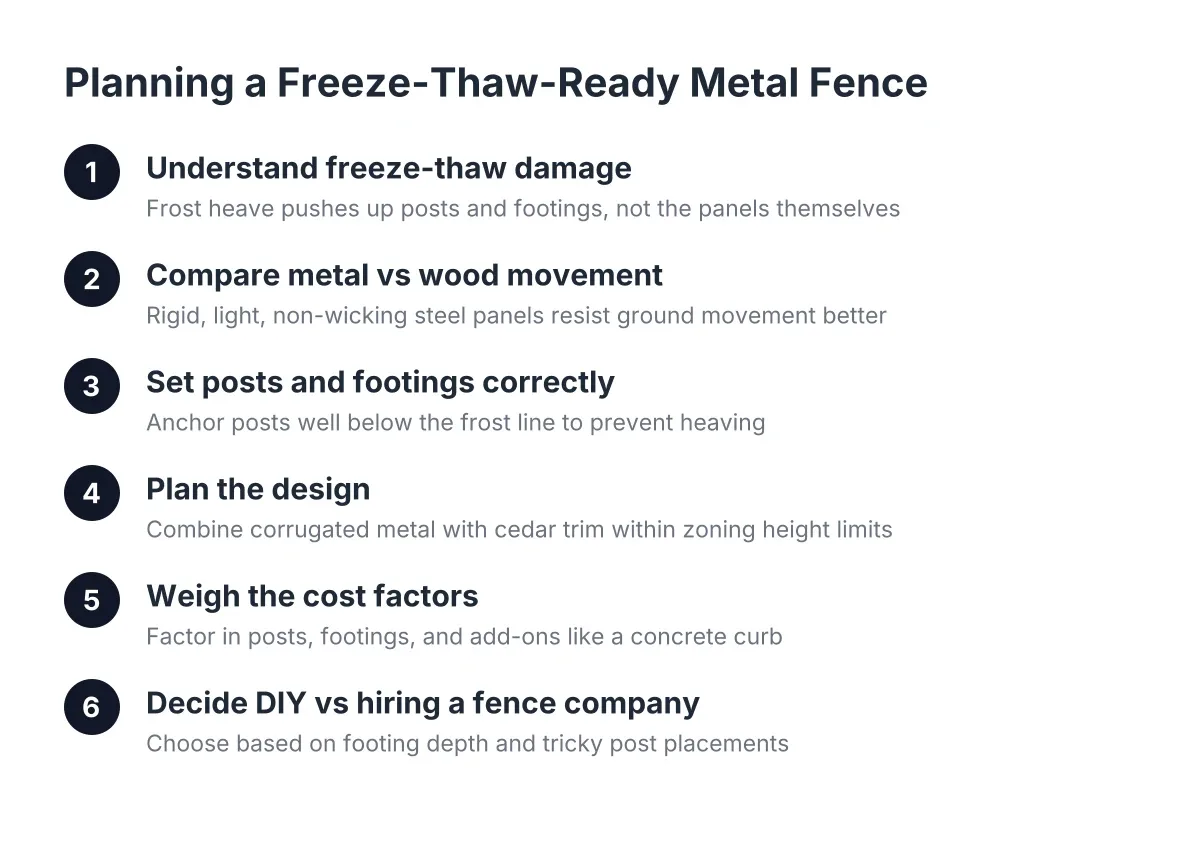
Ground prep is where Anchorage fence pricing separates from the national averages you see online. Frost heave moves posts and footings here. A fence built on shallow footings can lean or lift within a few freeze-thaw cycles, and then you are paying for fence repair on a fence you just bought.
Expect the ground prep portion of an estimate to cover:
- Digging post holes below the local frost line, which takes bigger equipment and more time than shallow digging
- Concrete or gravel footings sized for the post and the wind load on solid panels
- Grading or stepping the fence line on sloped lots, common on older in-town Anchorage lots
- Dealing with rocky fill, roots, or old footings left from a previous fence
Solid corrugated panels catch wind like a sail, so footings carry more load than they would under chain link fence of the same height. Deeper, heavier footings cost more upfront. Skipping them costs more later, because the cheapest bid that shorts the footings often becomes a rebuild in a few seasons.
Timing belongs in this step too. Post holes need to go in before the ground freezes hard, which compresses the install season. If you are scrambling after storm damage in late fall, ask directly whether posts can still be set this year or whether a temporary fix should hold the line until spring.
Step 5: Compare the Cost of a Corrugated Metal Fence Against Your Alternatives
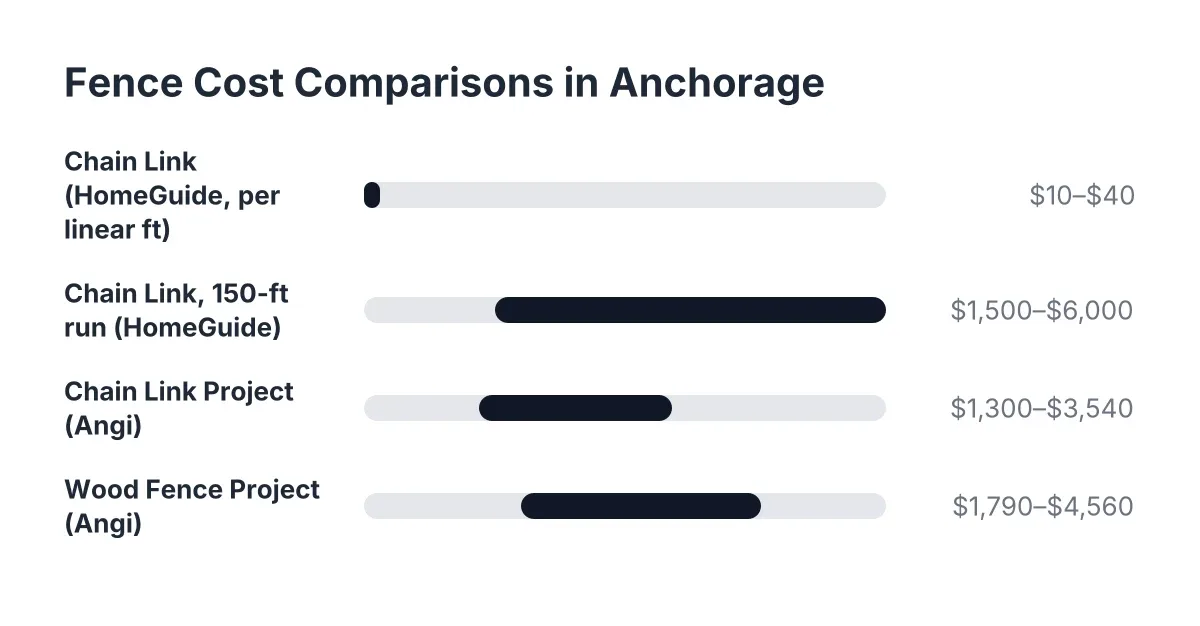
Put your corrugated numbers next to at least two other materials before you commit. Chain link sets the floor. According to HomeGuide, a chain-link fence runs about $10 to $40 per linear foot installed, roughly $1,500 to $6,000 for a 150-foot run. Angi puts the typical chain link project at $1,300 to $3,540 total, with a comparable wood fence at $1,790 to $4,560.
Wood costs more than chain link almost every time. Angi reports a wood fence typically runs 20% to 30% more than a comparably sized chain-link fence. Corrugated metal usually lands between chain link and a custom cedar fence, though panel gauge, height, and a wood frame can push it toward the high end.
Price is not the whole comparison. Weigh these trade-offs:
- Privacy: corrugated panels block sightlines fully; chain link does not without slats
- Snow and wind: solid panels take more load than open mesh, so they need stronger posts
- Lifespan: coated metal resists rot that eventually takes wood pickets and rails
- Repairs: a dented panel swaps out individually, which keeps future fence repair simple
One honest limitation: corrugated metal is a privacy and style product, not a budget one. If you only need to contain a dog or secure a lot line, chain link does that job for less money.
Step 6: Build a Working Estimate and Pressure-Test It
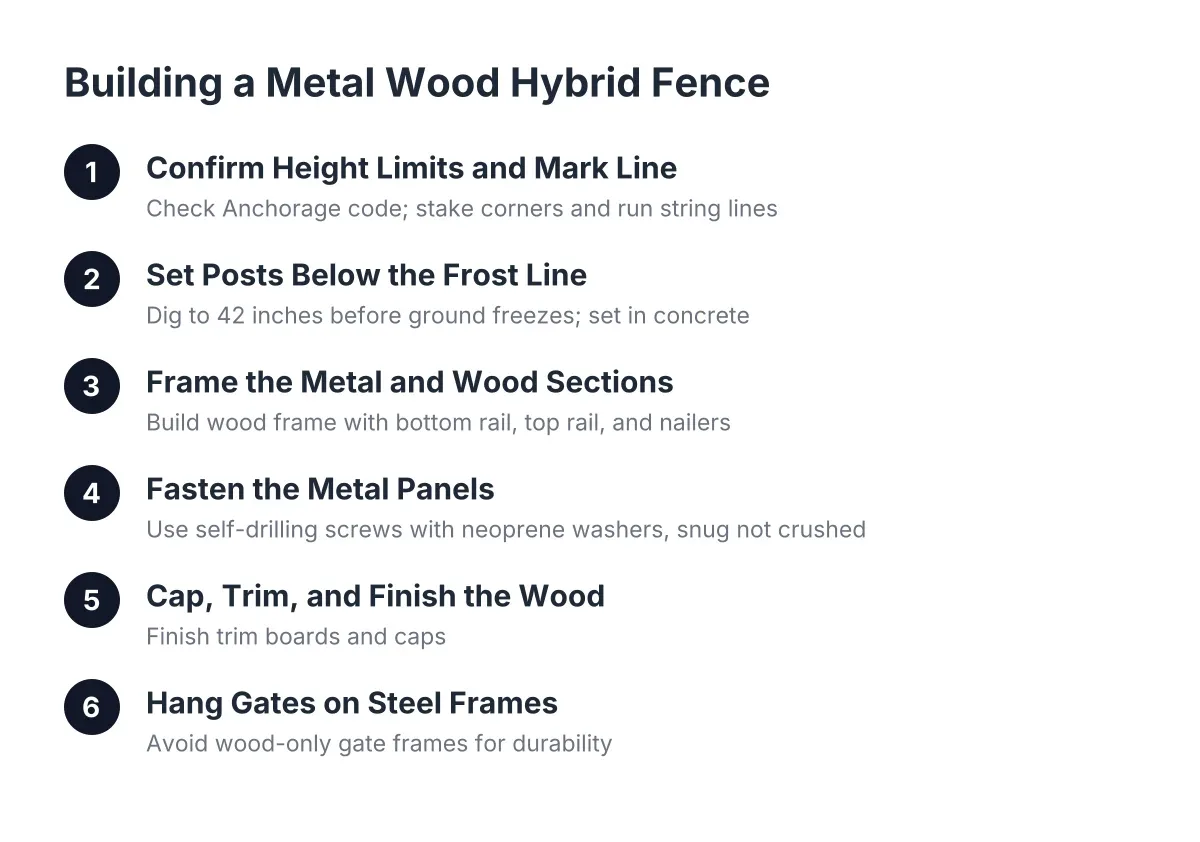
Now assemble the numbers into a working budget. Suppose a homeowner in South Anchorage lost 60 feet of old wood fence to heavy snow load last winter and wants to replace the whole run with corrugated metal and a cedar frame. In that scenario, the estimate should show tear-out and haul-away, posts and footings dug below frost depth, panels by gauge and height, the wood frame and trim, and one gate as separate lines.
As a rough illustrative range only, solid metal privacy fencing tends to price above the chain link figures cited earlier and in the same neighborhood as quality wood, sometimes higher with heavy-gauge panels and custom framing. Treat any corrugated metal fence cost figure you see online as a starting point for questions, not a quote. Local digging conditions, access, and panel spec move the number too much for a national average to hold here.
Pressure-test the estimate with three questions. How deep do the footings go, and why that depth for this soil? What gauge are the panels, and how do they handle plowed snow against the base? Where will cut panels land, and how will the cut edges be finished? A fence estimate that answers those cleanly was built by someone who has set posts through an Anchorage winter.
Step 7: Decide on Repair, Partial Replacement, or Full Install
If you already have a damaged fence, do not assume you need a full replacement to go metal. A flattened section sometimes needs only new panels on posts that held, which costs a fraction of a full rebuild. Conversely, if frost heave has walked several posts out of plumb, patching panels onto failing posts wastes money.
There is a middle path worth asking about. When a wood post has rotted at ground level but its concrete footing is sound, setting a steel post into the existing footing can cost less than full removal and re-dig. That approach also suits a phased upgrade, replacing the worst run in corrugated metal now and the rest next season as budget allows. Property managers often stage portfolio work exactly this way, standardizing one spec across sites over two or three capital cycles.
For anything involving heaved footings, property lines, or utility locates, bring in a professional before you dig. A fence company that works Anchorage ground can tell you in one site visit whether your situation is a repair, a section replacement, or a full install, and price each path so you can choose with real numbers instead of guesses.
If you need fence installation, Anchorage Fence Co can help.
Prefer to talk it through? Call (907) 312-2862 — a quick call is usually the fastest way to get a straight answer for your situation.