Corrugated Metal Fence vs. Wood in Anchorage, AK: How to Pick and Build One That Lasts
If you are comparing a corrugated metal fence with wood framing against a standard cedar fence for your Anchorage property, the real question is not which one looks better. It is which one still stands straight after ten winters of frost heave, snow load, and freeze-thaw cycles. This guide walks through the decision step by step: durability, maintenance, cost factors, and the build process, all framed for Anchorage, AK ground conditions rather than Lower 48 assumptions. The comparison between metal fence vs wood involves more than aesthetics—it requires understanding how each material holds up to local weather and ground movement.
The short version: corrugated metal panels shrug off moisture and never rot, but the wood frame and fence posts that hold them are still wood, so the fence is only as durable as its weakest material. Plan the frame and footings right and you get a fence that outlasts a standard privacy fence with less yearly upkeep.
Step 1: Decide Whether Corrugated Metal and Wood Beats All-Wood for Your Site
Start with your lot, not the look. A corrugated metal and wood fence makes the most sense where moisture and maintenance are the enemy: low spots that pool snowmelt, north-facing fence lines that stay damp, and rental or commercial sites where nobody wants to re-stain pickets every few years.
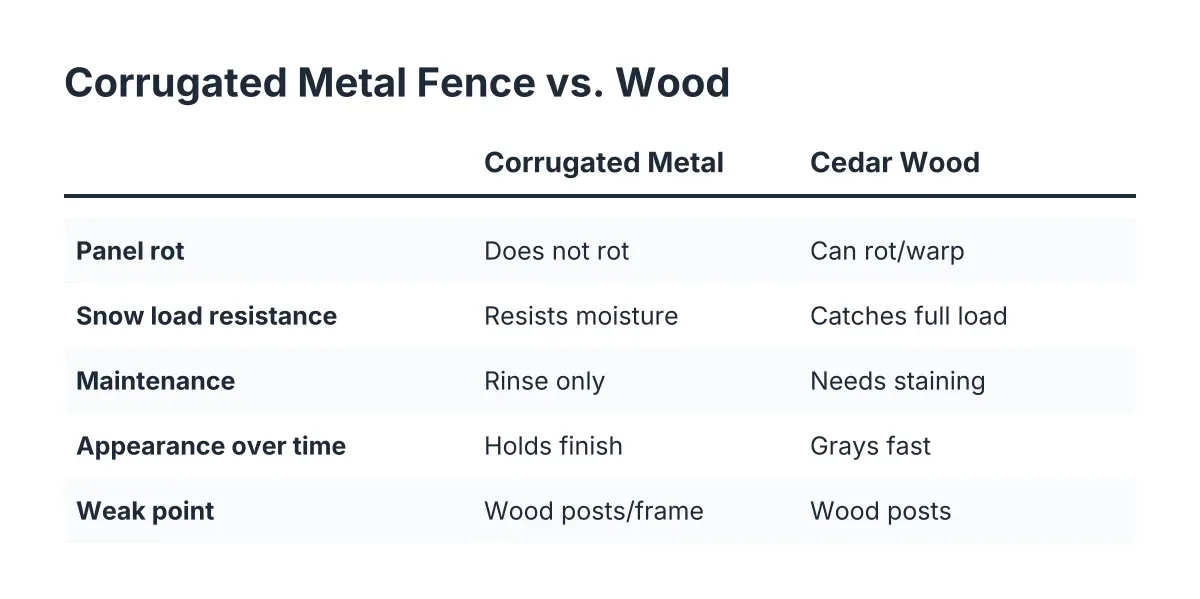
Here is how the two options compare on the things that fail first in Anchorage:
- Panel rot: Corrugated steel panels do not rot, warp, or twist. Cedar pickets can do all three, especially near grade where snowmelt sits against the boards.
- Snow load: Both styles take a beating from plowed and drifted snow pushed against the fence line. Metal panels resist the moisture; a solid fence of either type still catches the full load, so post strength matters more than panel material.
- Maintenance: A cedar fence rewards staining on both sides, which meaningfully extends its life. Metal panels need a rinse and little else. The wood frame around the panels still needs sealing.
- Appearance over time: Galvanized or painted steel holds its finish. Unstained cedar grays fast in long, wet shoulder seasons.
- The shared weak point: Wood fence posts commonly fail from rot even when the panels above them stayed in good shape. Both fence styles live or die at the posts.
Suppose a property manager in Anchorage, AK runs a 12-unit building with a 90-foot cedar privacy fence that has been repainted twice but now leans because three posts rotted at grade. Replacing it with corrugated metal fence panels on a treated wood frame removes the picket-rot problem entirely. However, if the new posts go in the same shallow holes, the lean comes back. The material choice solves maintenance; only the footing solves movement.
One honest trade-off: solid metal panels reflect sound and can read as industrial in an older in-town neighborhood. A cedar fence with corrugated metal fence with wood trim softens that, but if your HOA or neighbors expect traditional pickets, settle that conversation before you price anything.
Step 2: Check Anchorage Height Rules and Plan Your Fence Line
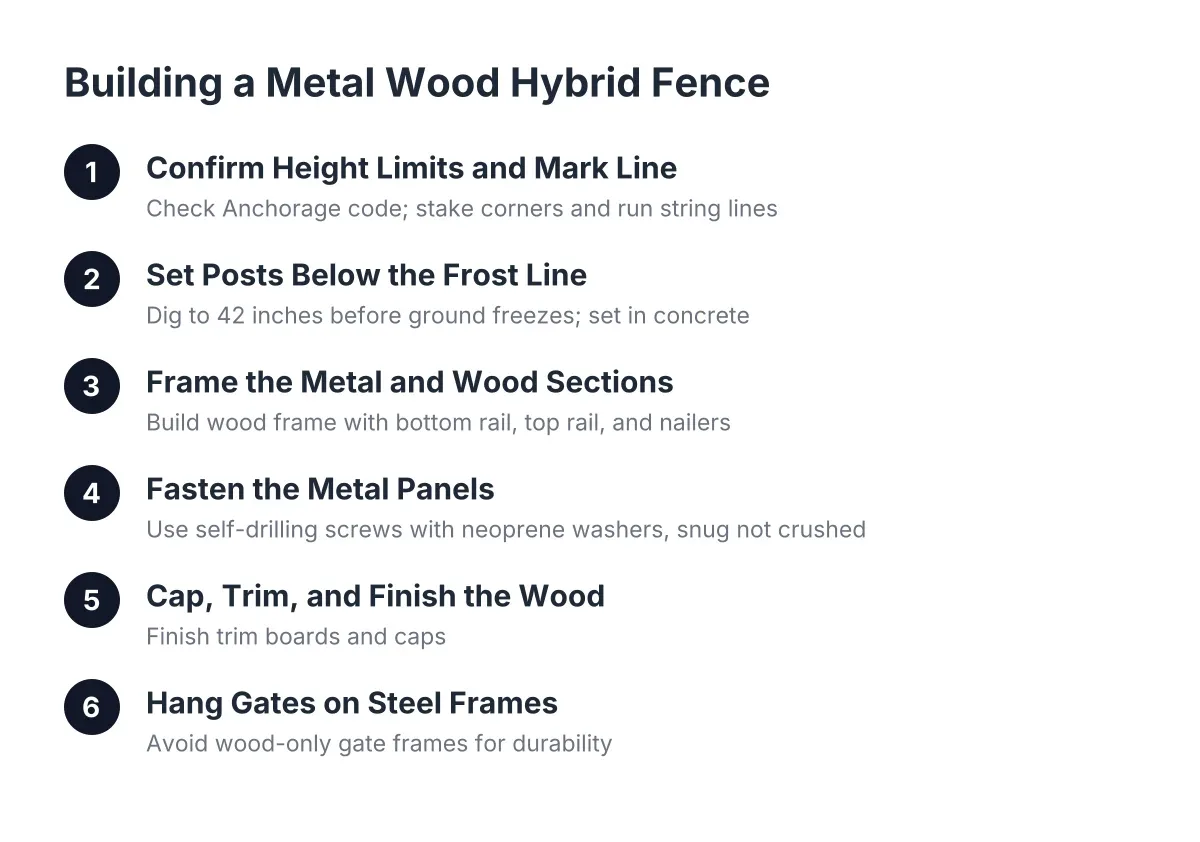
Confirm what you are allowed to build before you sketch panels. Anchorage Municipal Code sets front-yard residential fence height limits at 4 feet in most zones, rising to 6 feet, or 8 feet for non-sight-obscuring fencing like chain link, in R-6, R-8, and R-9 districts, according to the Municipality of Anchorage. A solid corrugated panel counts as sight-obscuring, so do not assume the taller allowances apply to it.
Next, walk the fence line in daylight and mark three things: where snow gets plowed or shoveled against the line, where water pools in breakup, and where the grade drops. Those spots dictate where you add a rot board, raise panels off grade, or step the fence. Call for utility locates before anyone digs; it is free and it is required.
For commercial sites, also confirm sightline and setback requirements at driveways and corners. A facilities director replacing perimeter fencing after a failed inspection does not want the new fence flagged for the same reasons as the old chain link fence.
Step 3: Spec the Corrugated Metal Fence Wood Frame for Frost Heave
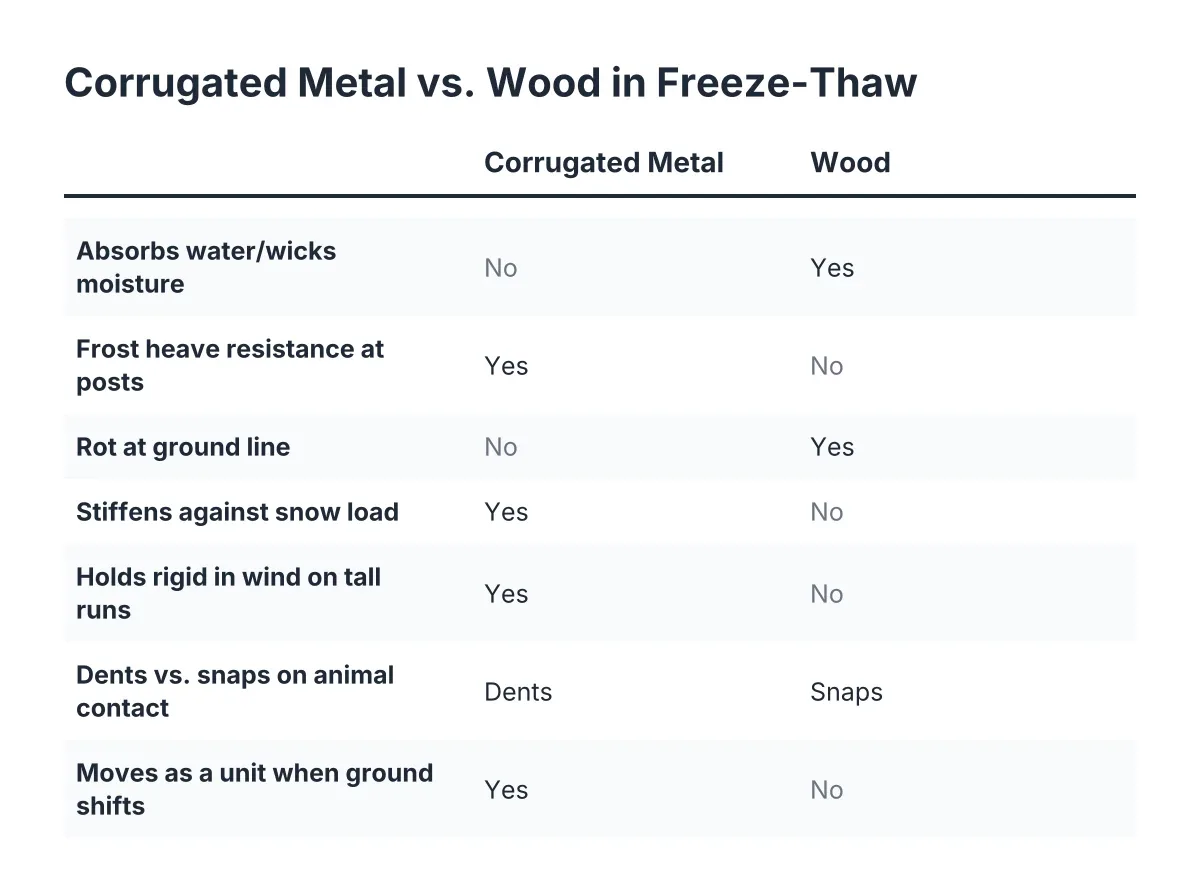
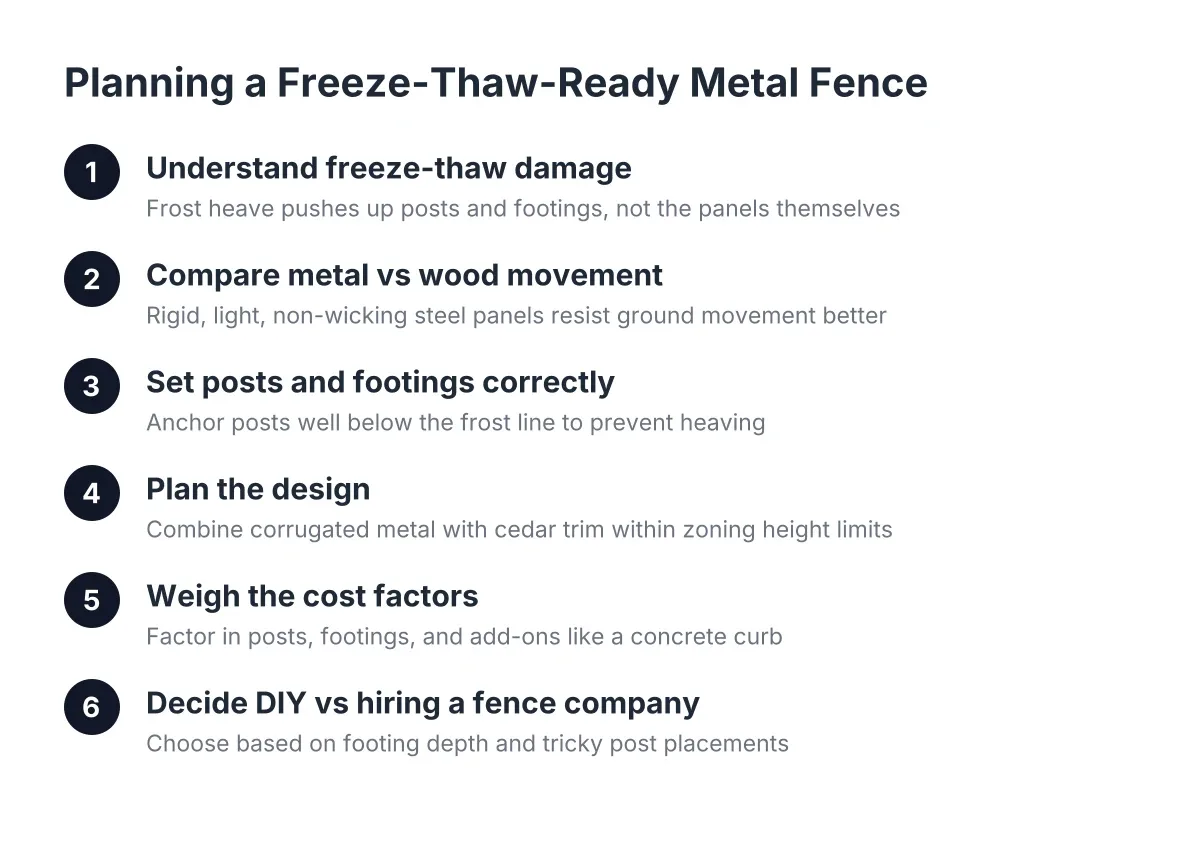
The frame is where Anchorage builds differ from the DIY kits sold online. Those kits assume mild ground. Here, seasonal frost heave moves anything that is not anchored below the frost line, and a tall solid panel acts like a sail in wind and a wall against snow.
Spec the frame in this order:
- Posts first. Use pressure-treated posts rated for ground contact, or steel posts wrapped with wood trim if you want the metal-and-wood look with steel-post longevity. Steel posts sidestep the rot and twist problems that take down wood fence posts over time.
- Depth second. Footings in Anchorage need to get below the frost zone. For reference, the local building code amendment sets minimum exterior footing depth at 42 inches below finished grade for frost protection, according to PermitsGuide.com. Fence posts are not foundations, but shallow holes are the single most common reason fences here lean within a few winters.
- Drainage third. Backfill matters as much as depth. Concrete poured tight around a wood post can trap moisture against the wood and speed up rot. A well-draining base under and around the post keeps water moving away from it.
- Rails and rot board last. Horizontal rails carry the corrugated panels; a pressure-treated rot board along the bottom keeps panels and any cedar trim from wicking moisture out of pooled snowmelt. That one board does a lot of work for the fence's lifespan.
This is also the step where a professional earns their fee. If your lot has fill soil, a high water table, or old footings from a previous fence, have a fence company assess it before you commit to a panel style. Ground conditions, not panel choice, decide how long this fence stands straight.
Step 4: Compare Corrugated Metal Fence Costs Against Wood
Corrugated metal fence cost in Anchorage lands in the same conversation as a cedar privacy fence, not the budget end of the market. You are paying for steel panels plus a full wood frame, so think of it as a wood fence where metal replaces the pickets. The useful comparison is cost per year of service, not cost per foot on day one.
For context on how materials separate in price, Angi reports that a wood fence typically costs 20% to 30% more than a comparably sized chain-link fence, with chain link averaging $1,300 to $3,540 in total cost versus $1,790 to $4,560 for similar wood. Corrugated metal on a wood frame generally prices above chain link and in the range of, or above, a standard cedar fence, depending on the frame design.
The cost factors that move a corrugated metal fence wood build up or down:
- Panel gauge and finish. Heavier steel and factory-painted panels cost more than thin galvanized sheets, and they dent less when snow gets pushed against them.
- Frame complexity. Corrugated metal and wood fence panels with cedar trim, caps, or horizontal accent boards take more material and labor than a plain frame, the same way board-on-board costs more than a flat privacy fence.
- Post count and depth. Deep footings and closer post spacing cost more upfront and are exactly where you should not economize here.
- Site access and digging conditions. Rocky fill, roots, old concrete, and tight in-town lots all add labor.
- Gate installation. Gates are the hardest-working part of any fence and carry their own hardware and framing costs.
Treat any number you see online, including national pricing guides, as a starting point for conversation rather than a quote. A fence estimate built from a site visit will reflect your actual ground, line length, and access; a phone number will not.
Step 5: Build in the Maintenance Plan Before You Sign Off
Decide now what you are willing to do each year, because that choice should shape the final spec. A corrugated metal fence with wood posts and trim asks for a short annual routine, while an all-cedar fence asks for a recurring staining cycle to reach its full lifespan.
For the metal-and-wood build, the yearly list is short. Rinse the panels, check panel fasteners after breakup, reseal exposed wood trim as needed, and watch the posts for movement after the ground thaws. Catching a loose post in June is a cheap fence repair; finding a leaning run in October, after the install season has closed, usually means living with it until spring.
As a result of planning around that seasonal window, timing matters as much as material. Anchorage's install season is compressed; frost-depth digging has to happen before the ground freezes, and long dark winters shut down most post work. If you want metal fence vs wood panels standing before snow flies in 2026, get estimates and schedule the dig in spring or early summer, not September.
Step 6: Choose Who Builds It and What to Ask Them
Whether you hire it out or build it yourself, judge the plan by the same checklist. For a homeowner comparing bids, or a property manager standardizing across a portfolio, ask every fence company the same questions:
- How deep do the posts go, and what is the backfill plan for drainage?
- Are the posts wood or steel, and how is the bottom of the frame protected from pooled water?
- What panel gauge and finish are specified, and how do panels attach to the rails?
- How is snow load along the plow line handled: panel height off grade, rot board, post spacing?
- What does the written fence estimate include: tear-out of the old fence, haul-away, gate hardware, and permit checks?
DIY is realistic for a handy homeowner on a short, flat run with easy digging. It stops being the smart move when the line is long, the grade changes, the soil fights back, or the fence protects a commercial property where a lean becomes a liability question. In that scenario, the premium for professional fence installation buys the part you cannot redo cheaply: posts set right the first time.
Pick the bid that explains its footings, not the one with the lowest number. In Anchorage, the fence that costs a little more to anchor below the frost line is the one you are not replacing in five years.
If you need fence installation in Anchorage, AK, Anchorage Fence Co can help.
Prefer to talk it through? Call (907) 312-2862 — a quick call is usually the fastest way to get a straight answer for your situation.