Corrugated Metal Fence Panels in Anchorage: Cost, Gauge, and Durability Guide
Corrugated metal fence panels have moved from industrial yards to residential lots and multi-unit properties across Anchorage, and for good reason. Steel panels shrug off moose damage, snow load, and freeze-thaw cycles better than most wood pickets. However, not every panel, gauge, or frame design holds up here. This guide walks you through how to evaluate, price, and plan a corrugated metal fence step by step, whether you manage several rental properties in town or need a long perimeter run on acreage out toward Knik-Fairview or Wasilla.
Step 1: Decide Whether Corrugated Metal Fits Your Property
A corrugated metal fence makes sense when you want privacy, low maintenance, and a fence that does not need repainting every few summers. The panels are solid, so they block sightlines completely, which matters for apartment dumpster enclosures, rental property perimeters, and acreage owners screening equipment or livestock areas.
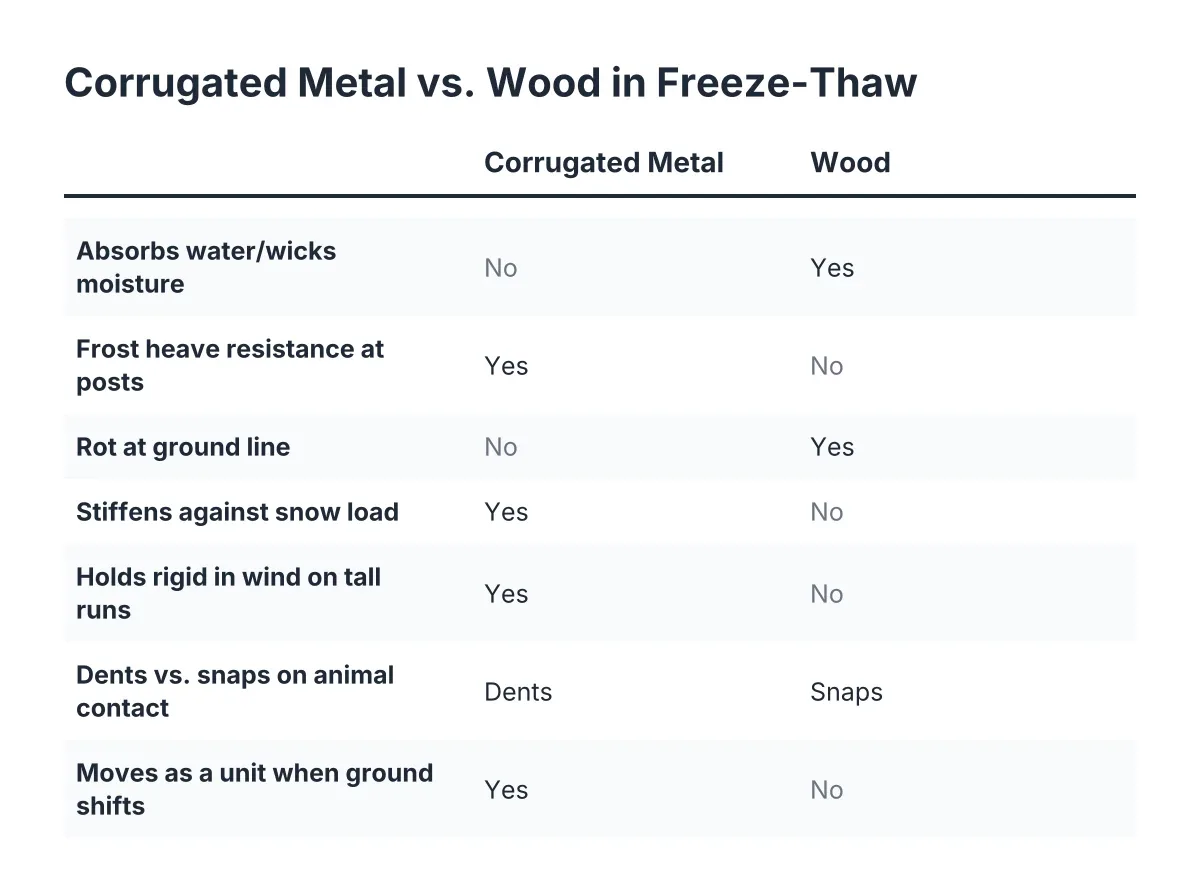
The trade-off is wind and snow. Solid panels catch wind like a sail and hold drifted snow against their full face. Wood fence posts commonly rot or twist under that kind of load over time, which is why steel posts set below the frost line matter more with corrugated panels than with chain link fence, where wind and snow pass through.
Consider corrugated metal when:
- You want full privacy without the staining and board replacement a cedar fence needs
- Tenants or livestock are hard on fencing and you are tired of six-month handyman fixes
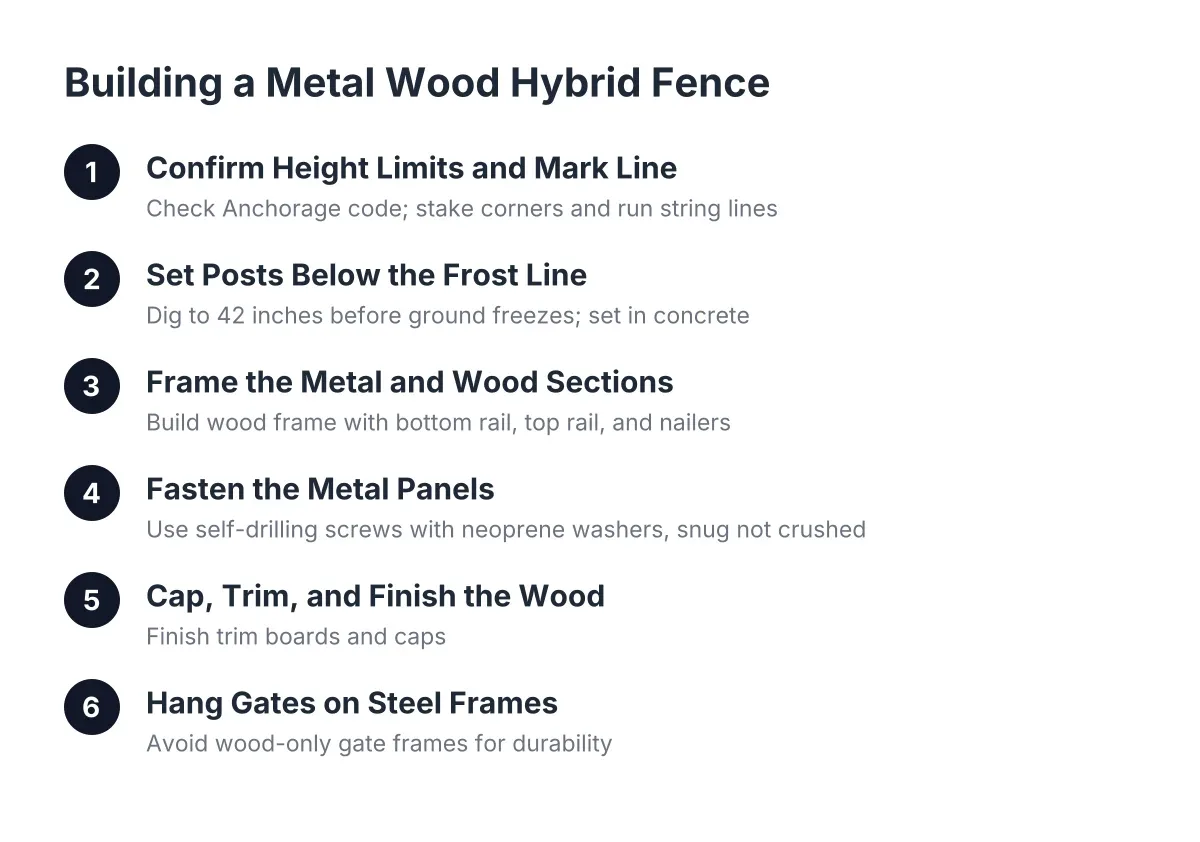
- You like a modern look, especially corrugated metal and wood fence combinations with cedar rails or caps
- You need long runs on open land where wood would weather fast
Skip it, or go partial, when the fence line sits in a wind corridor with no windbreak, or when your zoning limits height. Anchorage Municipal Code caps front-yard residential fences at 4 feet in most zones, rising to 6 feet in R-6, R-8, and R-9 districts, according to the Municipality of Anchorage. A 4-foot solid steel panel in a front yard looks heavy; chain link or ornamental fence often reads better there.
Step 2: Gauge, Finish, and Material Selection for Corrugated Metal Fence Panels
Gauge is the thickness of the steel, and lower numbers mean thicker metal. Thin roofing-grade panels sold as 29 or 31 gauge are built to lie flat on a roof deck with support every few inches. Stood vertically as a fence, thin panels dent from snow shoveled against them, hail, and the occasional moose. For fencing, heavier panels hold their shape far better and resist oil-canning, the wavy distortion you see on cheap installs.
Finish matters as much as gauge. Plain galvanized steel weathers to a dull gray and resists rust well. Painted panels, often available in six or more colors from fence suppliers, add cost but let you match siding across a multi-unit property. Weathering steel develops a rust patina on purpose; it looks sharp against snow but can stain concrete below it.
In addition, check the cut edges. Every field cut exposes bare steel. A good installer seals or caps cut edges and conceals them at corners, often by measuring the remaining gap at the end of a run, cutting the panel to size, and trimming the corner so the raw edge never shows.
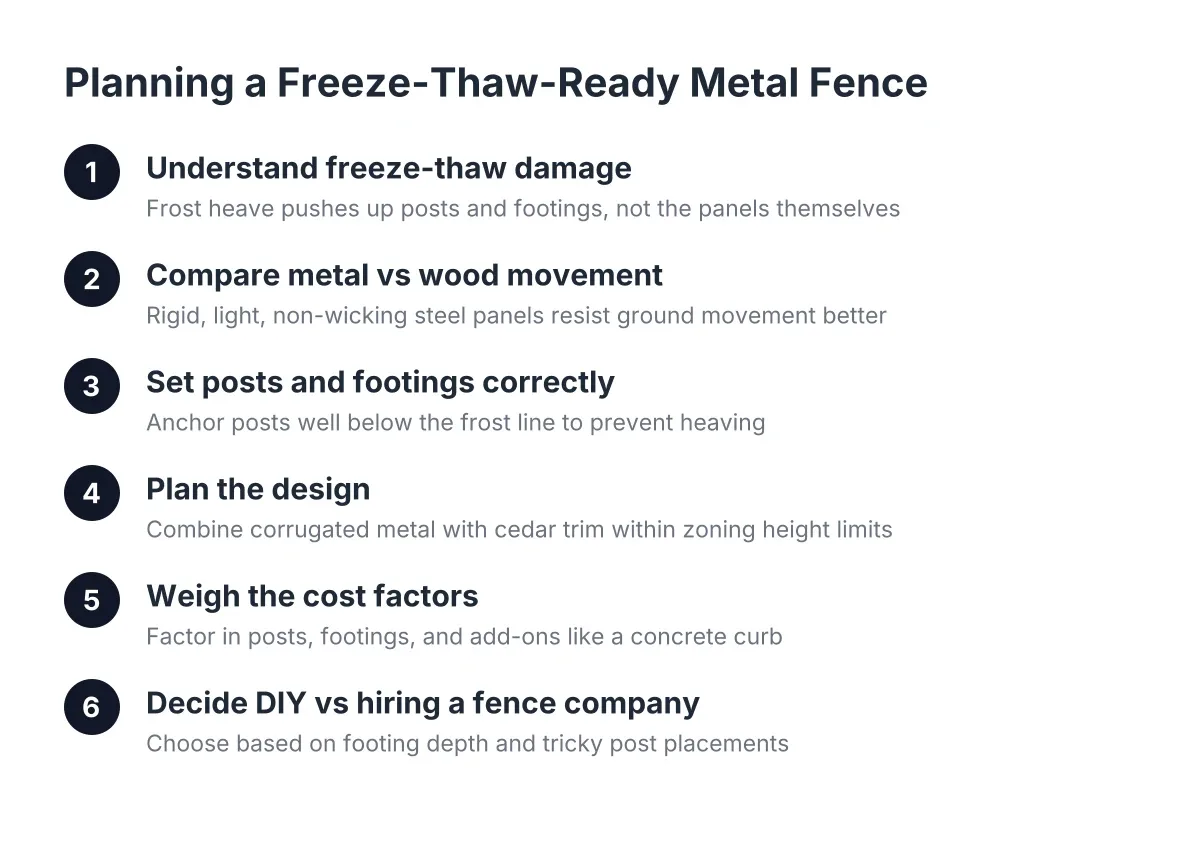
Step 3: Plan the Frame, Posts, and Footings Around Frost Heave
The panel is the skin; the frame does the work. Corrugated panels have no structural strength of their own, so they screw to horizontal rails running between posts. In Anchorage, the posts decide whether your fence is standing straight in five years.
Frost heave moves footings every freeze-thaw cycle. Posts set too shallow walk upward and tilt, and a solid panel fence shows every inch of post movement because the panels sit in a rigid line. Steel fence posts set in concrete below the local frost depth are the standard approach here; your installer should explain their footing plan for your specific soil before quoting.
For example, say a property manager inherits a fourplex in Spenard with a leaning wood privacy fence along the parking lot. In that scenario, an installer might reuse the existing steel posts if they are sound and deep, set new steel posts between them, and hang corrugated metal fence panels on new rails. Reusing solid existing steel posts alongside new ones can make the fence stronger against wind than building the same height from scratch, and it trims the dig-and-pour labor that drives cost.
A few frame rules worth insisting on:
- Measure post spacing center to center, not edge to edge, so panels land consistently along the run
- Use steel posts and rails; wood rails under steel panels reintroduce the rot problem you paid to avoid
- In tight spots, such as butting against a neighboring fence or working around a tree, a reinforced post with a metal pipe and sleeve keeps the line true
- Leave a small gap at grade so panels do not sit in snowmelt and soil
Step 4: Price Out Corrugated Metal Fence Panels Against the Alternatives
Corrugated metal fence cost in Anchorage lands between chain link and high-end cedar for most layouts, though the frame design drives the final number more than the panels themselves. There are no verified Anchorage-specific figures for corrugated steel, so treat any flat per-foot quote you see online with suspicion and price your actual fence line.
For context on the low end, a chain-link fence runs about $10 to $40 per linear foot installed, roughly $1,500 to $6,000 for a 150-foot run, according to HomeGuide. Angi reports chain link averaging $1,300 to $3,540 total versus $1,790 to $4,560 for a similar wood fence, with wood typically costing 20% to 30% more than comparable chain link. Corrugated metal with a steel frame usually prices above basic chain link because of the posts, rails, and panel labor, and the gap narrows against cedar privacy fence once you factor in staining and board replacement over the years.
Fence pricing reflects construction method and expected lifespan, not just raw material. The factors that move a corrugated metal fence estimate most:
- Linear footage, the biggest driver on acreage parcels where runs stretch for hundreds of feet
- Gauge and finish, since heavier painted panels cost more than thin galvanized stock
- Footing depth and soil, because rocky or wet ground slows digging before winter
- Gate installation, as steel-framed gates with latches rated for tenant traffic are a separate line item
- Design extras, since corrugated metal and wood fence hybrids with cedar caps or trim take more material and labor than plain panels, the same way board-on-board costs more than a flat privacy fence
For a rural owner budgeting $3,000 to $20,000 depending on footage, mixing materials often works: corrugated panels where you need privacy near the house, field-grade chain link or wire for pasture lines.
Step 5: Decide What to DIY and When to Call a Fence Company
A capable acreage owner can handle parts of this job. Hanging panels on an existing sound frame, replacing a dented panel, or building a short garden screen are reasonable weekend projects. You can buy corrugated metal fence panels for sale at big-box stores and metal suppliers, though roofing-aisle stock is usually thinner than fence-rated panels.
However, call a fence company for the structural work. Setting posts below frost depth, laying out long runs square and level, and building gates that still latch after a winter of heave are where DIY installs fail. Warning signs that mean call now rather than patch again:
- Posts leaning more each spring, a sign footings are above frost depth
- Panels pulling loose at the screws after wind, which points to rail spacing problems
- A gate that drags or will not latch by February
- Rust streaks spreading from unsealed cut edges
For property managers, the DIY question is really a liability question. A perimeter fence or guardrail-adjacent run at a rental property should go through a contractor who provides proper documentation and billing, not a handyman invoice. If the fence line borders a parking area or walkway, have a professional assess it before you build; that is not a corner worth cutting.
Step 6: Vet the Installer Before You Sign
Most corrugated installs are custom-framed, so the installer matters more than the panel brand. Three questions separate a fence company that builds for Anchorage ground from one that does not:
- How deep do you set posts here, and why? You want an answer about frost heave and local soil, not a generic number
- What gauge and finish are you quoting, and is it fence-rated or roofing stock? The quote should name the panel spec
- How do you handle cut edges, corners, and gate framing? Vague answers here show up as rust and sagging later
A fair fence estimate itemizes posts, rails, panels, gates, demolition of the old fence, and haul-away. For property managers, ask whether the company handles fence repair calls across multiple properties and how they bill recurring work; one relationship beats starting over at every address. For acreage owners outside town, confirm the company actually works your area and ask how they stage long runs before freeze-up, since the dig season sets the real deadline.
The Bottom Line on Corrugated Steel Fencing Here
Corrugated metal fence panels earn their place in Alaska when the gauge is fence-rated, the frame is steel, and the posts are set for frost heave rather than against it. Priced above chain link but competitive with cedar over its lifespan, a well-built corrugated fence handles snow load, tenants, and moose with minimal upkeep. If you are planning a run for a rental property or an acreage perimeter, Anchorage Fence Co can walk your fence line, explain the footing plan for your soil, and put together a clear fence estimate before the digging season closes.
If you need fence installation, Anchorage Fence Co can help.
Prefer to talk it through? Call (907) 312-2862 — a quick call is usually the fastest way to get a straight answer for your situation.