Chain Link Fence Repair Terms Explained: A Plain-English Glossary
If you own a home or manage property in Anchorage and a fence quote left you guessing, this chain link fence repair glossary is for you. It explains the words repair crews and estimators use every day, in plain English. Use it to read a fence estimate line by line, describe the damage over the phone, and spot problems in your own yard before they get worse.
- Fabric (Mesh): the woven wire itself
- Gauge: how thick the wire is
- Terminal Post: the heavy posts at ends and corners
- Line Post: the posts in between
- Top Rail: the horizontal pipe along the top
- Tension Bar: flat bar woven into the fabric's edge
- Tension Band: clamps that grip the tension bar
- Tie Wire: small wires holding fabric to posts and rail
- Rail End and Rail Cap: fittings that finish the frame
- Fence Stretching: pulling the fabric tight again
- Frost Heave: winter ground movement that lifts posts
- Post Reset: digging out and re-setting a leaning post
- Concrete Footing: the concrete that anchors each post
- Gate Sag: when a gate drops and drags
- Fabric Splice: joining new mesh to old
- Fence Estimate: the written price and scope
- Repair vs. Replacement Threshold: when fixing stops making sense
- Mobilization: the cost of just showing up
Chain Link Fence Repair Glossary: Parts and Hardware
Most confusion in a chain link fence repair glossary starts with the parts, so here is the hardware itself, named and explained.
Fabric (Mesh)
Fence fabric is the woven diamond-pattern wire that makes up the body of a chain link fence; crews also call it mesh. When a tree limb or snow load crushes a section, the fabric is usually what gets replaced. Knowing this word helps you describe damage precisely: "ten feet of crushed fabric" tells an estimator far more than "the fence is bent." Fabric can often be replaced in sections without touching the posts, which keeps the job smaller.
Gauge
Gauge is a number that tells you how thick the wire in chain link fabric is, and lower numbers mean thicker wire. A 9-gauge fence is heavier and stronger than an 11-gauge fence. This matters in a repair because new fabric should match the old gauge, or the patch will look and perform differently. If a quote lists a gauge, ask whether it matches what you already have.
Terminal Post
A terminal post is a heavier post set at the ends, corners, and gate openings of a chain link fence. These posts carry the pulling force of the stretched fabric, so they are thicker and set deeper than the posts in between. A damaged terminal post is a bigger repair than a damaged line post because the fabric tension depends on it. If an estimator flags a leaning terminal post, expect more digging and concrete in the scope.
Line Post
A line post is one of the smaller posts spaced along the straight runs of a chain link fence between the terminal posts. Line posts keep the fabric upright but do not carry the main tension. Replacing one is a routine repair. In Anchorage, leaning line posts are one of the first signs that winter ground movement is working on your fence.
Top Rail
The top rail is the horizontal pipe that runs along the top of a chain link fence and keeps the fabric from sagging. Heavy snow load pushed against a fence can bend or separate the top rail. A bent rail is a common standalone repair, and it is cheaper to fix early than after the fabric starts drooping with it.
Tension Bar
A tension bar is a flat metal bar woven vertically through the end of the chain link fabric so the mesh can be pulled tight and anchored. Without it, the woven wire would just unravel when stretched. If a repair quote mentions new tension bars, the crew plans to re-stretch or re-attach the fabric at a post. That is a sign of a proper repair rather than a quick patch.
Tension Band
A tension band is a metal clamp that wraps around a terminal post and bolts to the tension bar, locking the stretched fabric in place. Several bands are used per post, spaced top to bottom. Rusted or snapped bands let the fabric pull loose from the post, which often looks worse than it is. Replacing bands is a small, inexpensive line item on most repairs.
Tie Wire
Tie wire means the short wires that fasten chain link fabric to the line posts and top rail. Ties loosen over time, and missing ties let the fabric rattle and sag. Re-tying a fence is one of the cheapest repairs there is. If your fence looks saggy but the posts are straight, ask whether new ties and a re-stretch would solve it.
Rail End and Rail Cap
A rail end is the fitting that connects the top rail to a terminal post, and a rail cap (or post cap) is the cover that closes off the top of a post. Caps keep water out of hollow posts, which matters in a freeze-thaw climate because trapped water that freezes can split a post from the inside. Missing caps are a small fix that prevents a bigger one.
Repair Work and Causes in Chain Link Fence Repair Glossary
Fence Stretching
Fence stretching is the process of pulling chain link fabric tight between terminal posts so it stands flat without sagging. Crews use a stretching tool to tension the mesh before locking it down with tension bars and bands. Loose, wavy fabric usually means the fence needs a re-stretch, not replacement. It is a normal part of most chain link fence repair jobs, so seeing it on a quote is a good sign the crew intends to do it right.
Frost Heave
Frost heave is the upward movement of soil when the water in it freezes and expands, and it is the main reason fence posts in Anchorage lean, lift, or pop out of line. A post that was straight in September can tilt by spring. Heave is a ground condition to plan around, not a sign the original installer failed. If several posts lean the same direction after winter, frost heave is the likely cause, and the fix is usually resetting posts deeper and with better footings.
Post Reset
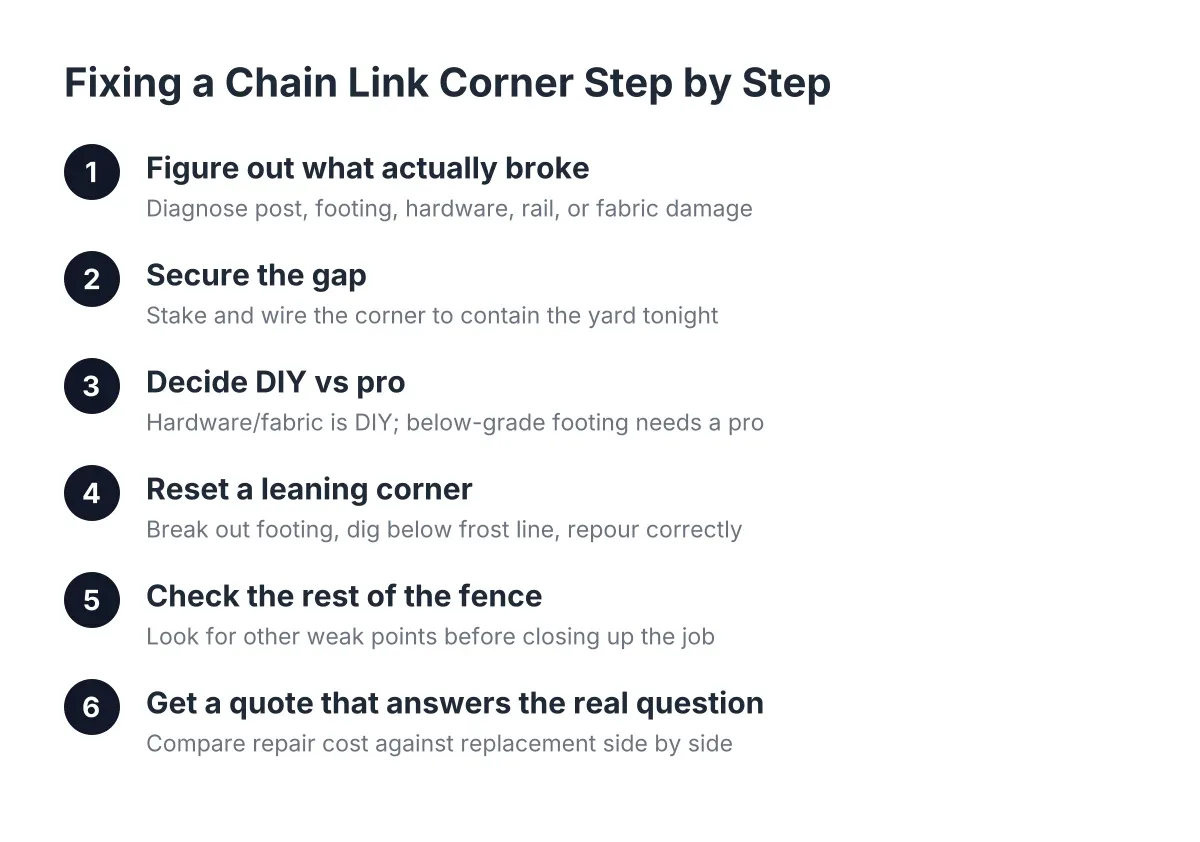
A post reset means digging out a leaning or heaved post, excavating the hole deeper or wider, and setting the post again, usually in fresh concrete. It is the standard fix for frost-heaved posts. A reset costs more than tightening hardware but far less than replacing a whole fence run. Ask how deep the crew plans to set the post, since depth is what fights future heave.
Concrete Footing
A concrete footing is the mass of concrete poured around the base of a fence post to anchor it in the ground. In Anchorage, footings need to reach below the depth where the ground freezes, or seasonal frost can grab the concrete and lift the whole assembly. If an estimator talks about footing depth, they are talking about whether your fence stays put next winter. Shallow footings are the most common root cause behind repeat post repairs.
Gate Sag
Gate sag means a gate that has dropped out of square so it drags on the ground or will not latch. Causes include worn hinges, a heaved gate post, or a frame bent by snow piled against it. Sometimes the fix is adjusting hardware; sometimes the gate post needs a reset. A sagging gate is worth fixing early, because a dragging gate stresses its hinges and post a little more every time it swings.
Fabric Splice
A fabric splice is the method of joining a new section of chain link mesh to existing fabric by weaving a single strand of wire through both sections. A clean splice is nearly invisible and lets a crew replace only the damaged length. If your quote covers a splice instead of a full fabric replacement, the estimator is trying to save you money. Matching gauge and coating keeps the splice from standing out.
Pricing and Paperwork
Fence Estimate
A fence estimate is the written description of what a repair will include and what it will cost, broken into labor, materials, and sometimes mobilization. A good estimate names the parts involved, like posts, fabric, rails, and fittings, so you can compare quotes fairly. Cost depends on factors such as damage length, post condition, access, and ground conditions. For a fuller breakdown of what drives the number, see our guide on chain link fence repair cost.
Repair vs. Replacement Threshold
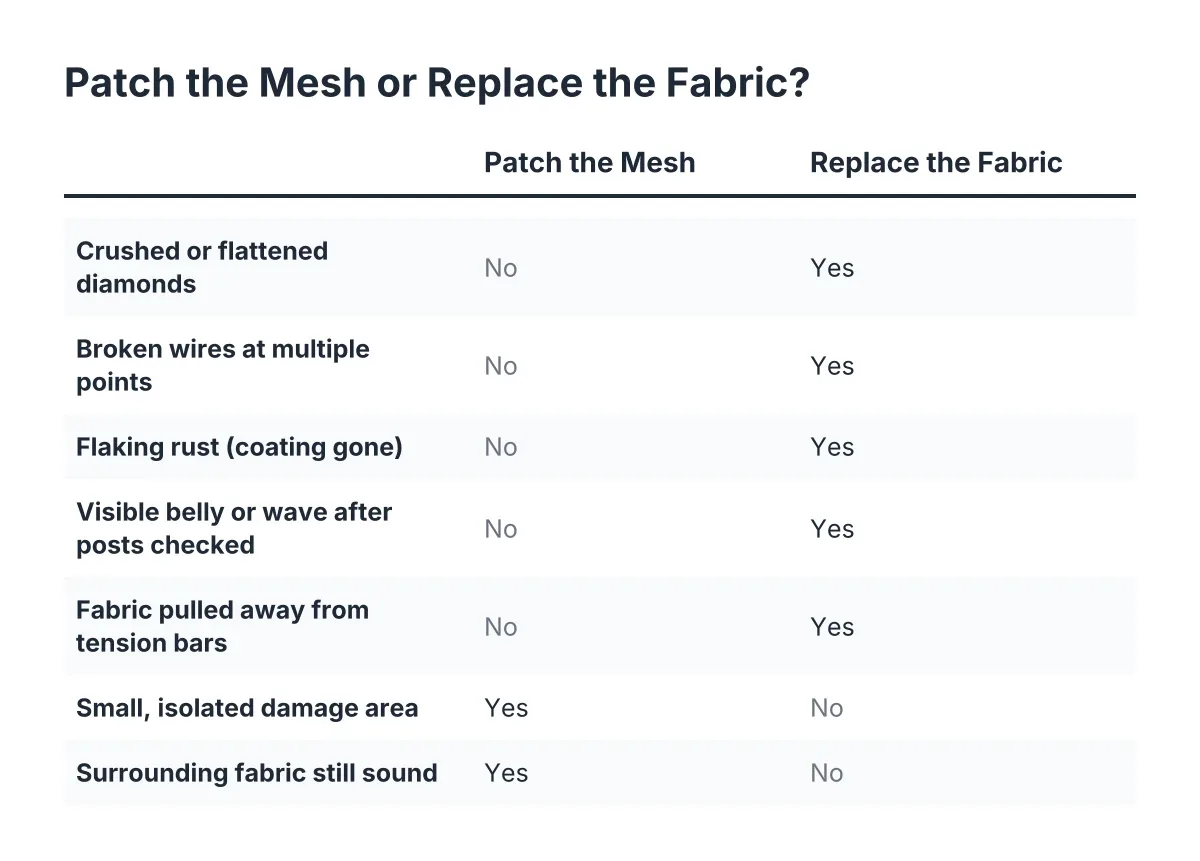
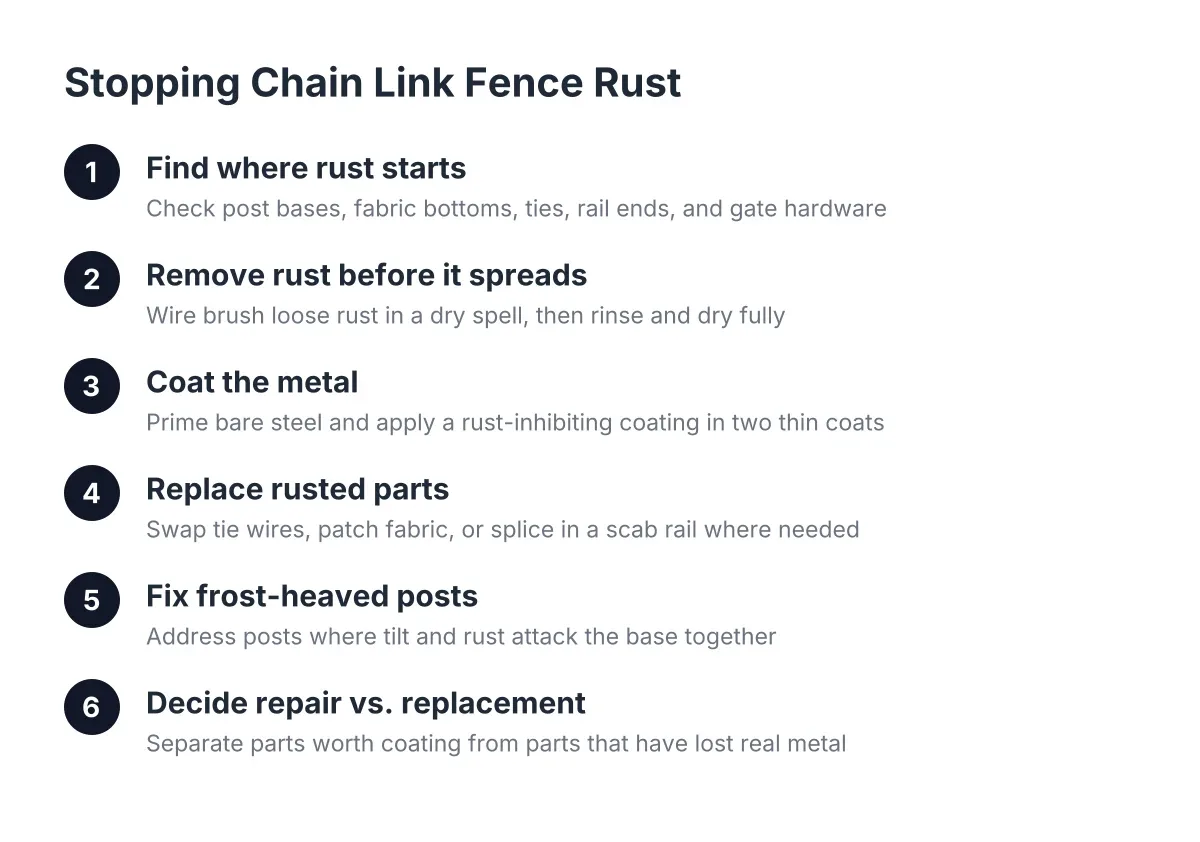
The repair vs. replacement threshold is the point where fixing a fence section by section costs more than replacing the run outright. Widespread rust, many heaved posts, or fabric failing in several places all push toward replacement. There is no single magic number; it is a judgment call you should ask the estimator to explain. A clear answer about where your fence sits on that line is one mark of an honest quote, and our chain link fence repair service page covers how we approach that call in Anchorage.
Mobilization
Mobilization is the base cost of getting a crew, truck, and tools to your property, regardless of how small the repair is. It is why a tiny fix can carry a minimum charge. If you have several small issues, like loose ties, a missing cap, and a sagging gate, bundle them into one visit. One mobilization charge across several fixes stretches your money further.
Using These Terms
This chain link fence repair glossary gives you the vocabulary to read a quote line by line and ask sharper questions: what gauge is the new fabric, how deep will the reset posts go, and is this a splice or a full replacement. When you can name the parts and the work, you can compare estimates on substance instead of price alone. That is the whole point of knowing the words.
If you need chain link fence repair, Anchorage Fence Co can help.
Prefer to talk it through? Call (907) 312-2862 — a quick call is usually the fastest way to get a straight answer for your situation.