Why Chain Link Fence Rusting Happens Faster in Alaska and How to Slow It
If you just dragged a snapped branch off your fence, or spring thaw showed you a line of orange posts, you are probably asking the same question most Anchorage homeowners ask: is chain link fence rusting a cosmetic problem or a structural one? The honest answer is both, depending on where the rust sits. Rust on the fabric is mostly ugly. Rust at the post base, the rail ends, or the ties is what lets a fence fold under the next heavy snow load.
This guide walks you through slowing that deterioration step by step. It is written for someone who already owns the fence and wants to keep it standing, not someone shopping for a new one. The steps work whether you have 80 feet behind a Spenard lot or a half mile of perimeter fence on acreage out toward Knik-Fairview.
First, a quick note on why rust moves faster here. Chain link is galvanized steel; zinc coating protects the steel underneath. Freeze-thaw cycles crack that coating at stress points. Road salt and gravel spray eat it along street-facing runs. Snow piled against the fabric holds moisture on the metal for months at a time. In addition, frost heave tilts posts, which bends ties and rails and scrapes the galvanizing right where parts rub. None of that means your fence is done. It means the fence needs attention at specific points, in a specific order.
Step 1: Where Chain Link Fence Rust Actually Starts
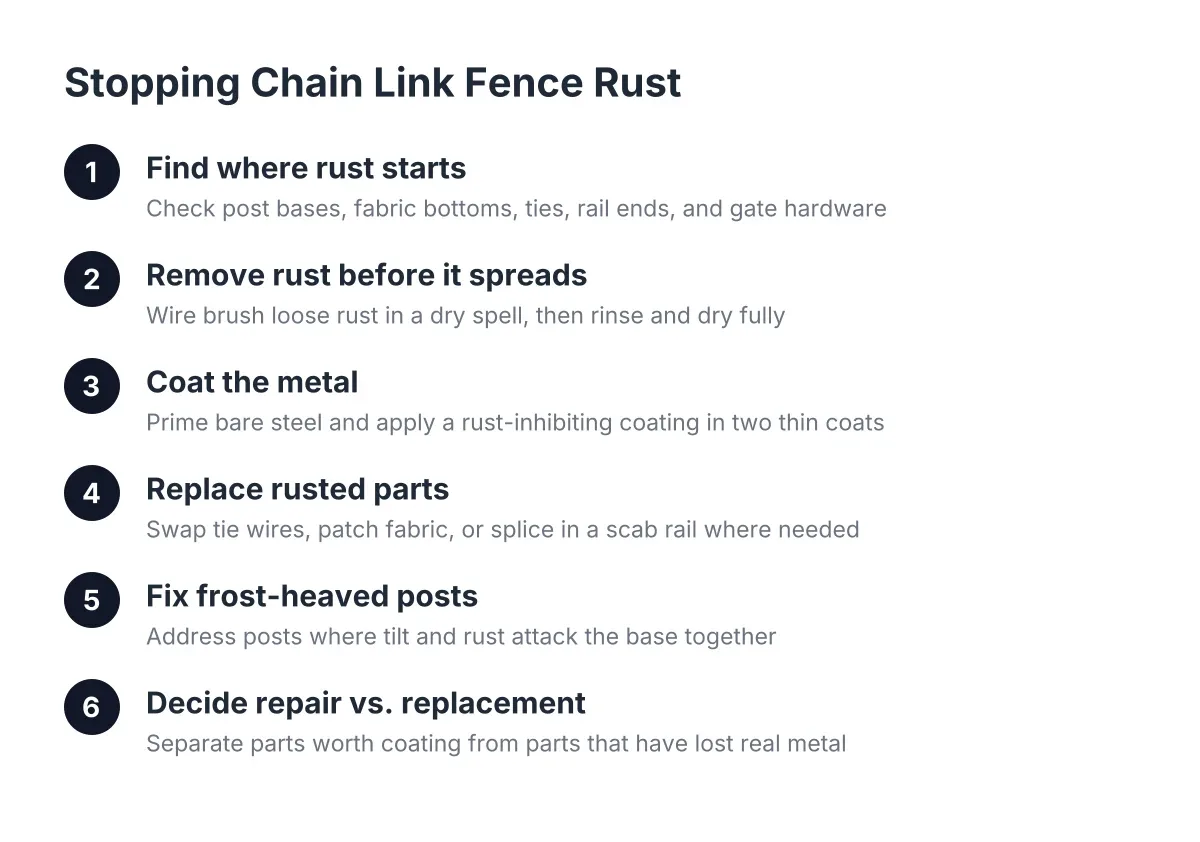
Walk the full line before you buy anything. Rust rarely attacks a chain link fence evenly; it concentrates where water sits and where metal rubs metal. Check these spots first:
- Post bases at ground level, where snow piles and meltwater pool
- The bottom few inches of fabric, especially along driveways that get salt or gravel
- Tie wires, which are thinner than everything else and fail first
- Rail ends and brackets, where movement from frost heave scrapes off coating
- Gate hinges and latches, which see the most friction of any part on the fence
Press a screwdriver against the worst spots. Surface rust feels solid underneath. If the metal flakes, dents, or punches through, that part needs replacement, not treatment. A post that is soft at the ground line will not hold through another winter of snow load no matter what you paint on it.
Separate your findings into two lists: parts you can clean and coat, and parts that have lost real metal. Everything below follows from that split.
Step 2: Removing Rust from Chain Link Fence Before It Spreads
Chain link fence rust removal is simple work, but the timing in Anchorage matters. You want a dry stretch in late spring or summer, after breakup mud has firmed up and before fall rain. The coating you apply later needs dry metal and a few dry days to cure.
Use a wire brush or a wire wheel on a drill for posts and rails. For fabric, a stiff brush and patience work; the diamond pattern hides rust on the inside faces, so work both sides. Rinse the whole section, then let it dry fully. Trapped moisture under paint causes the coating to bubble and fail in one season.
Do not sand down to bare shiny steel everywhere. The goal is removing loose, flaking rust so a coating can bond. Sound galvanizing that is dull gray but intact should stay; it is still protecting the steel.
Step 3: Coat the Metal to Slow Future Rusting
A rust-inhibiting coating is the single best answer to how to keep a chain link fence from rusting once the original galvanizing wears thin. Products made for this job, such as Rust-Oleum's chain link fence paint, are designed to bond to weathered galvanized metal and seal out moisture.
Prime any spots you brushed to bare steel with a rust-converting or rust-inhibiting primer. Then coat the fabric with a long-nap roller, working the paint into the weave from both sides. Posts, rails, and gate frames take a brush better than a roller. Two thin coats outlast one heavy one.
People sometimes ask whether a black chain link fence rusts. The vinyl or polymer coating on black fabric resists rust well, but cut ends, scratches, and bent spots expose steel just like plain galvanized. Treat those nicks the same way: clean, prime, seal.
One trade-off worth naming: painting a fence commits you to repainting. Coated fabric that starts peeling looks worse than plain weathered galvanizing, so only coat sections where rust has genuinely broken through.
Step 4: Replace the Parts Rust Has Already Taken
Some parts are cheaper to swap than to save, and tie wires top that list. Ties are the thin wires holding fabric to posts and rails, and they rust through long before the framework does. When you replace them, bend each tie so the wrap traps the fabric link tight against the pipe. Bent the other way, the tie stays loose enough that wind works it open, and you are back out there after the next storm. Ties also come in different lengths matched to pipe diameter, so check your post and rail sizes before ordering chain link fence repair parts.
For small fabric holes, chain link fence repair wire lets you weave a patch into the existing mesh. For larger damage, say a moose walked through a section out past Meadow Lakes, cut out the damaged run and splice in fabric from a chain link fence repair roll, joining it with the spiral wire pulled from the old section.
Rails that rusted through at the ends can take a scab rail: a segment of pipe overlapped across the two old rail ends and fastened with brackets, tying the old and new sections together structurally. That beats replacing a full rail run when the middle of the pipe is still sound.
Step 5: Fix the Posts That Frost Heave and Rust Attack Together
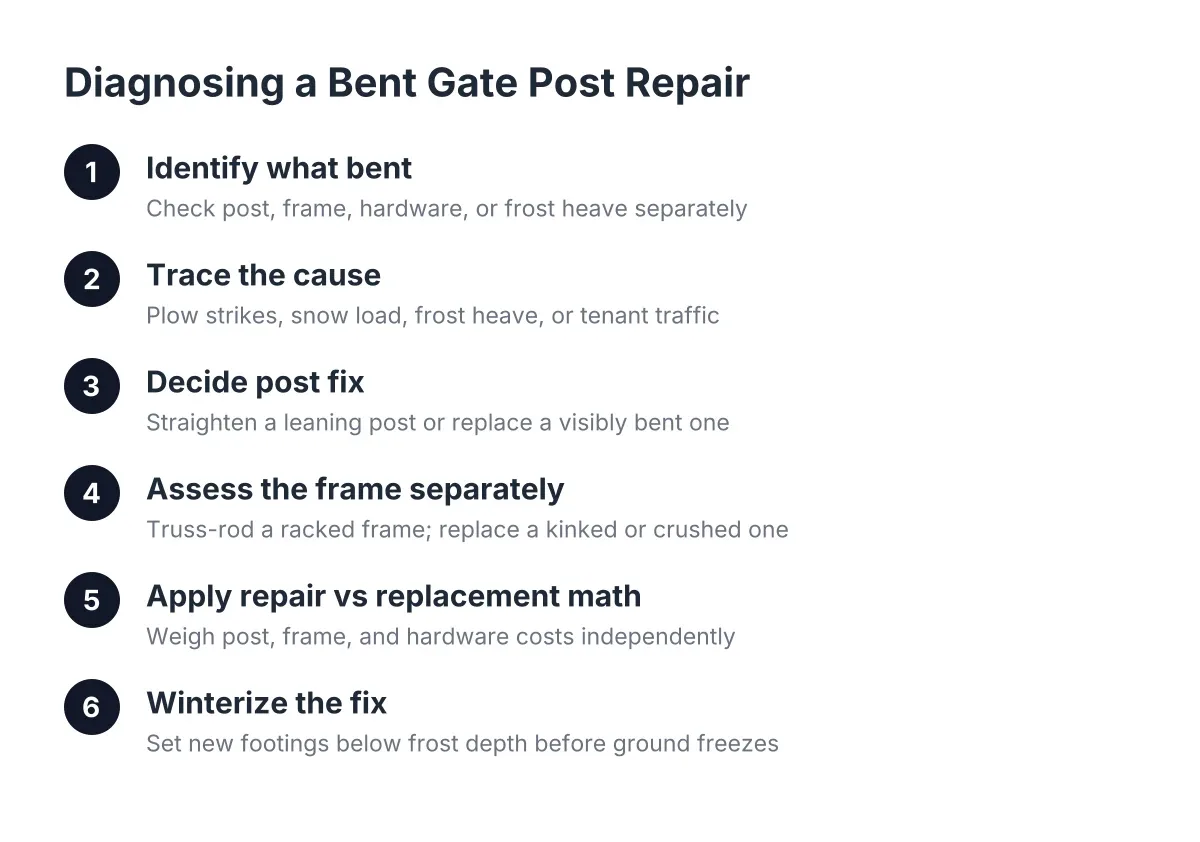
Posts fail where rust and frost heave gang up: right at ground level. A heaved post tilts, the tilt stresses the galvanizing, cracks open, water gets in, and rust finishes the job. If a post rocks when you push it or shows soft metal at the base, treat it as structural.
Here is a hypothetical that plays out across Anchorage every spring. Suppose a homeowner finds three leaning posts after thaw on a fence that is otherwise solid. The instinct is to rip out each post and its concrete footing and start over. However, when the footing itself is intact, setting a new post into or beside the original footing often costs less and holds just as well. A full dig-out in frozen or rocky ground adds labor fast. The same logic applies on mixed fences, where rotting wood posts can be cut above the deteriorated section and replaced with steel while the footing stays put.
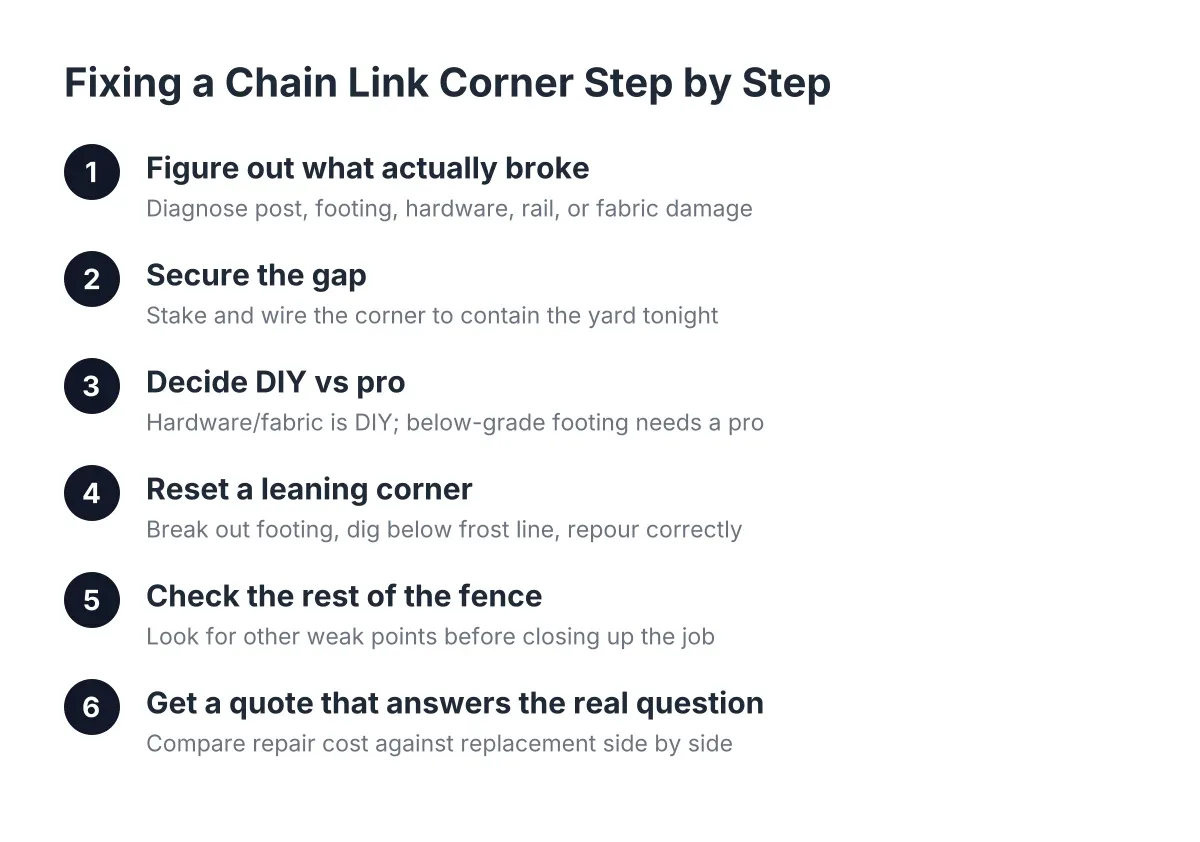
Post work is also where it pays to consult a pro. Setting posts to hold through freeze-thaw cycles depends on soil, drainage, and depth, and getting it wrong means repeating the job. This is the point where many homeowners stop searching for parts and start searching for chain link fence repair near me instead; a crew that works Anchorage ground year after year can usually tell you on-site whether a post needs resetting or replacing, and whether the fence around it is worth the fix.
Step 6: Change the Conditions That Feed the Rust
Coatings and new parts buy you years. Site conditions decide how many. Spend an hour on these and the whole repair lasts longer:
- Pull soil, mulch, and sod back from post bases so meltwater drains instead of pooling.
- Keep brush and grass off the bottom of the fabric; vegetation holds moisture against the steel.
- Along driveways and road-facing runs, rinse off salt spray each spring during breakup.
- Where plows or shoveling pile snow against the fence, redirect the pile; months of wet snow pressed on fabric feeds rust and bends the mesh under snow load.
- On acreage, check gates and corner posts each fall, since those take the most movement and fail first.
Step 7: Decide What Is Repair Work and What Is Replacement
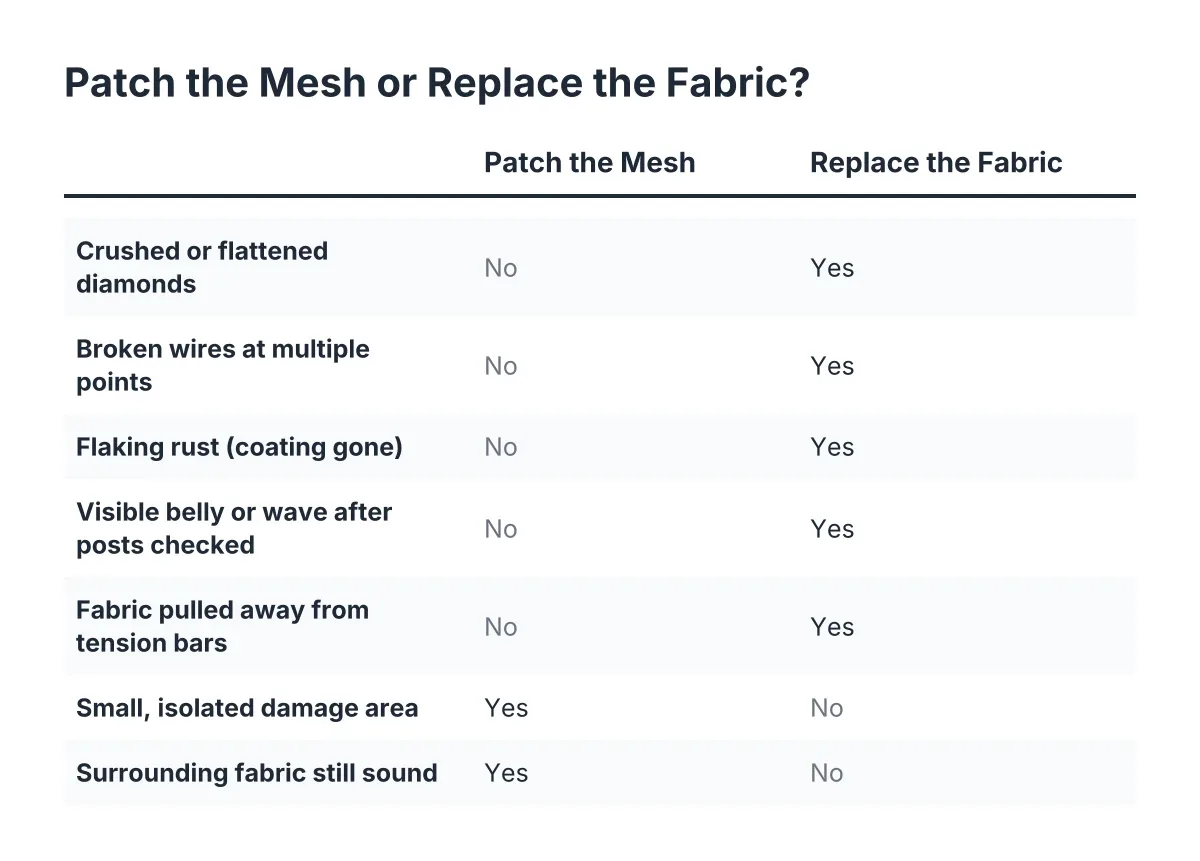
A fence with surface rust on the fabric and solid posts is a repair job, full stop. A fence with multiple failed posts, fabric rusted through at the bottom across long runs, and rails gone soft is telling you something different. The dividing line is structure: if the framework still stands straight and holds tension, parts and coatings make sense.
Budget frames the call too. Chain link remains the economical option; Angi puts typical chain link fencing at $1,300 to $3,540 total, compared to $1,790 to $4,560 for a similar wood fence. For a large-acreage perimeter, repairing sound sections and replacing only the failed ones usually beats either extreme. One caution: the cheapest fix quoted is not always the cheapest fix owned, since work that fails in two winters costs more than solid work did up front.
Slowing chain link fence rusting is mostly about catching it at the ties, the post bases, and the rail ends before the next freeze-thaw cycle widens the damage. Walk the line each spring and fall, keep water moving away from the metal, and the same fence that looks rough today can hold your dogs, your property line, and your sanity for years yet.
If you need chain link fence repair, Anchorage Fence Co can help.
Prefer to talk it through? Call (907) 312-2862 — a quick call is usually the fastest way to get a straight answer for your situation.