Chain Link Fence Corner Damage in Anchorage: A Freeze-Thaw Repair Guide
A leaning chain link fence corner is one of the most common sights in Anchorage yards after spring breakup. The corner post holds tension for two runs of fence fabric at once, so when frost heave pushes it even a little out of plumb, both sides of the fence sag. Then a heavy snow load or a windstorm finishes the job, and suddenly the fence that kept the dog in last fall will not hold anything. If you're facing this problem, chain link corner repair is often the answer—whether a DIY fix or a professional job depends on what actually broke.
If that sounds like your yard right now, you do not need a lecture on fencing. You need a straight answer: is this a repair or a replacement, what can you do yourself today, and when should a fence company take over? This guide walks through both, step by step, with Anchorage ground conditions in mind the whole way.
Why Chain Link Corners Fail First in Freeze-Thaw Country
Corner posts do more work than any other post in a chain link fence. A line post mostly keeps the fabric upright. A chain link fence corner post anchors the tension of two stretched runs pulling in different directions. That is why corner posts are set in larger footings and are often a larger diameter pipe than line posts.
Anchorage ground makes that job harder. Water in the soil freezes, expands, and grips the footing. Over repeated freeze-thaw cycles, the footing can lift a little each winter and never fully settle back. A footing poured too small, or too shallow, heaves faster. Once the post tilts, the fence fabric on both sides loses tension, the top rail pulls at its corner connectors, and the whole assembly starts to rack.
For reference, Anchorage treats frost protection seriously in its building rules. The municipality's code amendment sets minimum exterior footing depth at 42 inches below finished grade for structures, according to PermitsGuide.com. Fence posts are not held to building-foundation standards, but that number tells you how deep frost works into Anchorage ground. A corner post set in a shallow plug of concrete is fighting physics every winter.
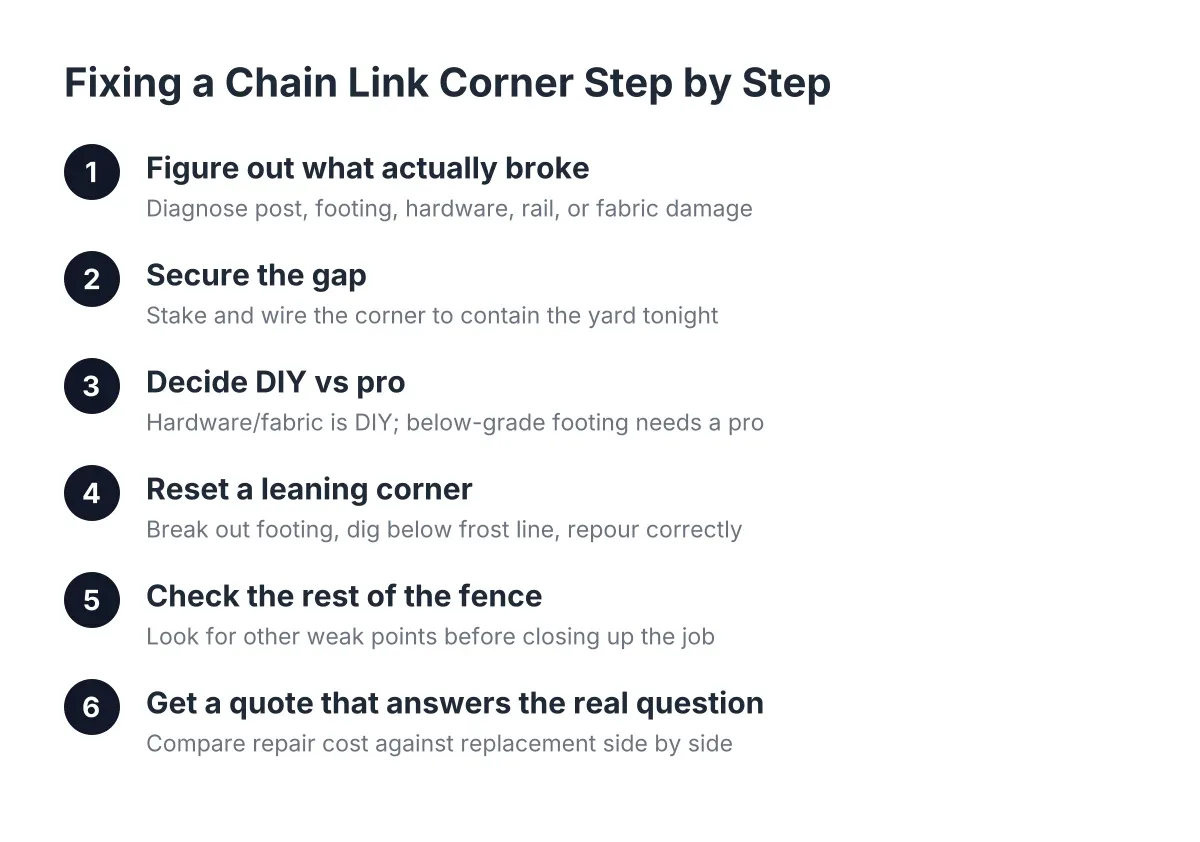
Step 1: Figure Out What Actually Broke
Before you buy parts or call anyone, spend ten minutes diagnosing. Corner damage shows up in a handful of patterns, and each one points to a different fix.
Walk the corner and check these in order:
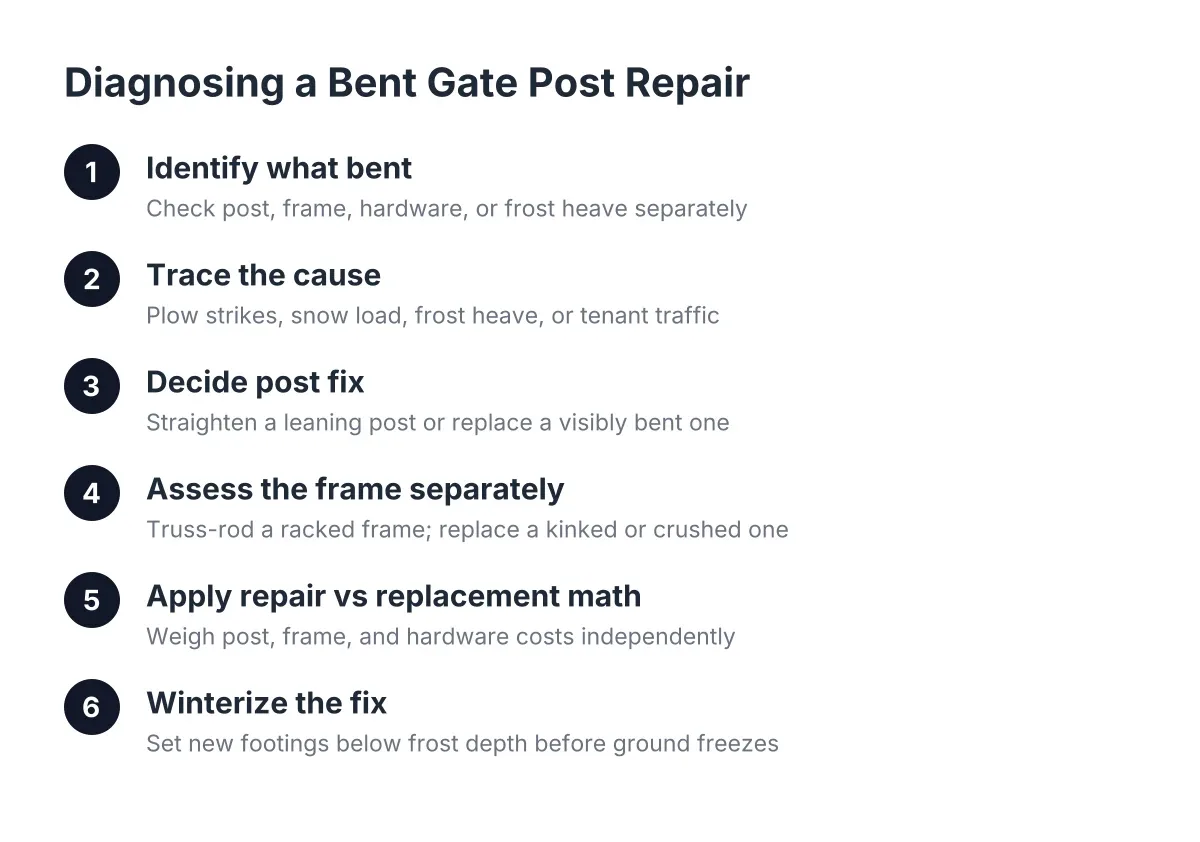
- Post out of plumb but solid in the ground. The footing heaved or tilted as one unit. The post itself may be fine.
- Post wobbles at ground level. The concrete footing likely cracked, often because it was poured too small. A cracked footing creates a wobble point right where lateral force is highest, and it will not heal itself.
- Post is straight but the fabric sags on both sides. Tension hardware failed. Look at the tension bands, tension bars, and the corner brace or rail connections.
- Top rail bent or popped out of its corner piece. Snow load or a falling branch usually causes this. Rail and fittings are replaceable without touching the post.
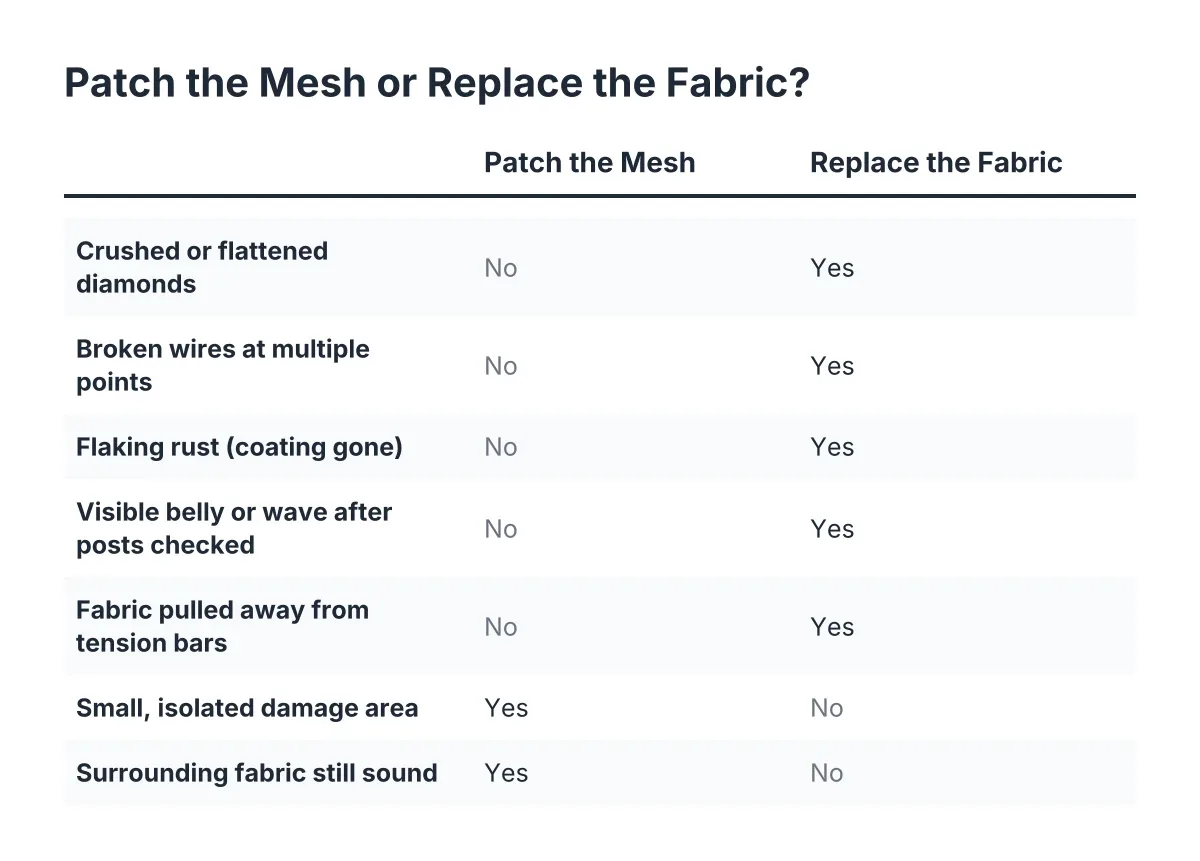
- Fabric torn or crushed near the corner. The mesh itself needs splicing or a replacement section.
The distinction matters because hardware and fabric repairs are quick and cheap. Footing and post problems are not, and patching over them wastes money. A new tension bar on a heaved post will sag again by next spring.
Step 2: Secure the Gap Before Anything Else
If a pet or a property line is exposed, stabilize first and repair second. You do not need the permanent fix today; you need the fence to hold until the real repair happens.
For a leaning chain link fence corner, drive a temporary wood or metal stake beside the post and lash the post to it. Pull the sagging fabric up and wire it to the top rail or the temporary stake with repair wire or heavy zip ties. A roll of chain link repair wire from any hardware store covers most of this. For torn fabric, a section from a chain link fence repair roll can be wired over the gap in under an hour.
This is rough work, and it should look rough. The goal is a contained yard tonight, not a finished fence.
Step 3: Decide Between DIY and a Pro for Chain Link Corner Repair
Plenty of chain link fence repair is honest DIY territory. Be realistic about which side of the line your damage falls on.
Reasonable homeowner jobs include replacing a corner post cap, swapping bent corner connectors or a corner bracket, re-tensioning fabric with a come-along, and splicing torn mesh. The parts are standard and inexpensive, and mistakes are recoverable. One practical tip when tying fabric back to a post: work from the side opposite the mesh when access allows, since it gives you better leverage on the ties. When chain link corner repairs involve only hardware and fabric, the work is straightforward and the results are predictable.
Call a fence company when the problem is below grade. Resetting a heaved corner post means breaking out or pulling the old footing, digging below the frost action, and pouring a correctly sized new footing while holding tension on two runs of fabric. Recently poured footings are stubborn to remove; older ones sometimes pop out with less fight, but you will not know until you start. In addition, a corner post that fails under tension can whip, so releasing and re-stretching fabric safely takes the right tools.
One honest trade-off: on an older fence with widespread rust, multiple heaved posts, and brittle fabric, a corner repair may not be worth the money. A fence estimate that prices both the repair and a replacement side by side lets you decide with real numbers instead of guesses. Chain link remains the budget option either way; Angi puts chain link fencing at $1,300 to $3,540 in total cost on average, versus $1,790 to $4,560 for a comparable wood fence.
Step 4: How to Reset a Leaning Chain Link Corner
Whether you tackle this yourself or watch a crew do it, here is what a proper corner reset in Anchorage looks like. First, the fabric comes off tension. Tension bands are loosened and the tension bars pulled so the post carries no load.
Next, the old footing comes out or gets broken down. Cutting corners here, by jamming a new post next to the old failed footing, recreates the original weak point. Then the hole gets dug deeper and wider than the failed one, sized for a corner post rather than a line post. Corner post diameter matters; the heavier pipe resists the pull of two tensioned runs.
After that, the new post is set plumb in concrete, crowned at the surface so water sheds away instead of pooling and refreezing against the pipe. The concrete cures before anyone re-tensions anything. Finally, the rail goes back into its corner fittings, the fabric gets stretched with a fence puller, and the tension bars and bands are re-seated.
Timing is the local wrinkle. Concrete and frozen ground do not cooperate, and Anchorage's install season is short. A corner that fails in October may get a solid temporary brace for the winter and a permanent reset after thaw. That staged approach is normal here, not a runaround.
Step 5: Check the Rest of the Fence While You Are at It
A heaved corner is usually a symptom, not a one-off. Suppose a homeowner in a 1970s-era in-town lot finds the back corner leaning after breakup. In that scenario, odds are good that two or three line posts along the same run have started to lift too, just not far enough to notice yet. Checking them now turns one service visit into one complete fix instead of three separate calls over two years.
Walk the full line and look for:
- Posts that have risen so the top rail is no longer level
- Footings with concrete visible above grade or cracked at the surface
- Loose or missing post caps letting water into the pipe
- Gates that drag or latch poorly, an early sign the gate posts are moving
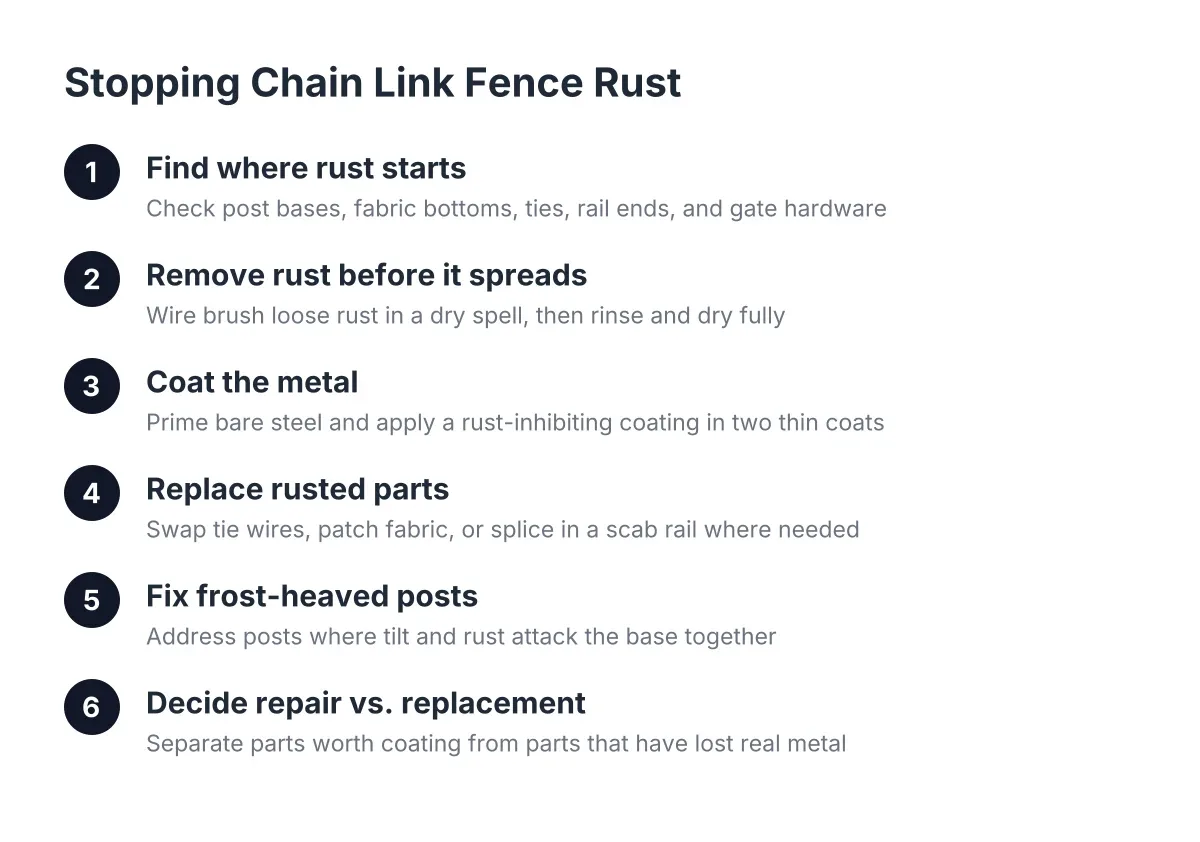
- Rust at ground level where the pipe meets soil and snow sits longest
While you are looking, note fence height rules if you plan any changes. Anchorage Municipal Code limits front-yard residential fences to 4 feet in most zones, with allowances up to 8 feet for non-sight-obscuring fencing like chain link in certain districts, according to the Municipality of Anchorage. A straight repair does not trigger that, but a replacement or height change might.
Step 6: Get a Quote That Answers the Real Question
When you do call a fence company, you are buying a diagnosis as much as a repair. A fair quote for corner damage should spell out three things: whether the footing is being replaced or reused, what post size and footing depth the new corner gets, and what happens to the existing fabric and rail.
Ask these questions and listen for specifics:
- Is this a hardware fix, a post reset, or a section replacement, and why?
- How will the new footing handle frost heave differently than the one that failed?
- If the fence is older, what would repair versus replacement cost side by side?
Vague answers on footing depth or post sizing are a warning sign. So is a quote that jumps straight to full fence replacement without explaining why the corner cannot be fixed on its own. Chain link is a workhorse material with steady demand nationwide, forecast at 225 million linear feet per year according to Freedonia Group, and parts for it are standardized and available. A single damaged corner almost never justifies tearing out a sound fence.
Get the Corner Fixed Before the Next Freeze
A failed chain link fence corner does not improve with time. Every freeze-thaw cycle moves the footing a little more, every snow load pulls harder on slack fabric, and a repairable problem slowly becomes a replacement. Secure the gap now, diagnose what actually failed, and get the below-grade work done while the ground allows it.
If you are in Anchorage and want a straight answer on whether your corner is a quick fix or a bigger job, Anchorage Fence Co can look at the damage, walk you through the options, and give you a clear fence estimate for the repair. Reach out and get the fence solid again before winter makes the decision for you.
If you need chain link fence repair, Anchorage Fence Co can help.
Prefer to talk it through? Call (907) 312-2862 — a quick call is usually the fastest way to get a straight answer for your situation.