Wire Gauge and Fabric Replacement for Chain Link Fence Repair in Anchorage
When snow load or a fallen branch flattens a section of chain link, the fix usually comes down to one question: can the mesh be repaired, or does the section need a chain link fabric replacement? Getting wire gauge and fabric replacement right is what separates a repair that holds through the next Anchorage winter from one that sags again by March. This guide walks through how chain link fabric is measured, which gauges make sense for repairs here, and how to decide between patching damaged mesh and replacing a full run.
If your fence just went down and the dog is eyeing the gap, the short version is this: match or beat the gauge of your existing fabric, never go thinner, and treat crushed or rust-weakened mesh as a replacement job rather than a patch. The details below explain why, and how to evaluate your options before you call a fence company or order repair parts.
What Wire Gauge Means on a Chain Link Fence
Wire gauge is the thickness of the steel wire woven into chain link fabric. The numbering runs backward from what most people expect: a lower gauge number means thicker, stronger wire. So 9 gauge fabric is heavier than 11 gauge, and 6 gauge is heavier still.
That backward scale trips people up when they shop for chain link fence repair parts online. A roll listed as 11.5 gauge sounds close to 9 gauge, but it is a noticeably lighter wire. On a fence line facing Anchorage snow load, that difference shows up fast.
Gauge is not the only spec that matters on a fabric roll. You will also see mesh size, which is the diamond opening, and the coating type, usually galvanized or vinyl-coated. However, gauge is the spec that most directly controls how the fabric handles weight pressing against it, whether that weight is a snow berm, a leaning tree limb, or a moose that decided your fence was in the way.
Common chain link fabric replacement gauges and where they fit
Here is how the common residential and commercial gauges generally sort out:
- 11 or 11.5 gauge: Light fabric. Common on budget residential fences and temporary fencing. It bends easily under snow load and is the fabric most often found flattened after a heavy winter.
- 9 gauge: The standard working gauge for most residential and light commercial chain link. It balances cost and strength, and it is the most widely available for repairs.
- 6 gauge: Heavy commercial fabric. Used around storage yards, equipment lots, and perimeters where security and impact resistance matter more than cost.
For vinyl-coated fabric, check whether the listed gauge refers to the core steel wire or the finished coated diameter. Two rolls can carry the same outside measurement while one has thinner steel underneath. The core wire gauge is what carries the load.
Why Gauge Choice Matters More in Anchorage
Anchorage puts loads on chain link fabric that milder climates never see. Snow piles against the bottom of the fence for months at a time, and plowed or shoveled berms press hard on the lower third of the mesh. Light-gauge fabric stretches and bows under that sustained pressure, and once the diamonds deform, they do not spring back.
Freeze-thaw cycles add a second problem. Frost heave moves fence posts, and when a post shifts, the fabric tension changes along the whole run. Fabric that was already marginal gauge for the conditions loses its tension and starts to belly out. By spring, a fence that looked fine in October can have a visible wave in it.
Therefore, the practical rule for Anchorage repairs is simple: match the existing gauge at minimum, and consider stepping up one gauge where the fence takes repeated snow load. A homeowner replacing a flattened 11 gauge section along a driveway where plowed snow stacks up every winter is a strong candidate for 9 gauge replacement fabric. The posts and rails usually do not need to change; the fabric does.
Property managers face the same math across a portfolio. Suppose a manager oversees three apartment complexes with chain link perimeters, and the same low spots fail inspection every spring. Standardizing on 9 gauge or heavier fabric for every repair, instead of matching whatever light fabric the original builder used, cuts the repeat failures and makes future repair orders simpler because every site uses the same roll spec.
When Chain Link Fabric Replacement Beats Patching the Mesh
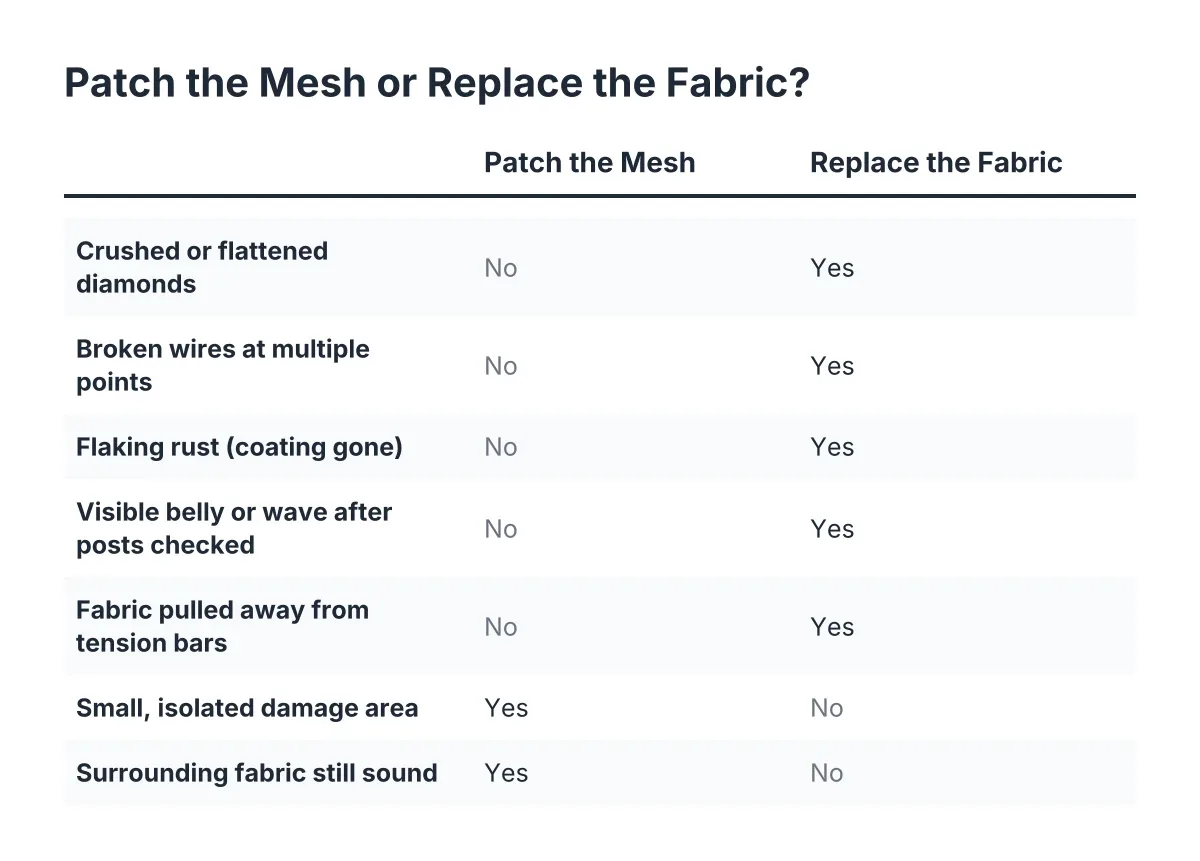
Fabric replacement makes sense when the mesh itself is compromised: crushed diamonds, broken wires, widespread rust, or a section stretched so far out of shape it will not re-tension. Patching works when the damage is small and the surrounding fabric is sound. The honest answer for most storm-flattened sections in Anchorage is replacement of that section's fabric, not a patch.
Here is why. Chain link fabric gets its strength from tension across the whole run between terminal posts. A patch spliced into stretched or bent fabric inherits the weakness around it. You can weave in a repair, and it will close the hole, but the section will still sag because the fabric around the splice already deformed.
Signs the Fabric Needs Replacement, Not Patching
Walk the damaged run and check for these:
- Crushed or flattened diamonds that stay deformed when you push against them. Bent wire has lost its temper and will not hold tension.
- Broken wires at multiple points, especially along the bottom where snow and ice grind against the mesh.
- Rust that flakes when you rub it. Surface discoloration on galvanized fabric is cosmetic; flaking rust means the zinc coating is gone and the wire is losing cross-section.
- A visible belly or wave in the fabric that stays after you check the posts. If the posts are plumb and the fabric still sags, the fabric has stretched.
- Fabric pulling away from the framework because stretched mesh no longer reaches the tension bars.
If only one or two of these show up in a small area, a woven patch or a short section replacement can work. If they run the length of a panel or more, price the fabric replacement. On a per-foot basis, chain link stays an affordable material; according to Angi, chain link fencing averages $1,300 to $3,540 in total cost for a full install, and replacing fabric on existing sound posts costs a fraction of that because the framework, concrete, and digging are already done.
Matching Gauge and Mesh in a Fabric Replacement
A fabric replacement on an existing fence has to match more than gauge. Get the mesh size, height, and coating right, or the new section will look wrong and tie in poorly with the old fabric.
First, measure the mesh. Standard residential diamonds are about two inches, but older Anchorage fences sometimes carry different sizes. Measure the flat-to-flat opening on an undamaged diamond and match it on the replacement roll.
Next, confirm the fabric height against your actual fence, not your memory. Fences settle, and frost heave can raise posts enough that a roll matching the original spec now sits short. Measure from the top rail to grade at several points along the run. In addition, if you are near the front of the lot, keep height rules in mind; the Municipality of Anchorage sets front-yard residential fence height limits at 4 feet in most zones, with taller non-sight-obscuring fencing like chain link allowed in certain districts.
Then match the coating. Splicing bright new galvanized fabric into a run of black vinyl-coated mesh works mechanically but looks like a patch forever. On a rental property or an HOA street, that mismatch draws complaints. For a commercial site, mismatched sections also flag deferred maintenance to anyone inspecting the perimeter.
Finally, verify the gauge on what you are buying. Repair rolls sold in short lengths at big-box stores often run 11.5 gauge even when the full rolls nearby are 9 gauge. If you are sourcing chain link fence repair parts yourself, read the spec line, not the shelf tag. When the wire gauge on a fabric replacement roll is not listed, assume it is light.
Ties, Tension Bars, and the Small Parts That Make It Hold
New fabric at the right gauge still fails if it is attached wrong. The small parts carry more of the job than most homeowners expect, and they are where rushed storm repairs usually go wrong.
Fence ties are the short wires that fasten the fabric to the top rail and the line posts. They come in different lengths sized to the pipe diameter, so ties bought for a thin top rail will not close properly around a heavier line post. Each tie needs to wrap so it traps a fabric wire tight against the pipe. Bent the wrong direction, the tie stays loose enough that wind works it open over a winter, and the fabric starts rattling free one tie at a time.
The twisted ends of every tie should fold inward, flat against the fabric. Ends left sticking outward become a snag and cut hazard, which matters anywhere kids or pets run the fence line, and it matters double for a property manager thinking about liability on a shared walkway.
Sequence matters too when hanging new fabric. Tie the top rail first, because working along the top lets you lift and align the fabric before it is locked down. Tie the bottom first and you lose that adjustment, and the finished run looks uneven no matter how good the fabric is. At the terminal posts, the fabric threads onto a tension bar that bolts to the post with tension bands; this is what actually holds the stretch, so a fabric replacement that skips new tension hardware on a corroded terminal is only half done.
Repair Roll or Pro: Weighing the Two Paths
A capable homeowner can replace a short section of chain link fabric with a repair roll, a fence puller, and a free afternoon. The parts are not exotic, and nothing about the work requires digging if the posts are sound. That is the honest case for the DIY path, and for a single small section on a healthy fence, it is a fair choice.
The pro path earns its cost in three situations. First, when the damage involves posts, not just fabric; a heaved or leaning post means the problem is below grade, and resetting posts against Anchorage frost conditions is where fence repair jobs go sideways for DIYers. Second, when the run is long; stretching fabric to proper tension across a full run takes equipment and a second set of hands. Third, when the diagnosis is unclear and you need a straight answer on repair versus replacement before you spend anything.
That last point matters most for the storm-damage situation. Say a windstorm drops a spruce limb across thirty feet of backyard chain link on a Friday night. The homeowner needs to know by Saturday whether this is a two-hour fabric splice, a one-day section replacement, or a sign the whole light-gauge fence is at end of life. A fence company that handles chain link fence repair regularly can usually read that from the gauge, the rust condition, and the post state in one walkthrough, and give a repair-versus-replace answer on the spot rather than defaulting to a full fence replacement pitch.
Cost framing helps the decision. Fabric-only work is the cheap end of the repair range because the posts, footings, and rails stay. Full replacement sits higher but may still be modest; HomeGuide puts a new chain link fence at $10 to $40 per linear foot installed on average. If the repair estimate on an old, thin-gauge fence approaches half the replacement number, replacement with heavier fabric starts winning on simple math.
One caution applies to both paths. If posts moved in frost heave, if the fence sits on an uncertain property line, or if an underground utility might run near a post that needs resetting, bring in a professional before anyone digs. Those are not fabric problems, and no gauge of mesh fixes them.
A Quick Decision Checklist Before You Buy or Call
Before ordering a repair roll or scheduling an estimate, run through this list. It turns a panicked scramble into a specific scope you can price.
- Check the posts first. Plumb and solid means a fabric job. Leaning or heaved means post work, and fabric decisions wait.
- Identify your existing gauge. Compare an undamaged wire against known samples at a supply store, or measure with calipers. Match it or go heavier; never lighter.
- Measure mesh size and fabric height at several points on the run.
- Note the coating so the replacement section matches galvanized or vinyl-coated, and the color.
- Count the damage. One bent spot on sound fabric can be patched. Crushed diamonds, flaking rust, or a stretched belly across a panel means section fabric replacement.
- Buy the small parts with the roll: ties sized to your pipe diameters, tension bars, and tension bands for any terminal post involved.
- Plan the tie work: top rail first, ties wrapped to trap the fabric tight, twisted ends folded flat and inward.
Gauge is the decision that outlasts everything else on this list. Posts set right and ties wrapped correctly still cannot save fabric too thin for the snow pressing on it every winter. For 2026 repairs in Anchorage, the dependable move is 9 gauge or heavier on any run that takes real snow load, matched carefully on mesh and coating, and attached with the small parts done right. Make that call once, and the next storm finds a fence that holds instead of one that needs another scramble.
If you need chain link fence repair, Anchorage Fence Co can help.
Prefer to talk it through? Call (907) 312-2862 — a quick call is usually the fastest way to get a straight answer for your situation.