Chain Link Fence Fabric Gauge for Anchorage Dogs: A Step-by-Step Spec Guide
If you manage rental properties in Anchorage, dog containment is probably the reason you are reading about chain link fence gauge at all. Tenants have dogs. Dogs test fences. The wrong fabric gauge turns into a repair call every six months, and the right one holds for years through frost heave, snow load, and a 90-pound husky mix leaning on it daily. This guide walks you through choosing the fabric spec step by step, so the fence you order in 2026 is the fence you stop thinking about.
One note before the steps: gauge numbers run backward. A 9-gauge wire is thicker and stronger than an 11-gauge wire. Keep that in mind every time you read a quote or a material list.
Step 1: List the Dogs the Fence Has to Hold
Start with the actual animals, not the fence. Walk your properties or pull your pet addendums and note three things: the biggest dog on site, the most determined digger or jumper, and whether tenants turn dogs out unsupervised. A fence that holds a 20-pound terrier will not hold two large dogs that hit the fabric at a run.
For a multi-unit portfolio, plan for the worst-case tenant, not the current one. Tenants turn over. The dog that moves in next year may be twice the size of the one there now. Speccing the fabric for a large, active dog from the start costs less than replacing stretched, bellied-out mesh after the fact.
Step 2: Choosing Chain Link Fence Gauge for Dog Containment
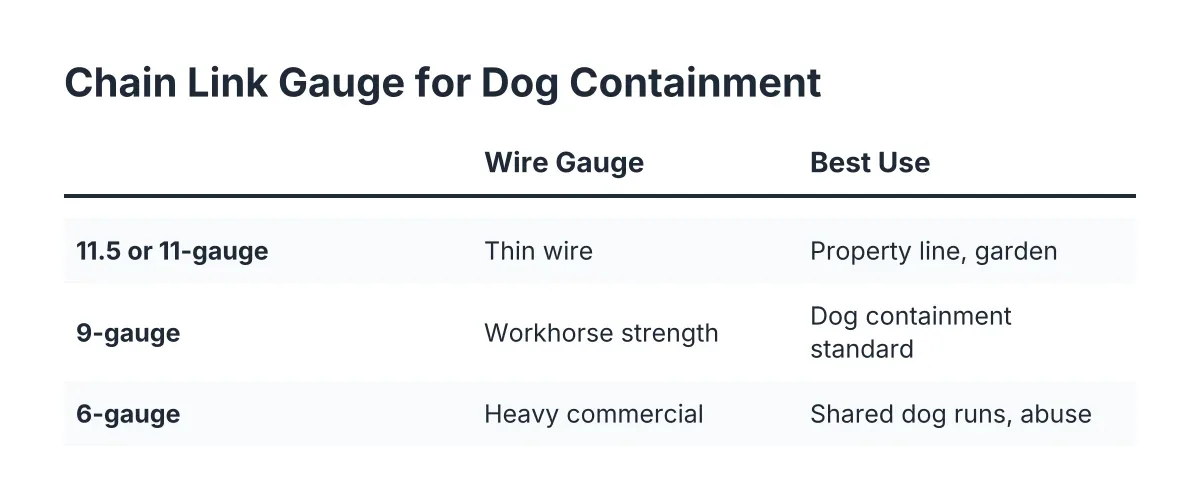
For dog runs and shared yards at rental properties in Anchorage, 9-gauge chain link fence fabric is the practical standard; 11-gauge or 11.5-gauge fabric is a light-duty product better suited to decorative borders than dog containment. Thicker wire resists stretching when a dog jumps on the mesh, and it shrugs off snow load pushed against the fence line by plowing.
Here is how the common residential and commercial gauges break down for this use:
- 11.5-gauge or 11-gauge: Thin wire. Fine for marking a property line or a garden. Large dogs can stretch and deform it over a season or two.
- 9-gauge: The workhorse for dog containment and most commercial perimeter work. Handles big dogs, tenant traffic, and snow pushed against the fence.
- 6-gauge: Heavy commercial fabric. Worth discussing for a shared dog run at a large complex, a storage yard, or anywhere the fence takes constant abuse.
The cost difference between light fabric and 9-gauge is small compared to the labor of replacing fabric later. Since labor is the bigger share of any fence installation, upgrading the wire is cheap insurance on a per-foot basis.
Step 3: Choose Mesh Size and Coating for Teeth, Paws, and Weather
A 2-inch diamond mesh is standard and works for most dogs. However, if a property allows small dogs or puppies, a smaller mesh keeps paws and snouts from getting caught in the diamonds. Smaller mesh also uses more wire per foot, which stiffens the fabric against climbing.
Coating matters more in Alaska than in milder states. Galvanized fabric is the baseline and resists rust through wet shoulder seasons. Vinyl-coated fabric adds a polymer layer over the wire, which protects it from moisture and is easier on a dog that chews or paws at the fence. Note that vinyl-coated wire is measured by its core gauge, so confirm the steel underneath is 9-gauge, not a thin core padded out with coating.
Black or dark green vinyl-coated mesh also disappears visually against trees and snow. For an apartment complex where curb appeal affects leasing, that is a real consideration, not a cosmetic afterthought.
Step 4: Set Fence Height for Jumpers and Snow
A 4-foot fence contains most calm, medium dogs. For athletic breeds, or any yard where snow piles up along the fence line, specify 5 or 6 feet. Packed snow berms act like a launch ramp in late winter; a dog standing on two feet of compacted snow clears a 4-foot fence without much effort.
In addition, check the zoning side before you order. The Municipality of Anchorage sets front-yard residential fence height limits at 4 feet in most zones, rising to 6 feet, or 8 feet for non-sight-obscuring fencing like chain link, in R-6, R-8, and R-9 districts, according to the Municipality of Anchorage. Side and rear yards, where most dog areas sit, give you more room. A fence company that works in Anchorage can confirm what applies to each parcel before the estimate is final.
For diggers, ask about a bottom tension wire or buried mesh skirt along the bottom rail line. That detail stops more escapes than an extra foot of height.
Step 5: Match the Framework to the Fabric
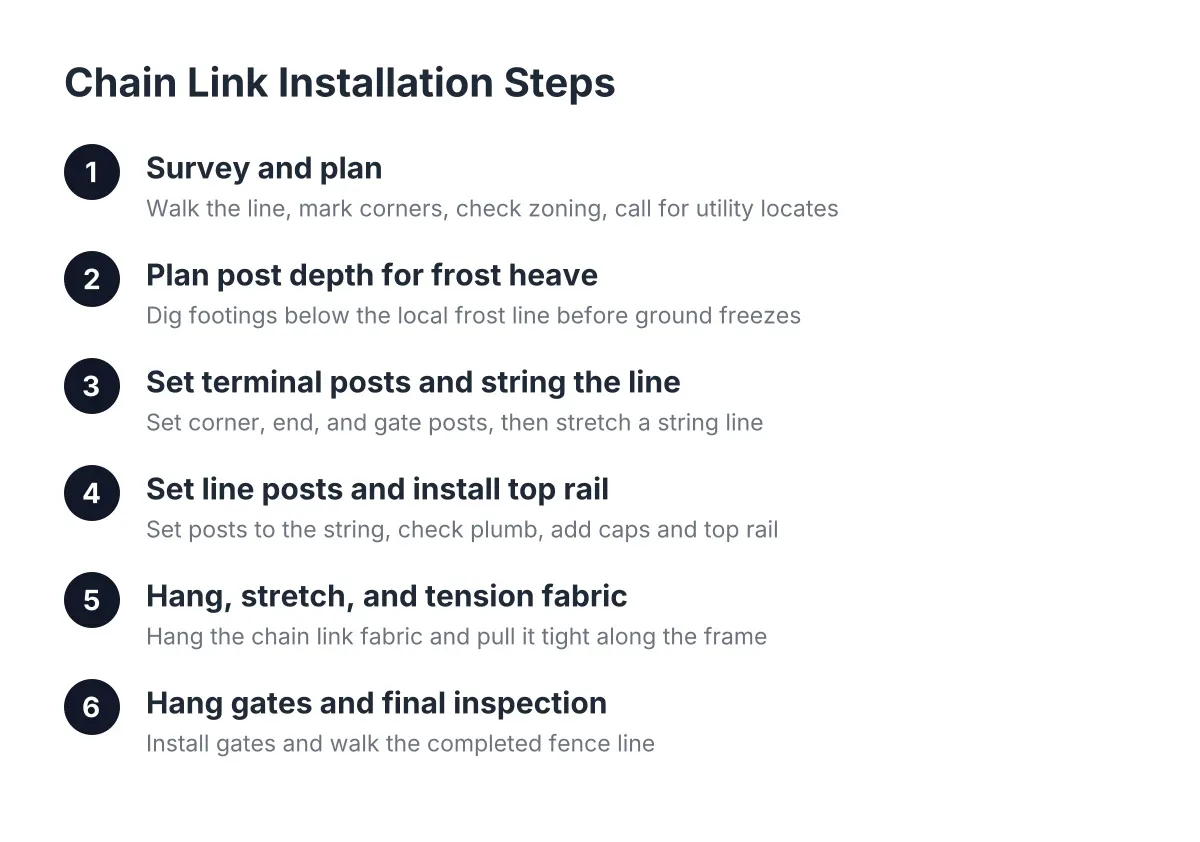
Heavy fabric on a light frame fails at the posts, not the mesh. The framework, meaning the fence posts, top rail, and tension bars, has to match the fabric gauge. Terminal posts at corners, ends, and gates carry the stretching tension of the entire run, so they are built thicker than line posts for a reason.
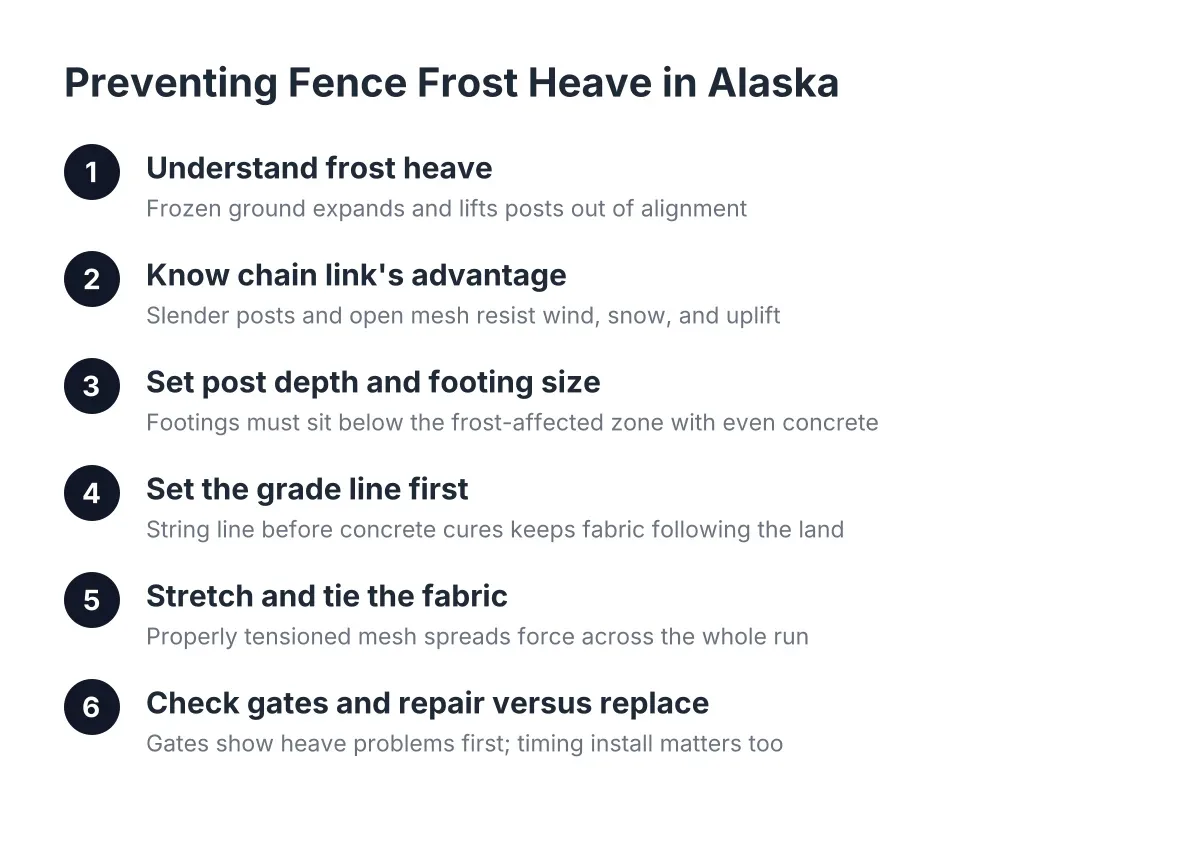
Anchorage ground adds its own requirement. Posts need to be set deep enough to sit below the frost line, or seasonal frost heave will walk them out of plumb and slacken the fabric. Loose fabric is exactly what a dog exploits. This is also why the install season here is compressed; digging and setting posts needs to happen before the ground freezes hard.
Gates deserve their own line on the spec sheet. At a rental property, the gate gets opened thousands of times a year and is the most common failure point. Specify a welded gate frame, a self-closing hinge where dogs are involved, and a latch a tenant can work with gloves on.
Step 6: Get the Attachment Details in Writing
How the chain link fence fabric is tied to the framework decides whether it stays tight. The fabric must be stretched with a fabric stretcher until the diamonds are taut, then tied to posts and rail with fence ties sized for the pipe diameter. Each tie should be bent so it traps the fabric link firmly against the pipe; a tie bent the wrong way stays loose enough for wind, or a dog, to pop it open.
Also ask that tie ends be bent flat against the mesh. Protruding wire ends snag dog coats and cut kids' hands, and at a rental property that is a liability note waiting to happen. These are small details, but they separate a crew that installs chain link fence runs every week from a handyman patch job.
Step 7: Budget by the Foot and Scope the Whole Portfolio
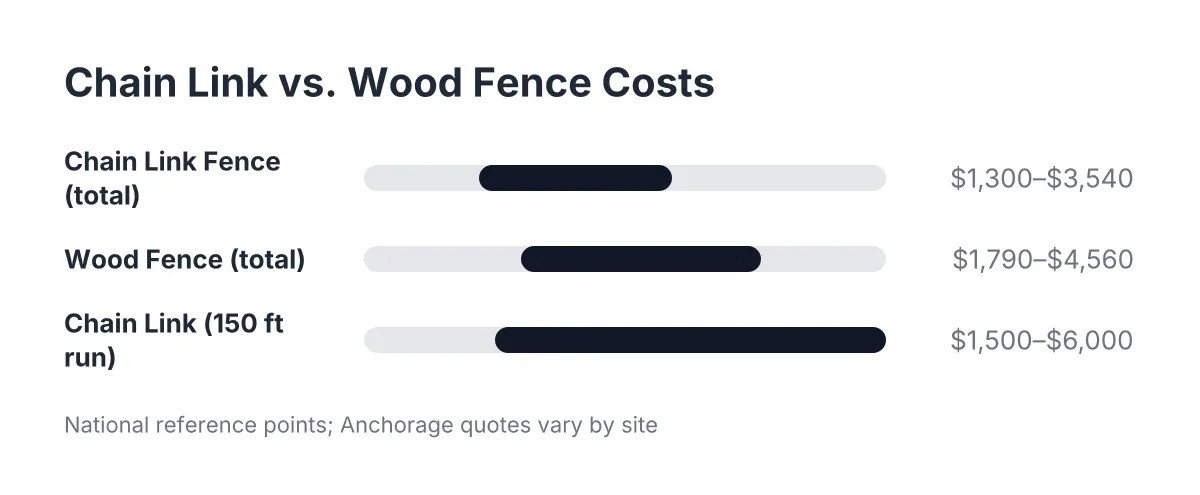
Price the job in ranges before you request bids. A chain link fence costs $10 to $40 per linear foot installed on average, roughly $1,500 to $6,000 for a 150-foot run, according to HomeGuide. Angi puts typical chain link totals at $1,300 to $3,540, compared to $1,790 to $4,560 for a similar wood fence. Heavier gauge, taller fabric, vinyl coating, gates, and rocky or frozen ground all push a specific job within those ranges.
For example, suppose a manager takes over a 24-unit complex with a sagging 11-gauge dog yard and two broken gates. In that scenario, re-stretching tired light fabric is money spent twice; replacing it with 9-gauge fabric on the existing sound posts, plus new gate hardware, usually costs less over five years than repeated fabric repair calls. When comparing estimates on chain link fence gauge specifications, a fence company can often reuse solid existing posts, which keeps the estimate down.
When you collect bids, ask three things: what gauge and coating the quote specifies, how deep posts are set for frost, and whether the company will bill and bid formally across multiple sites. A fair quote names the fabric spec in writing. "Chain link, 150 feet" is not a spec; "9-gauge galvanized, 2-inch mesh, 5 feet high" is.
When to Repair Fabric and When to Call a Pro
Small jobs are manageable in-house. A maintenance tech with a chain link fabric repair roll or a fabric patch can close a single damaged section, and tightening a few loose ties takes pliers and ten minutes. Those fixes keep a dog contained until a scheduled visit.
However, call a fence company for anything involving tension or posts: bellied fabric along a long run, leaning terminal posts, heaved footings, or a gate that no longer latches. Stretching fabric correctly requires equipment and technique, and post work in Anchorage soil is not a guess-and-dig task. One honest trade-off to accept: heavier fabric and deeper posts cost more upfront than the cheapest patch, and if you only need a short decorative border with no dogs, lighter fabric is a reasonable savings.
Anchorage Fence Co installs and repairs chain link fencing across Anchorage, from single dog yards to multi-property perimeter work, and bids commercial jobs as commercial jobs. If you manage properties with dogs behind tired fabric, reach out for a fence estimate and get the gauge question settled before the next escape call.
If you need chain link fence installation, Anchorage Fence Co can help.
Prefer to talk it through? Call (907) 312-2862 — a quick call is usually the fastest way to get a straight answer for your situation.