Chain Link vs. Wood Fence in Anchorage: How to Choose for Alaska Weather
Deciding between a chain link or wood fence setup, a full chain link run, or an all-cedar build comes down to three things in Anchorage: how the material handles frost heave and snow load, how much upkeep you can commit to, and how long you need it to last. This guide walks you through the decision step by step, the same way a fence company would talk it through on a site visit. Follow the steps in order and you will land on the right fence for your yard or your property portfolio.
Step 1: Start With What the Fence Has to Do
Before you compare materials, write down the fence's actual job. A fence that keeps a dog in during a January storm has different requirements than one that screens a hot tub from the neighbors.
Be specific:
- Containment: pets, kids, or site security. Chain link wins here because the fabric stays intact even when snow piles against it.
- Privacy: cedar or a privacy fence design. Chain link alone will not screen a view, though chain link privacy fence slats can close the gap partway.
- Property line marking: either material works; chain link usually costs less to run a long line.
- Security across multiple sites: property managers with apartment complexes or storage yards usually standardize on chain link because repairs are predictable and parts are interchangeable.
If you are reading this because snow load just flattened a section, this step still matters. A fence that failed once will fail the same way again unless the replacement matches the real job and the real conditions.
Step 2: Compare How Each Material Handles Anchorage Winters
This is where the decision gets made for most people. Anchorage ground moves. Freeze-thaw cycles push on posts and footings, and wet, heavy snow leans on anything vertical for months.
How chain link holds up
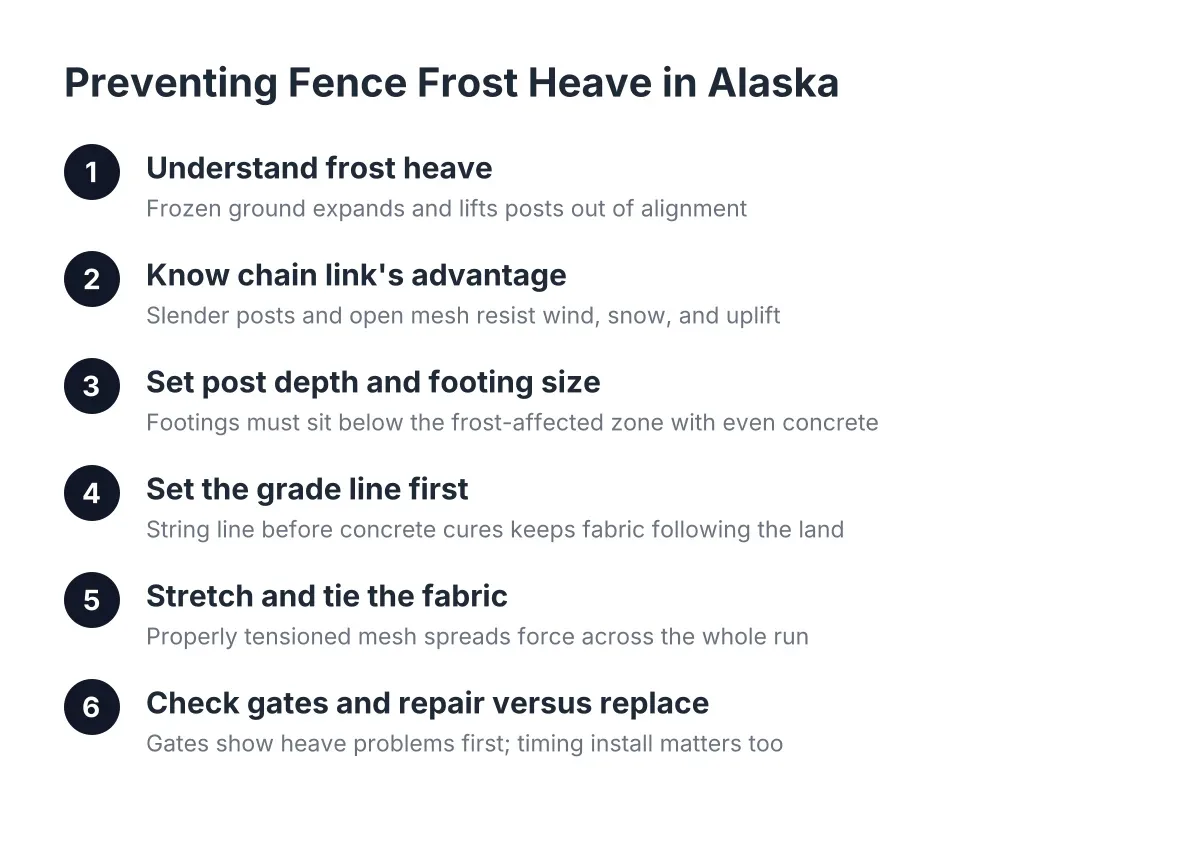
Chain link handles snow load well because wind and drifting snow pass through the mesh instead of pushing on a solid surface. Steel posts set below the frost line resist heave better than wood posts, and they do not rot at the ground line. When something does fail, say a car slides into a corner post, you replace that one section. The rest of the fence is untouched.
How wood holds up
A cedar fence acts like a sail and a snow dam. Solid panels catch wind, and plowed or drifted snow pressing against boards is a common cause of leaning sections by March. Wood fence posts are also the weak point over time. They can warp, twist, and rot at grade even when the panels above them have been repainted and maintained. A wood fence that looks fine in September can reveal three heaved or rotted posts at spring thaw.
The middle option: a chain link or wood fence combination
Some owners split the difference. A chain link and wood fence combo uses steel posts and rails for the structure with wood boards or slats attached to the framework, often with a chain link fence wood adapter or bracket made for the job. You get steel's resistance to rot and frost heave with wood's privacy and look. It costs more than plain chain link but avoids the most common wood failure, which is the post, not the panel.
Step 3: Weigh Chain Link vs. Wood Fence Costs
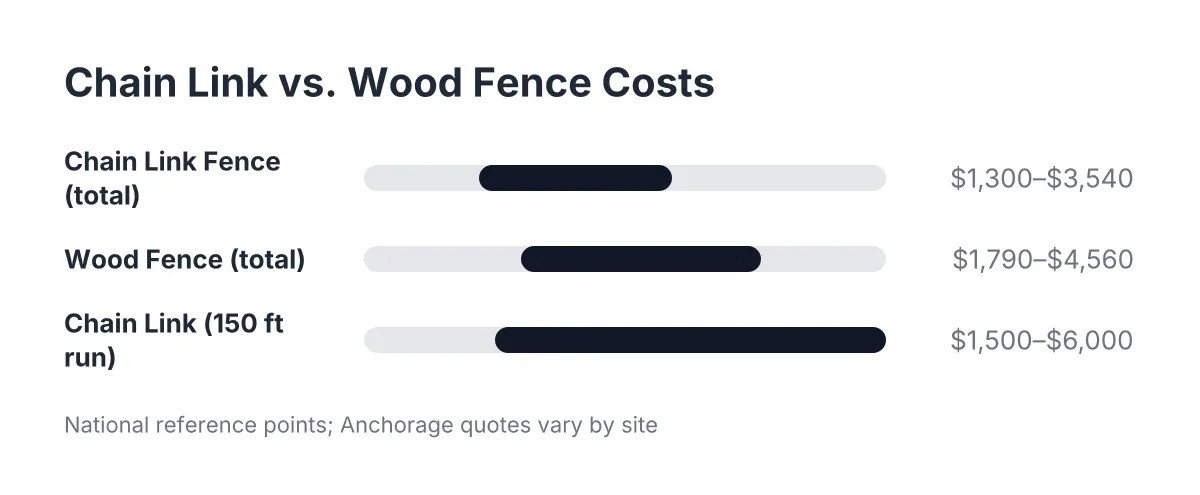
Chain link is the lower-cost option in nearly every comparison. According to Angi, chain link fencing averages $1,300 to $3,540 in total cost, while a wood fence of similar size runs $1,790 to $4,560. Angi also notes that a wood fence typically costs 20% to 30% more than a comparably sized chain-link fence. HomeGuide puts installed chain link at $10 to $40 per linear foot on average, roughly $1,500 to $6,000 for a 150-foot run.
Treat those as national reference points, not Anchorage quotes. Local cost factors to discuss in a fence estimate include:
- Digging depth required to get posts below the frost line
- Access for an auger on older in-town lots versus newer subdivisions
- Gate installation, since gates take the most abuse from snow and daily use
- Fabric height and gauge; a chain link fence fabric 4 ft run prices differently than a 6-foot security line
- Adding privacy slats, which raises chain link privacy fence cost but still usually lands under a full cedar build
However, the cheapest bid is rarely the cheapest fence. Pricing reflects construction practices, materials, and expected lifespan, not just labor. A bargain fence that heaves out of plumb in two winters costs more than a correct install did.
Step 4: Be Honest About Maintenance
Match the fence to the upkeep you will actually do, not the upkeep you intend to do.
Chain link needs close to nothing. Galvanized or vinyl-coated steel does not need staining, sealing, or painting. Check fence ties and tension after a hard winter and you are done. For a property manager running ten sites, that difference compounds fast across a portfolio.
Cedar needs regular work to reach its potential lifespan. Staining both sides of a wood fence, not just the street side, makes a real difference in how long the boards last. Skip it and you trade years of life for a weekend you saved. Even with perfect panel care, remember the posts: rot at the ground line takes down well-maintained wood fences all the time.
Step 5: Run the Lifespan Math
Think in decades, not seasons. A properly set chain link fence in Anchorage conditions commonly outlasts a wood fence because steel posts do not rot and the open fabric sheds snow load. US demand for chain link is forecast to grow to 225 million linear feet per year, according to Freedonia Group, in part because it is the long-haul workhorse of fencing.
Cedar can last a long time with disciplined staining and sound posts, and it offers privacy and warmth that chain link cannot match. The trade-off is that its lifespan depends on you. Chain link's lifespan mostly depends on the install.
For example, suppose a homeowner in South Anchorage wakes up to a cedar section flattened by snow sliding off the roof. In that scenario, the smart move is to check whether the posts failed or only the panels. If the posts and concrete footings are sound, an interim wood fence repair that reuses the footings keeps the dog in now, and the money spent is not wasted if a future fence replacement moves to steel posts.
Step 6: Check Rules Before You Decide on Height
Height limits can settle the decision between chain link or wood fence, especially in front yards. Anchorage Municipal Code sets front-yard residential fence height limits at 4 feet in most zones, rising to 6 feet, or 8 feet for non-sight-obscuring fencing like chain link, in R-6, R-8, and R-9 districts, according to the Municipality of Anchorage. In other words, open chain link can sometimes go taller than a solid wood fence in the same spot.
In addition, check HOA covenants if you have them. Some subdivisions require wood or ornamental fence styles facing the street and allow chain link only in back or side yards.
Step 7: Decide Repair or Replace, Then Pick Your Material
If you are scrambling after storm damage, do not let urgency push you into the wrong long-term choice. Use this quick test:
- One or two damaged sections, sound posts: repair. This is true for both materials.
- Wood posts rotted or heaved across multiple sections: a patch buys one season at best. Price a fence replacement, and consider steel posts this time.
- Chain link fabric damaged but framework straight: new fabric and ties, a fast and cheap fence repair.
- Older fence near end of life anyway: put repair money toward the fence you want, not the one that failed.
When you search for a chain link fence near me or call around for bids, ask each fence company how deep they set posts relative to the frost line, how they handle snow load on gates, and whether they will give a straight repair-versus-replace answer on site. A local installer who works Anchorage ground year after year will answer without hesitation.
One honest limit: no article can diagnose your posts. Footings, soil, and rot below grade need eyes on site, so have a professional assess the damage before you commit either way. The right answer in Anchorage is usually the fence built for the ground it stands in, whether that is plain chain link, cedar, or a chain link and wood fence hybrid that borrows the best of both.
If you need chain link fence installation, Anchorage Fence Co can help.
Prefer to talk it through? Call (907) 312-2862 — a quick call is usually the fastest way to get a straight answer for your situation.