Why a Chain Link Fence Survives Anchorage Freeze-Thaw Cycles Better Than Most
If you woke up this winter to a leaning post or a flattened fence section, you already know what Anchorage ground does to fences. A chain link fence handles that abuse better than almost any other fence type, and the reasons come down to physics, not marketing. This guide explains why frost heave and snow load destroy some fences and barely bother others, what a chain link fence actually needs to hold up here year-round, and how to tell whether your damaged fence needs a repair or a rebuild.
That matters whether you are patching storm damage before your dog finds the gap or planning the fence for a new build while the excavator is still on site. The problem is the same either way: Anchorage ground moves, and most fences are not built for ground that moves.
The Real Enemy Is Not Snow. It Is the Ground.
Most fence damage in Anchorage gets blamed on the storm that revealed it. A heavy dump of wet snow leans against a fence, a panel folds, and the storm takes the blame. But in many cases the fence was already compromised before the snow arrived. The post had lifted. The footing had cracked. Additionally, the snow just finished the job.
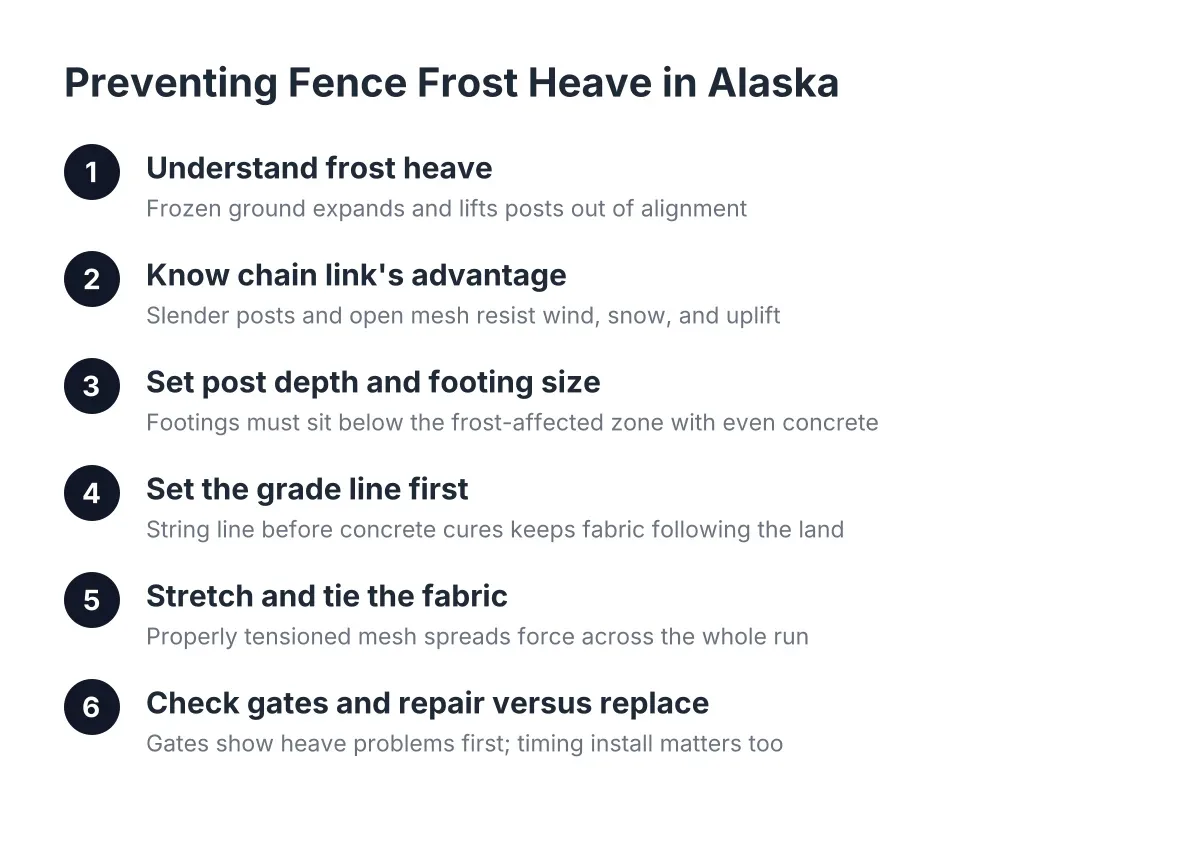
Here is what happens underground. Water in the soil freezes, and freezing water expands. That expansion pushes upward on anything buried in it, including fence posts and the concrete footings around them. Engineers call it frost heave. Homeowners call it "why is my post three inches higher than it was in September."
Then spring arrives and the ground thaws from the top down. The soil turns soft and saturated while the deeper layers stay frozen. A post that heaved over winter now sits loose in mud. One good wind, one snow slide off the roof, or one dog hitting the fence at speed, and it leans or falls.
This cycle repeats every year. A fence in Anchorage does not face one hard winter; it faces decades of freeze, lift, thaw, and settle. Any fence that survives here has to be designed around that cycle, not just around wind and weight.
Why Chain Link Handles Freeze-Thaw Better Than Solid Fences
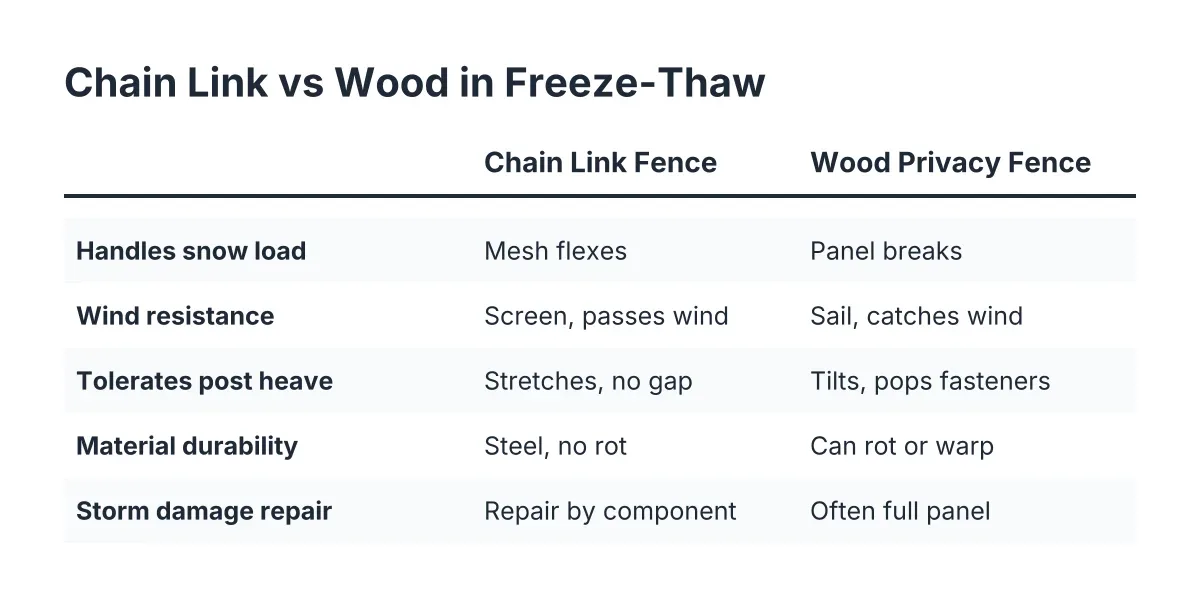
A chain link fence survives Anchorage winters for three structural reasons: the fabric flexes instead of breaking, the open weave sheds wind and snow load instead of catching it, and the whole system tolerates small post movement without failing. A wood privacy fence fights the ground. Chain link rides along with it.
Think about what snow load does to a solid fence. Wet snow piles against the boards, or slides off a roof onto a panel, and the full weight pushes on a flat surface. The boards have nowhere to give. Something breaks: a rail, a board, or the post itself. Wind works the same way; a solid privacy fence is a sail, and a chain link fence is a screen.
Chain link fabric is woven galvanized steel wire. When snow presses against it, the mesh deflects, the load passes through the openings, and the fabric springs back when the snow melts or gets cleared. The weak point is almost never the fabric. It is the framework, and the framework is steel pipe, which does not rot, warp, or dry-split the way wood does.
There is one more advantage that matters on older in-town Anchorage lots. When a post does heave slightly, chain link fabric tolerates it. The mesh stretches and shifts a little without opening a gap or snapping a connection. A wood panel fence with the same amount of post movement shows a tilted panel, popped fasteners, and a gap at the bottom your dog will find within the hour.
None of this means chain link is indestructible. A tree branch can crush the top rail. A truck can flatten a corner post. Decades of heaving can walk even a well-set line post out of plumb. The difference is that chain link damage is usually repairable one component at a time, which brings us to the question storm-damage homeowners actually care about.
Repair or Replace? Reading Your Damaged Chain Link Fence
A damaged chain link fence usually needs replacement only when multiple posts have heaved or the fabric is rusted through across long runs; most single-point damage, like one bent post, a sagging gate, or a torn fabric section, is a straightforward repair. The fence is a kit of parts, and parts can be swapped.
Here is how to read what you are looking at after a storm or a spring thaw:
- One leaning post, fabric intact. Usually a repair. The post gets reset or replaced, often with a new footing dug below the frost-affected zone, and the fabric gets re-tensioned and tied back on.
- Bent top rail from snow slide or a fallen branch. A repair. Top rail comes in sections joined by sleeves, so a crew can cut out the bent length and sleeve in new pipe.
- Torn or crushed fabric in one area. A repair. Chain link fabric can be unwoven at a strand, the damaged section removed, and new fabric spliced in.
- A gate that drags or will not latch. Often a repair; gate posts take the most stress on any fence, and frost heave hits them first. Resetting the gate post or adjusting hinges solves most of it.
- Several posts out of plumb along one run, footings cracked or lifted. This is where repair math gets honest. Resetting many posts approaches the cost of rebuilding the line, and a rebuild lets the crew set every footing correctly at once.
- Fabric rusted through at the bottom across long stretches. On a fence that old, patching one section buys a season, not a decade. A fence replacement conversation is fair at that point.
For example, suppose a homeowner in a Sand Lake neighborhood finds a fence section flattened after a March snow slide off the garage roof. Two line posts snapped at the ground and the fabric is kinked but whole. In that scenario, a typical crew would replace the two posts, set new footings, re-stretch the existing fabric, and tie it off; that is a repair measured in parts and a day of work, not a full fence replacement.
Be cautious of two extremes. A contractor who pushes full replacement for a single bent post is selling, not assessing. But a patch on a fence where every post has heaved is money spent twice. A straight answer names which posts are the problem and why, and any honest fence estimate should be able to do that on site.
What a Chain Link Fence Built for Anchorage Actually Includes
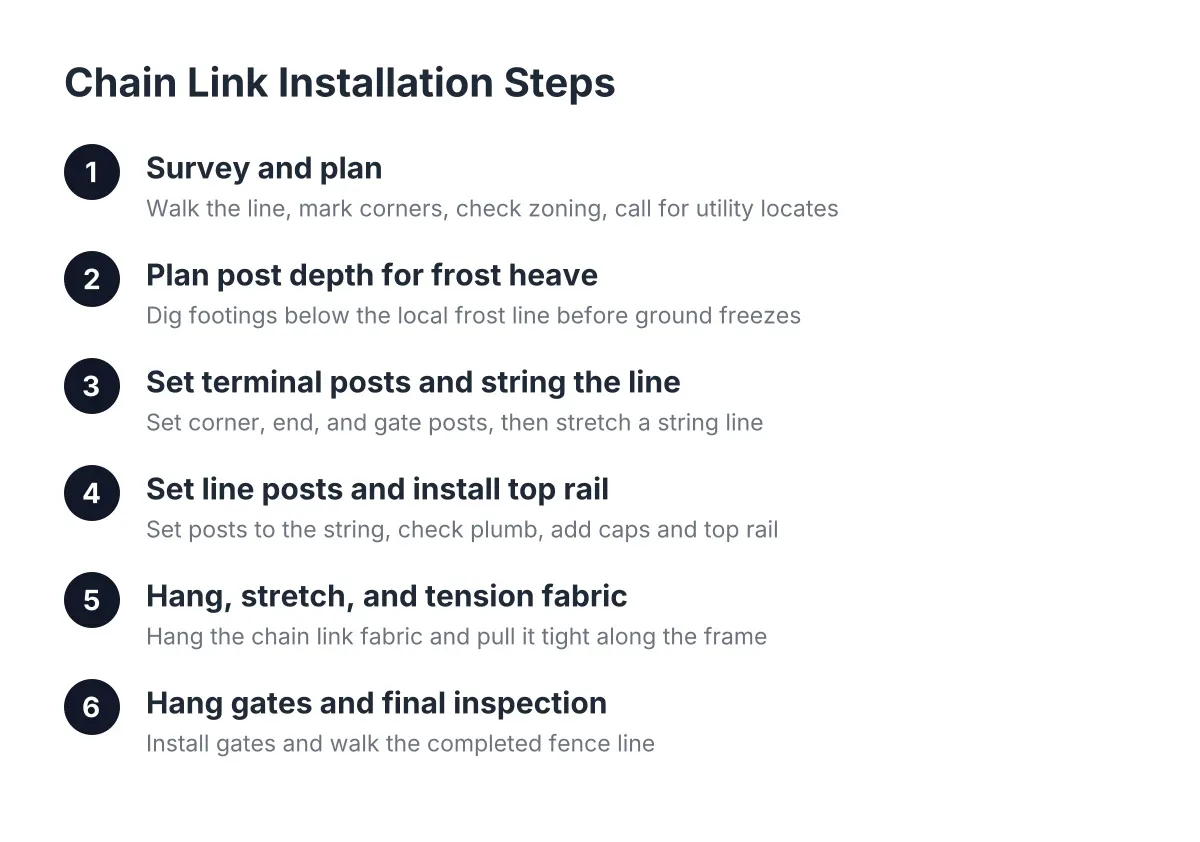
A properly installed chain link fence in Anchorage includes footings dug below the frost-affected depth, galvanized steel framework sized for snow load, tensioned fabric tied to the frame at correct intervals, and braced corner, end, and gate posts. The underground work is where Alaska installs differ most from Lower 48 installs, and it is where cheap jobs fail.
Posts and footings: the part you never see
Fence posts are the foundation of the whole system. Everything above ground depends on them staying put, and in Anchorage, staying put means getting below the zone where seasonal freezing grips and lifts the footing. For reference, Anchorage's building code amendment sets the minimum exterior footing depth at 42 inches below finished grade as a frost-protection standard for foundations, according to PermitsGuide.com. Fence posts are not held to the same code as house foundations, but the principle is identical: shallow footings in this ground get lifted.
That depth requirement also explains why the install season matters here. Once the ground freezes hard, digging post holes turns from routine work into a fight. Crews plan the digging before deep winter sets in, which is why fall scheduling in Anchorage fills up and why a storm-damaged fence in January sometimes gets a temporary fix until the ground opens up.
Framework and fabric
The visible parts of a chain link system are few and simple:
- Terminal posts at ends, corners, and gates, which take the fabric tension
- Line posts spaced along the run
- Top rail, which carries snow and keeps the line straight
- Fabric, the woven galvanized wire mesh, commonly in heights like 4 feet for yards and taller for security runs
- Tension bars, bands, and fence ties that attach fabric to the frame
- Gate hardware, hinges, latches, and the gate frame itself
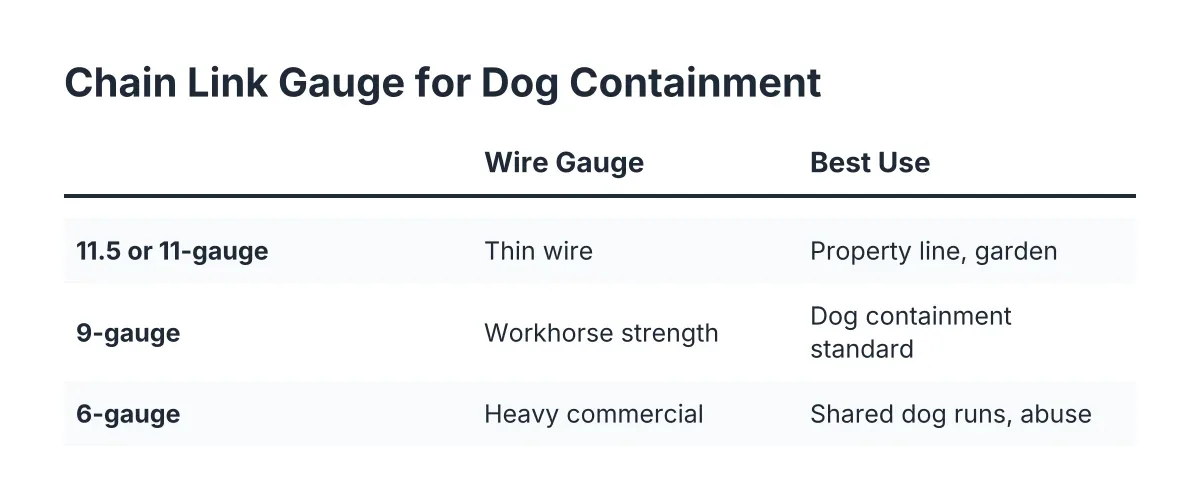
One detail worth knowing: fence ties come in different lengths matched to the pipe diameter they wrap. Small parts like that are why a chain link fence material list runs longer than homeowners expect; if you have ever searched for a chain link fence material list PDF, you have seen how many fittings a clean install takes. Heavier wall pipe and heavier gauge fabric cost more, and in a snow load climate the heavier spec earns its price.
Height, privacy, and local rules
Anchorage Municipal Code sets front-yard residential fence height limits at 4 feet in most zones, rising to 6 feet, or 8 feet for non-sight-obscuring fencing like chain link, in R-6, R-8, and R-9 districts, according to the Municipality of Anchorage. That "non-sight-obscuring" allowance is a quiet advantage for chain link; because you can see through it, some districts let it run taller than a solid fence could.
If you want screening, chain link fence privacy slats weave into the mesh after install. Keep in mind the trade-off: slats add wind and snow resistance, which transfers more load to the posts. On a fence planned for slats, the framework spec should account for that from the start.
Where Chain Link Fits, and Where It Does Not
Chain link is the practical choice when the job is containment, security, and survival in moving ground on a working budget. It is not the choice when curb appeal leads the decision. Knowing which job you are hiring the fence to do makes the material choice easy.
Cost is the first reason people land on chain link. Chain link fencing averages $1,300 to $3,540 in total cost, compared to $1,790 to $4,560 for a wood fence of similar size, according to Angi. HomeGuide puts installed costs at $10 to $40 per linear foot on average, roughly $1,500 to $6,000 for a 150-foot run. Treat those as national reference ranges, not Anchorage quotes; local chain link fence costs depend on footing depth, ground conditions, fabric height and gauge, gate count, and site access, which is why a site visit beats any online cost calculator.
Durability in freeze-thaw ground is the second reason, and for large-acreage owners, it compounds. A long perimeter run multiplies every maintenance task. Steel pipe and galvanized mesh ask for almost nothing year over year, while a long wood fence line means staining, board replacement, and posts that rot at the soil line even when the boards above have been maintained. Chain link remains the default for long runs and dog yards for a reason; Freedonia Group market research forecasts US demand for chain link fencing to grow 1.0% per year to 225 million linear feet.
Where chain link loses is appearance and screening. On a new build or a renovated lot where the fence frames the house, a cedar fence or an ornamental metal fence earns its higher price. Plenty of Anchorage properties split the difference: cedar privacy fence along the street-facing side, chain link around the dog run and the back acreage. That hybrid approach puts the money where the neighbors see it and the durability where the ground and the dog test it.
One honest caveat: on sites with severe drainage problems or heavily disturbed fill, even a correctly set chain link post can heave over time. Those sites need a professional assessment of the ground before anyone quotes a fence, and sometimes they need drainage work first.
DIY, or Call a Fence Company?
A homeowner can safely handle small chain link fixes: re-tying loose fabric with new fence ties, replacing a latch, tightening gate hinges, or weaving privacy slats. The jobs that call for a fence company are the ones that involve the ground or the tension in the fabric, because both can go wrong in ways that cost more than the service call.
Call a pro when you see any of these:
- A post that moved, leaned, or lifted. Resetting it means digging a correct footing below the frost-affected depth, and in 2026 that still means a utility locate before anyone digs.
- Fabric that needs stretching. Chain link fabric is installed under tension with a come-along and tension bars. Loose fabric sags, catches snow, and invites dogs under the bottom.
- Gate posts out of plumb. Gates concentrate stress, and a gate reset done wrong fails again by spring.
- Any damage along a shared property line. Get the line confirmed before posts move; a fence rebuilt a foot onto the neighbor's lot is an expensive mistake.
- Storm damage you need secured fast. A crew can brace or temporarily fence a gap the same visit they assess it, which matters when the dog is the deadline.
When you compare installers, two questions sort them quickly. First, how deep do you set posts here and why; a company that works in Anchorage should talk about frost heave without being prompted. Second, for repair calls, will you tell me on site whether this is a repair or a replacement, and itemize which posts are the problem. A fair quote names the parts, the footage, the gate count, and the footing work; a vague lump sum hides the corners that get cut underground where you cannot inspect them.
Getting a Straight Answer on Your Fence
Whether a snow slide just flattened a section or your new lot has no fence at all, the next step is the same: get eyes on the site. Ground conditions, access, fabric height, and gate placement change the answer from one Anchorage lot to the next, and no article can measure your yard.
Anchorage Fence Co installs and repairs chain link, cedar, ornamental, and metal fencing built around Anchorage ground: footings set for frost, framework sized for snow load, and straight answers about whether your damaged fence needs a repair or a replacement. Reach out for a fence estimate, and bring your questions about posts and footings; the answers you get will tell you everything about the fence you will get.
If you need chain link fence installation, Anchorage Fence Co can help.
Prefer to talk it through? Call (907) 312-2862 — a quick call is usually the fastest way to get a straight answer for your situation.