Chain Link Fence Terms Explained: A Plain-English Glossary
If you are pricing a fence in Anchorage and the quotes read like a foreign language, this chain link fence glossary is for you. It covers the terms homeowners and property managers hit most often when comparing fence estimates. Each entry gives you a plain definition first, then explains why the term matters to your project and your budget. Read it once and you can question any line on a quote without guessing.
- Chain Link Fabric: the woven wire mesh itself
- Gauge: how thick the wire is
- Mesh Size: the size of the diamond openings
- Terminal Post: the heavy posts at ends and corners
- Line Post: the posts between corners
- Top Rail: the horizontal pipe along the top
- Tension Bar: the flat bar that locks fabric to posts
- Tension Band: the clamps that hold the tension bar
- Tie Wire: small wires that fasten fabric to rails and posts
- Galvanized Coating: zinc layer that fights rust
- Vinyl-Coated Chain Link: color coating over the wire
- Post Footing: the concrete anchor around each post
- Frost Heave: ground movement that pushes posts up
- Frost Line: the depth the ground freezes to
- Gate Hardware: hinges, latches, and frames for gates
- Privacy Slats: inserts that block the view through the mesh
- Linear Foot: how fence length is measured and priced
- Property Line Survey: the map showing where your fence can go
Chain Link Fence Glossary: Parts of the Fence Itself
These are the materials and components you will see itemized on estimates for a chain link fence glossary, and on most quotes. Knowing them helps you compare two estimates piece by piece instead of just by the bottom line.
Chain Link Fabric
Chain link fabric is the woven wire mesh that makes up the body of the fence. It comes in rolls and gets stretched between posts during installation. The fabric is where most of the visible quality lives, so quotes should name its height, wire thickness, and coating. If a quote just says "fence material," ask for those three details before you compare prices.
Gauge
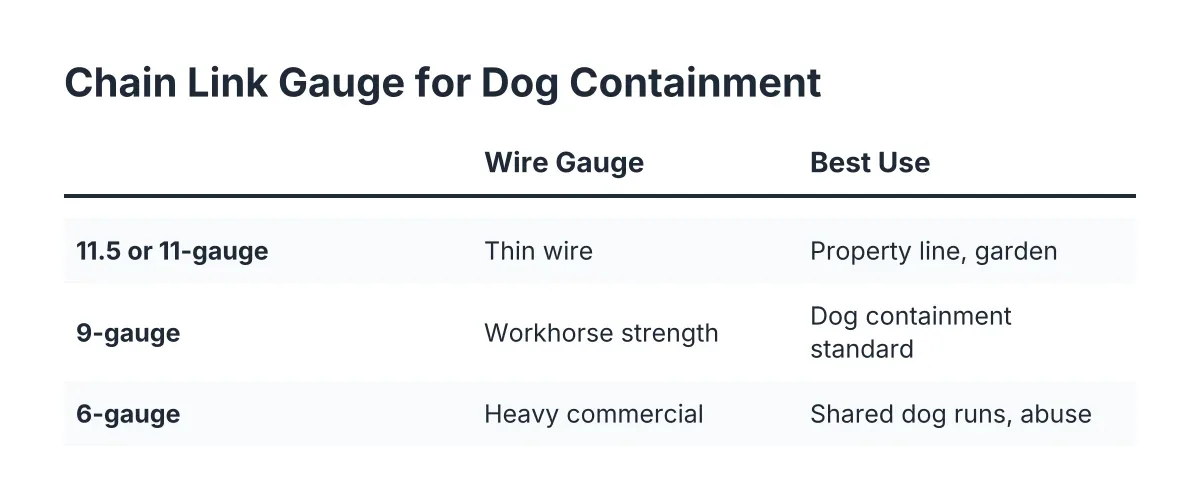
Gauge means the thickness of the wire used in the fence fabric, and the number runs backward: a lower gauge is thicker, stronger wire. A 9-gauge fence is heavier duty than an 11-gauge fence. Thicker wire costs more but handles impacts, pets, and heavy snow load better. If two quotes are far apart in price, a different gauge is one of the first things to check.
Mesh Size
Mesh size is the width of the diamond-shaped openings in the fence fabric. Smaller diamonds use more wire, which makes the fence stronger, harder to climb, and more expensive. Larger diamonds cost less and work fine for marking a boundary or containing a large dog. Your quote should list mesh size alongside gauge so you know exactly what fabric you are buying.
Terminal Post
A terminal post is a heavier post set at every end, corner, and gate opening of the fence. These posts take the full pulling force when the fabric is stretched tight, so they are thicker and set in larger footings than the posts in between. Counting terminal posts on your layout explains part of your cost; a yard with many corners needs more of them. A quote that skimps on terminal posts is a fence that sags early.
Line Post
A line post is one of the regular posts spaced along the straight runs of fence between corners. Line posts carry the fabric and the top rail but not the heavy stretching tension, so they are lighter than terminal posts. Post spacing affects both cost and strength, since closer spacing means more digging and more material. In Anchorage, solid line posts matter because snow load pushes against the fabric all winter.
Top Rail
A top rail is the horizontal pipe that runs along the top of the fence from post to post. It keeps the fabric height even, stiffens the whole run, and gives the fence its clean finished line. Some budget fences swap the rail for a tension wire; that saves money but gives up rigidity. Ask which one your quote includes.
Tension Bar
A tension bar is a flat metal bar woven vertically through the end of the fence fabric where it meets a terminal post. It spreads the stretching force across the full height of the fabric so the mesh pulls evenly instead of tearing at one point. You will see one at every end, corner, and gate. Missing or bent tension bars are a common reason a fence looks loose near its ends.
Tension Band
A tension band is a metal clamp that wraps around a terminal post and bolts to the tension bar. Several bands run up each terminal post, holding the stretched fabric in place. They are cheap parts that do heavy work, which is why repairs often start here. If your fence fabric is pulling away from a corner post, loose or broken tension bands are the likely cause.
Tie Wire
Tie wire means the short wires or clips that fasten the fence fabric to the top rail and line posts. Installers space them regularly so the fabric cannot flap or sag between posts. Ties are small, but skipped or sparse ties show up fast as a wavy fence line. On a repair call, replacing ties is one of the cheaper fixes a fence company can make.
Galvanized Coating
A galvanized coating is a layer of zinc applied to steel wire and posts to stop rust. It is the standard finish on chain link and the reason the material lasts for decades outdoors. Coating quality varies, so ask whether both the fabric and the framework are galvanized. In a wet freeze-thaw climate like Anchorage, that coating is doing year-round work.
Vinyl-Coated Chain Link
Vinyl-coated chain link is standard galvanized fabric covered with a bonded color coating, usually black, green, or brown. The coating adds a second layer of rust protection and helps the fence blend into trees and landscaping. It costs more than plain galvanized but softens the industrial look that turns some homeowners away. Many people are surprised how well a black vinyl-coated fence disappears against a yard.
Understanding Chain Link Fence Glossary Terms for Ground, Footings, and Alaska Conditions
This section matters more in Anchorage than almost anywhere else. How the posts go into the ground decides whether a chain link fence stands straight in ten years or leans after two winters. If you want the longer story, read why a chain link fence survives Anchorage freeze-thaw cycles better than most.
Post Footing
A post footing is the concrete anchor poured around the base of a fence post in the ground. The footing holds the post plumb against wind, snow load, and the pull of the stretched fabric. Footing depth and shape matter most in cold climates, where shallow footings get pushed around by freezing soil. When a quote mentions footing depth, that is a sign the installer is planning for local ground, not just national habit.
Frost Heave
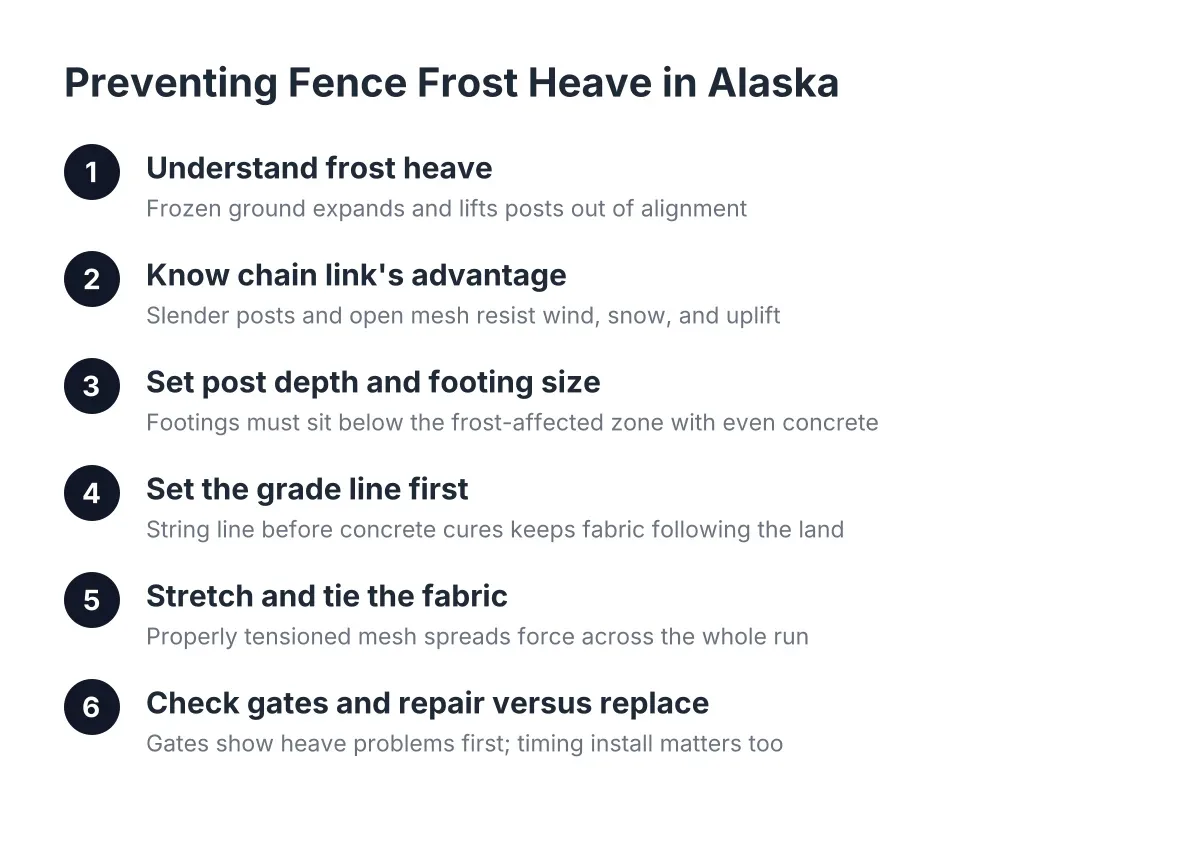
Frost heave is the upward push of soil when the water in it freezes and expands. It is the main reason fence posts in cold climates tilt, rise, or pop out of line over the years. Posts set too shallow catch that movement every winter; posts set below the freezing depth largely avoid it. If an Anchorage installer talks about frost heave unprompted, that is a good sign they build for the ground here.
Frost Line
The frost line is the depth to which the ground freezes in winter in a given area. Fence posts need footings that reach below that depth so freezing soil cannot grab and lift them. The frost line varies by region and soil, so ask your installer how deep they set posts for your lot rather than trusting a one-size answer. Deeper digging takes more labor, which is part of why cold-climate installs cost more than the same fence down south.
Gate Hardware
Gate hardware means the hinges, latches, and frame parts that make a fence gate swing and close. Gates are the moving part of any fence, so hardware quality decides whether the gate still latches cleanly after years of use. Snow piled against a gate stresses hinges and posts, so heavier hardware earns its cost in Anchorage. A quote should list gates separately, since each one adds a frame, hardware, and an extra terminal post.
Privacy Slats
Privacy slats are strips of plastic or aluminum woven vertically through the fence fabric to block the view. They turn an open mesh fence into a partial privacy fence without replacing it. Slats add wind and snow resistance against the fabric, so the posts and footings need to be up to the extra load. They cost less than switching to a full privacy fence, which makes them a common middle option.
Pricing and Paperwork Terms
These terms show up on estimates and contracts rather than in the yard. They decide how the numbers are built.
Linear Foot
A linear foot is a straight-line measurement of fence length, and it is how most fence installation is priced. Measure along the fence line, not the area of your yard; a price per linear foot times your total footage gives the rough material and labor base. Corners, gates, slopes, and ground conditions then adjust that base. For a fuller breakdown of what moves the number, see our guide to chain link fence cost factors.
Property Line Survey
A property line survey is a professional map showing the exact legal boundaries of your lot. Fences must sit on or inside your line, and a survey is the only reliable way to know where that line is. Older in-town Anchorage lots in particular can have fuzzy or disputed boundaries, so do not rely on an old fence or a neighbor's memory. Sorting the line out before install day prevents the most expensive fence problem there is: moving a finished fence.
Using These Chain Link Fence Glossary Terms
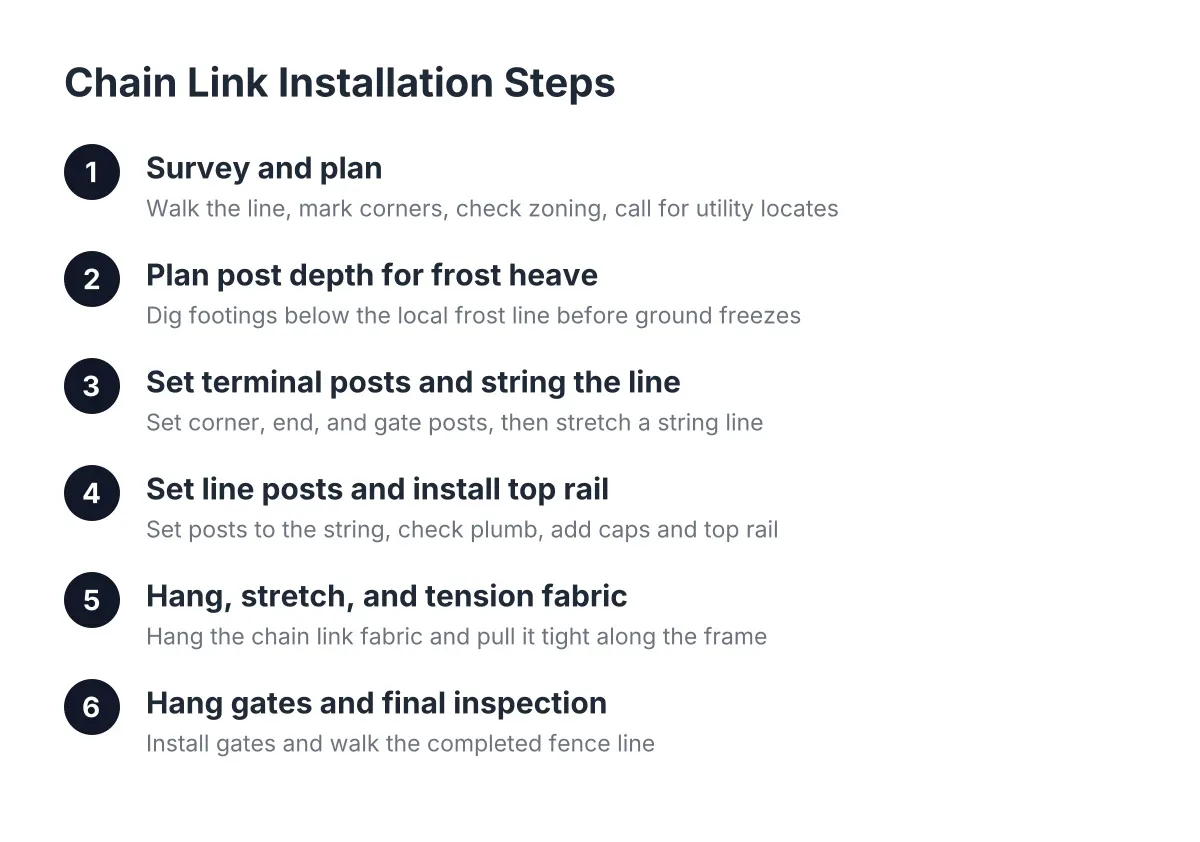
What this glossary gives you is the ability to read a fence estimate line by line instead of trusting the total. You can now ask about gauge, footing depth, terminal post count, and gate hardware, and understand the answers. If you want to see how these parts come together on a real project, our chain link fence installation page walks through the process.
If you need chain link fence installation, Anchorage Fence Co can help.
Prefer to talk it through? Call (907) 312-2862 — a quick call is usually the fastest way to get a straight answer for your situation.