Corrugated Metal Fence Terms Explained: A Plain-English Glossary
If you are pricing a metal fence in Anchorage, the quotes come loaded with trade words that nobody stops to explain. This corrugated metal fence glossary translates those terms into plain English so you can read an estimate line by line, ask sharper questions, and spot a thin spec before you sign anything. It is written for homeowners and property managers, not contractors. Skim the index, then jump to the terms you keep seeing.
- Corrugated Panel: the wavy metal sheet itself
- Gauge: how thick the metal is
- Rib Profile: the shape of the waves
- Galvanized Coating: zinc layer that fights rust
- Powder Coating: baked-on color finish
- Fence Posts: the vertical backbone
- Post Footing: concrete that holds each post
- Frost Line: how deep the ground freezes
- Frost Heave: ground movement that tilts posts
- Rails (Stringers): horizontal supports for panels
- Fasteners: screws that hold panels on
- Panel Overlap: where two sheets join
- Gate Hardware: hinges and latches
- Snow Load: winter weight against the fence
- Property Line Survey: confirming where the fence can go
- Fence Estimate: the written scope and price
- Linear Foot: how fence length is measured
- Setback: required distance from the line
The Metal Itself
These are the words that describe the panels, their thickness, and their finish. Get these right and half the quote makes sense.
Corrugated Metal Fence Panel
A corrugated panel is a sheet of steel formed into a repeating wave or rib pattern that makes thin metal stiff and strong. The waves let a light sheet resist bending, which is why the same material shows up on roofs and barns. On a corrugated metal fence, these panels attach to a wood or steel frame and do the privacy work. If a quote lists panel count and size, you can check it against your fence length.
Gauge
Gauge means the thickness of sheet metal, and the numbering runs backward: a lower gauge number means thicker, heavier steel. Thicker panels dent less, flex less in wind, and stand up better to packed snow against the fence line. Ask any fence company what gauge they price by default, and whether a step up is worth it on your exposed side. Two quotes with different gauges are not the same fence, even if the drawings look identical.
Rib Profile
A rib profile is the specific shape and depth of the waves rolled into a metal panel. Deeper ribs add stiffness; shallower ones look sleeker and more modern. Profile also affects how panels overlap and how shadows fall across the fence, which changes the look more than most people expect. Ask to see a sample panel in person before you commit, because photos flatten the ribs.
Galvanized Coating
A galvanized coating is a layer of zinc bonded to steel to slow rust. Bare steel rusts fast in a wet freeze-thaw climate, so galvanizing is the baseline protection you should expect on any metal fence panel in Anchorage. If a panel gets cut or scratched during fence installation, the exposed edge is where corrosion starts first. A careful installer seals or orients cut edges to limit that.
Powder Coating
Powder coating is a dry colored powder sprayed onto metal and baked into a hard, even finish. It resists chipping and fading better than brushed-on paint and comes in a wide color range. On a fence, powder coat usually sits on top of galvanizing, so you get rust protection plus color. If your quote says "bare galvanized," you are getting the silvery industrial look, which some people want and some do not.
Posts, Footings, and Anchorage Ground
This is the part of a corrugated metal fence glossary that matters most here, because Anchorage ground moves. A fence that ignores frost will lean by spring.
Fence Posts
Fence posts are the vertical members, usually steel or treated wood, that carry the whole fence. Everything else hangs off them, so post size, spacing, and depth decide whether the fence stays straight. Closer post spacing costs more up front but handles wind and snow load better. When you compare estimates, compare post specs first and panel looks second.
Post Footing
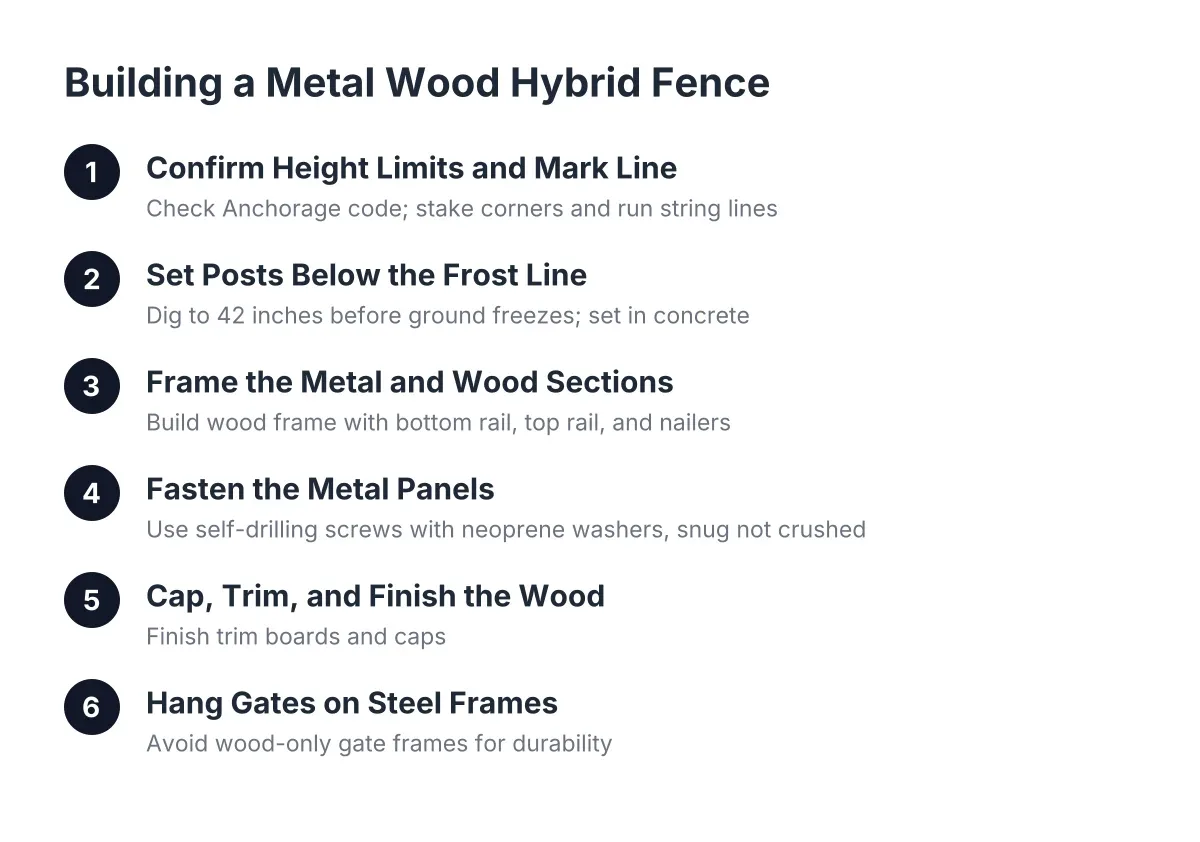
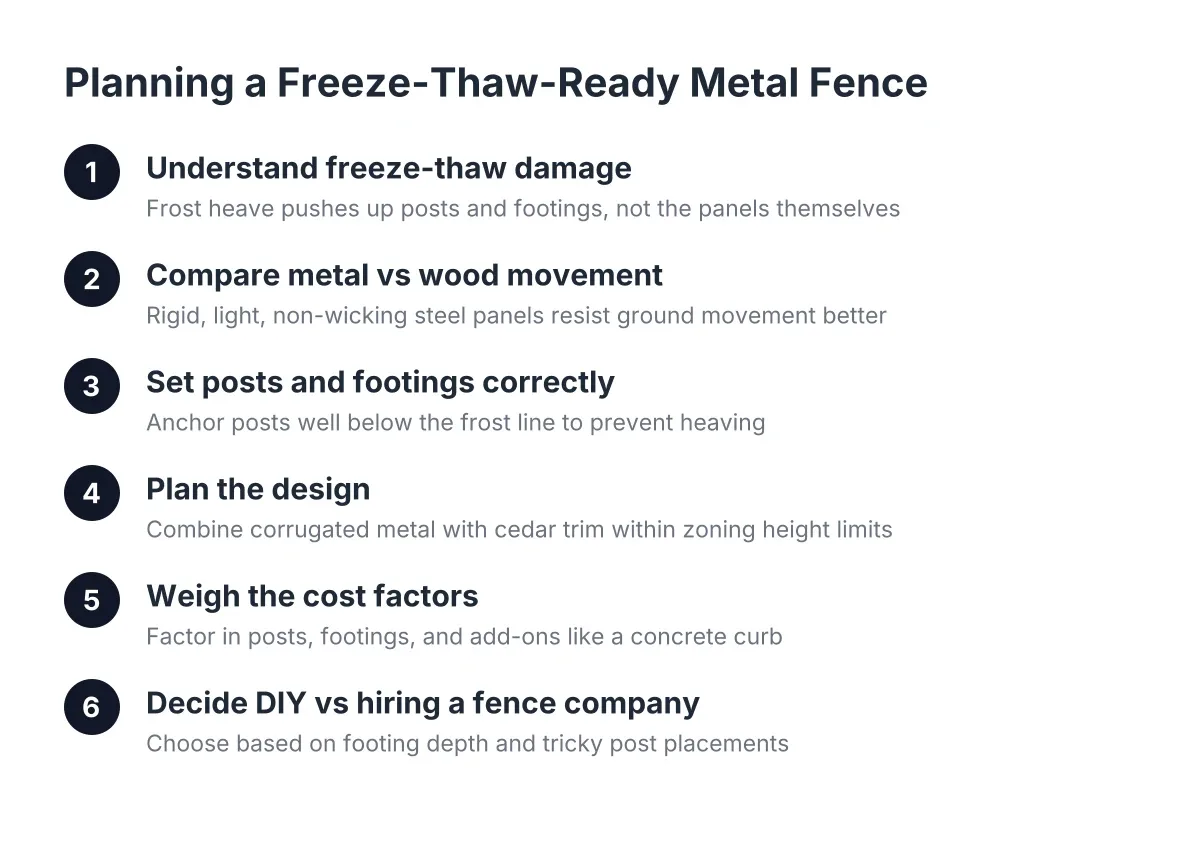
A post footing is the concrete base poured around a fence post to anchor it in the ground. In Anchorage, footings have to reach below the depth where the ground freezes, or the seasonal freeze will grab and lift them. A quote that mentions footing depth and concrete per post shows the installer has thought about your soil. A quote that skips it is worth a follow-up question.
Frost Line
The frost line is the depth to which the ground freezes in winter. Footings and posts set above it get pushed around every freeze-thaw cycle; footings set below it stay put. The exact depth varies by site and soil, so treat it as a condition to plan around rather than a single number. Any Anchorage fence company should be able to explain how deep they dig and why.
Frost Heave
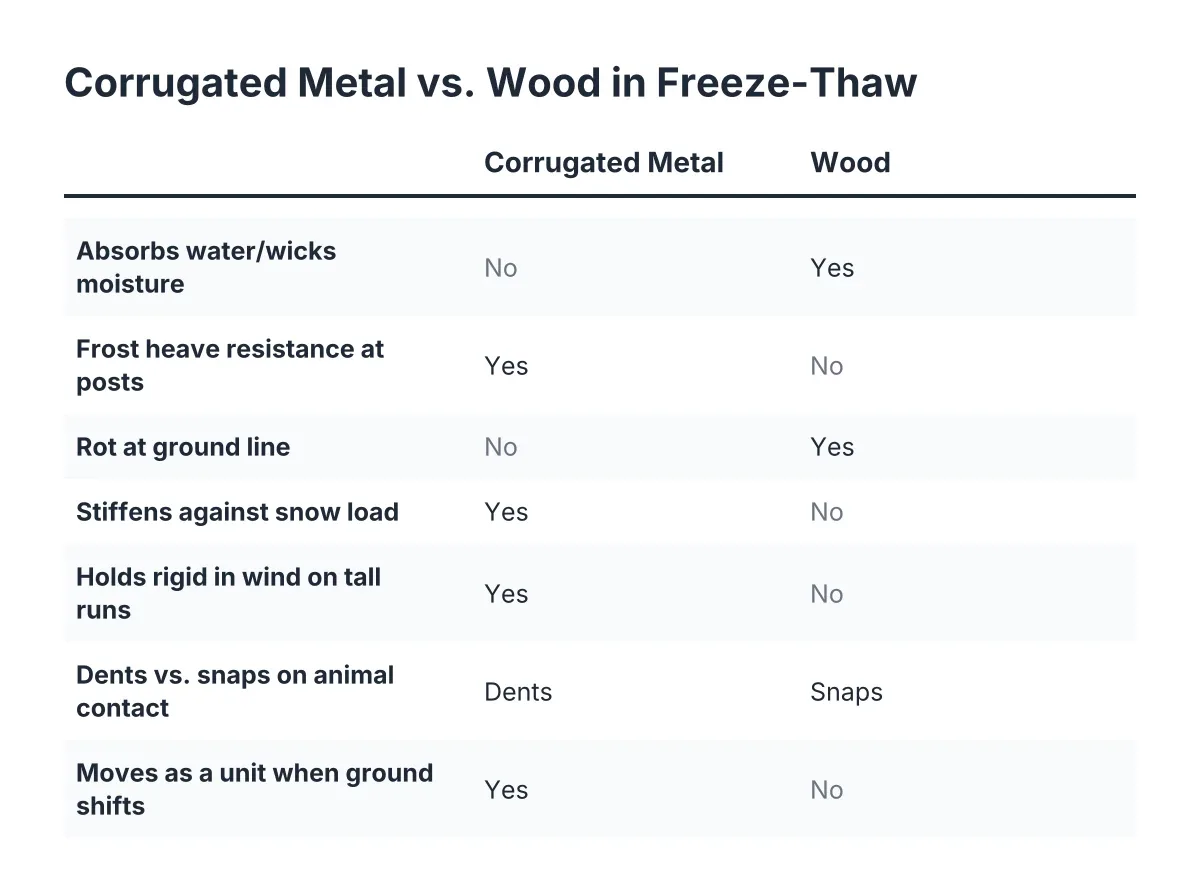
Frost heave is the upward push of soil as water in the ground freezes and expands. It is the main reason fences in cold climates end up tilted, with gates that no longer latch. Shallow footings, poor drainage, and frost-prone soils all make it worse. If your current fence leans a little more each spring, frost heave is the likely cause, and fence repair that ignores it will not last.
Rails (Stringers)
Rails, also called stringers, are the horizontal supports that run between posts and carry the metal panels. Most corrugated fences use two or three rails per section, depending on height and expected wind. Too few rails lets panels rattle and flex; the fence sounds cheap even if the metal is good. Ask how many rails per section your quote includes.
Fasteners
Fasteners are the screws that attach corrugated panels to the rails, usually self-drilling screws with a rubber washer under the head. The washer seals the hole so water cannot sneak in and start rust at every attachment point. Cheap or mismatched fasteners are a quiet failure point; they corrode, streak the panel, and loosen over time. Good installers match fastener coating to the panel coating.
Panel Overlap
Panel overlap is the strip where the edge of one corrugated sheet laps over the next so the ribs nest together. Proper overlap hides the seam, sheds water, and keeps a continuous look down the fence line. Skimping on overlap stretches the material further but leaves gaps and a wavy appearance. It is a small detail that separates tidy fence installation from rushed work.
Gate Hardware
Gate hardware means the hinges, latches, and drop rods that make a gate in your fence open, close, and lock. Gates fail before fence panels do because they move every day and carry their weight on two posts. In winter, snow and ice test latches hard, so heavier hardware and stout gate posts pay off. If gate installation is part of your project, ask what hardware is specified, not just the gate size.
Planning, Paperwork, and Price
Snow Load
Snow load is the weight of accumulated snow pressing on a structure, including snow plowed or shoveled against a fence. A solid corrugated fence catches drifting snow the way a privacy fence of any material does, and months of that weight strain posts and rails. Plan where plowed snow will go before the fence goes in. An installer who asks about your snow storage spots is thinking ahead for you.
Property Line Survey
A property line survey is a professional measurement that marks exactly where your lot begins and ends. Fences built on a guess cause neighbor disputes and sometimes have to move at the owner's cost. On older in-town Anchorage lots, the real line often sits somewhere other than the old fence. Confirming the line before fence installation is cheap insurance compared to rebuilding.
Fence Estimate
A fence estimate is the written document that spells out materials, footage, post and footing specs, gates, and price for your project. A good one lets you compare bids item by item instead of staring at two totals. Look for gauge, post depth, rail count, and who hauls away the old fence. If a fence estimate is one line long, ask for the detail before you compare it to anything.
Linear Foot
A linear foot is a straight-line measure of fence length, one foot at a time along the ground, with no width or height involved. Fence pricing is usually quoted per linear foot, with gates priced separately. Knowing your total footage lets you sanity-check any estimate quickly. Walk your line with a tape measure before the first call and you will talk numbers with more confidence.
Setback
A setback is the minimum distance a structure, sometimes including a fence, must sit from a property line, street, or easement. Rules vary by zone and city, so check your local code or ask your fence company to confirm before digging. Height limits often come paired with setback rules, especially near corners where sight lines matter. Sorting this out early keeps your fence replacement from becoming a removal order.
Using These Terms
With this corrugated metal fence glossary in hand, you can read a quote the way an installer writes it: posts and footings first, panels and finish second, gates and paperwork last. Ask about gauge, footing depth, and rail count, and you will hear fast whether a bidder builds for Anchorage ground or just sells panels. That is the whole point: fewer surprises, straighter fence, better questions.
If you need fence installation, Anchorage Fence Co can help.
Prefer to talk it through? Call (907) 312-2862 — a quick call is usually the fastest way to get a straight answer for your situation.