How Much Does Chain Link Fence Repair Cost?
How much does chain link fence repair cost? The honest answer depends on three things more than anything else: what broke, how many posts are involved, and whether the ground under the fence has moved. A bent top rail is a different job than three heaved posts with footings that need to come out of frozen-prone soil. Nobody can give you a real number from a headline figure on a web page, and we will not pretend otherwise. By the end of this guide, you will know exactly what drives the price in Anchorage and how to get an accurate number for your own fence.
What Drives the Cost of Chain Link Fence Repair
Repair pricing is mostly labor, and labor follows the type of damage. Here are the factors that move the number, and how to tell which side of each one you are on.
What part of the fence is damaged
Fabric, rails, posts, and gates each cost a different amount of work to fix. Torn or sagging fabric is often the cheapest repair, because it can be re-stretched or patched without digging. A bent top rail sits in the middle. Damaged fence posts are the expensive end, because a post repair usually means digging out the old footing and setting a new one. Walk your fence line and note what is actually wrong. If the posts stand straight and plumb, your repair likely stays on the lower end.
How many posts need attention
One leaning post is a small job. Five leaning posts along the same run can approach the cost of fence replacement for that section. Each post means digging, setting, and curing time, so the count adds up fast. Grab a level or just sight down the fence line. Count every post that leans, wobbles when you push it, or has lifted out of the ground. That count is the single most useful number you can give a fence company.
Frost heave and ground movement
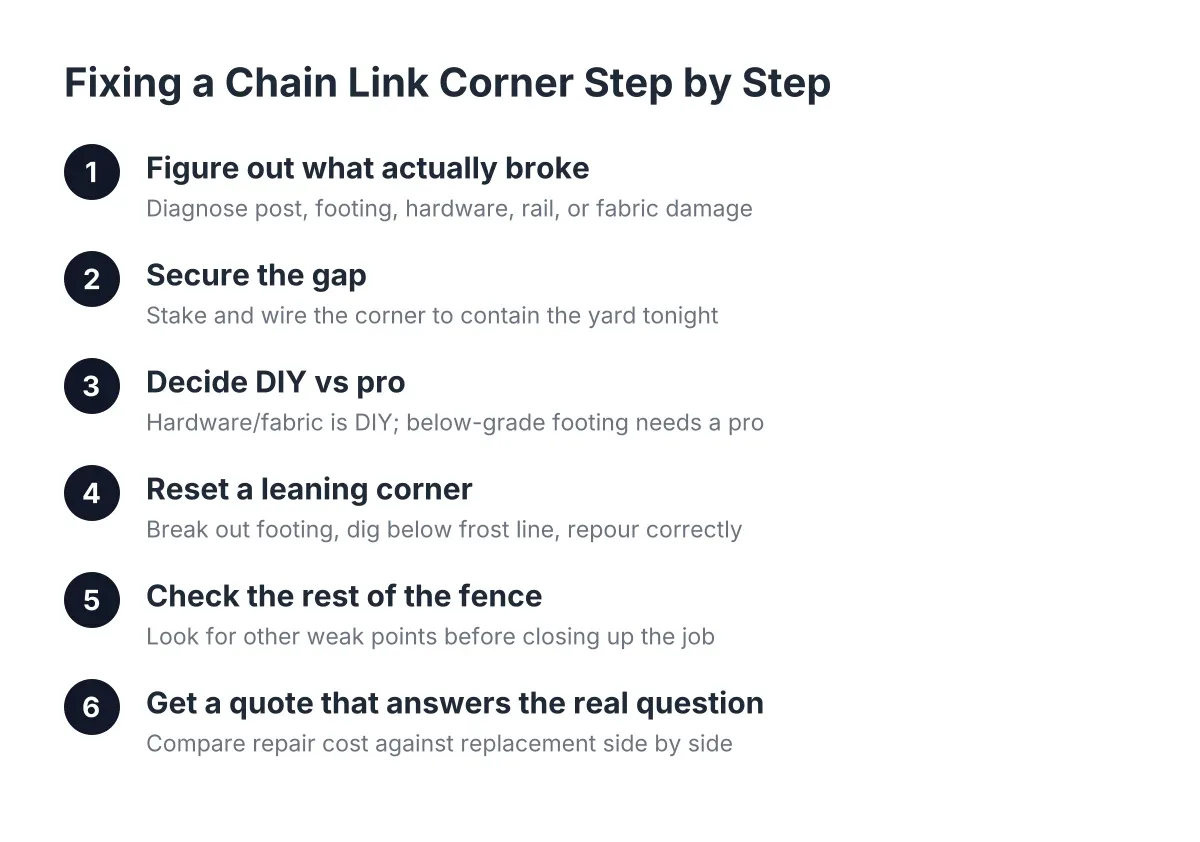
This is the Anchorage factor. Our freeze-thaw cycles push shallow footings up and out of the ground over time, and a post that frost heave has lifted once will lift again if it goes back in the same shallow hole. Fixing it right means setting the new footing below the depth where frost does its work, which takes more digging and more concrete than a quick reset. It costs more up front and saves you a repeat repair. If your post lifted rather than snapped, ground movement is the real problem, not the post.
Access and site conditions
A fence line along an open driveway is faster to work on than one squeezed between a shed, a mature spruce, and a neighbor's property line. Tight access slows the crew, and slower work costs more. Slopes, buried roots, and rocky fill on older in-town Anchorage lots all add time too. Look at your damaged section and ask: could a wheelbarrow and a two-person crew reach it without moving anything? If yes, you are on the cheaper side of this factor.
Gates and hardware
Gates take more abuse than any other part of a chain link fence. Snow load piles against them, hinges wear, and latches freeze and bend. A hardware swap is a quick, inexpensive fix. A racked gate frame or a leaning gate post is a bigger job, because the gate only works if the post holding it stays put. Open and close your gate. If it drags, swings on its own, or will not latch, note whether the frame is bent or the post is leaning. The post version costs more.
Matching your existing fence
Repairs look best when the new fabric, rails, and fittings match what is already there. Common residential heights and mesh sizes are easy to match. Older fences, unusual heights, or coated fabric in a faded color can take special-order material, which adds cost and lead time. If your fence is a standard galvanized chain link fence in a common height, matching is cheap. If it is older or color-coated, budget for the material hunt.
Cost Factor Table
| Factor | Pushes the price down when… | Pushes it up when… |
|---|---|---|
| Type of damage | Fabric or rail only, no digging needed | Posts or footings must come out of the ground |
| Number of posts | One or two posts need resetting | Several posts along a run have failed |
| Frost heave | Footings are deep and the ground has stayed put | Shallow footings have lifted and need deeper replacements |
| Site access | Crew can reach the fence line easily | Tight spaces, slopes, roots, or obstructions slow the work |
| Gates | Hardware swap fixes the problem | Gate frame or gate post needs rebuilding |
| Material match | Standard height and galvanized fabric | Older, unusual, or color-coated material needs ordering |
| Timing | Ground is workable and the schedule is open | Ground is frozen or the repair waits until it spreads |
What Chain Link Fence Repair Expenses Depend On
The fastest way to a real number is a site visit, but you can get a useful ballpark over the phone if you come prepared. Have this information ready:
- Photos. Shoot the damage up close and the whole fence run from a distance. A fence company can tell a lot from six photos.
- Measurements. Rough length of the damaged section and the fence height. Pace it off; precision is not required.
- Post count. How many posts lean, wobble, or have lifted.
- The story. Did a tree limb come down, did a plow clip it, or did it slowly lean over a few winters? Sudden damage and gradual ground movement call for different fixes.
A good fence estimate should spell out what gets repaired, what gets replaced, how deep new footings will be set, what materials are included, and what happens if the crew finds more damage once digging starts. If a quote is just one number on a text message, ask for the breakdown.
Estimates differ between providers for real reasons. One company may plan to reset your post in its old shallow hole; another may price a deeper footing built for frost heave. The cheaper quote is not wrong, but it may be pricing a different job. Compare scope, not just totals. You can read more about how we approach this work on our chain link fence repair in Anchorage page.
Ways to Keep the Cost Down
You cannot control what winter does to your fence, but you can control a few things that shape the bill.
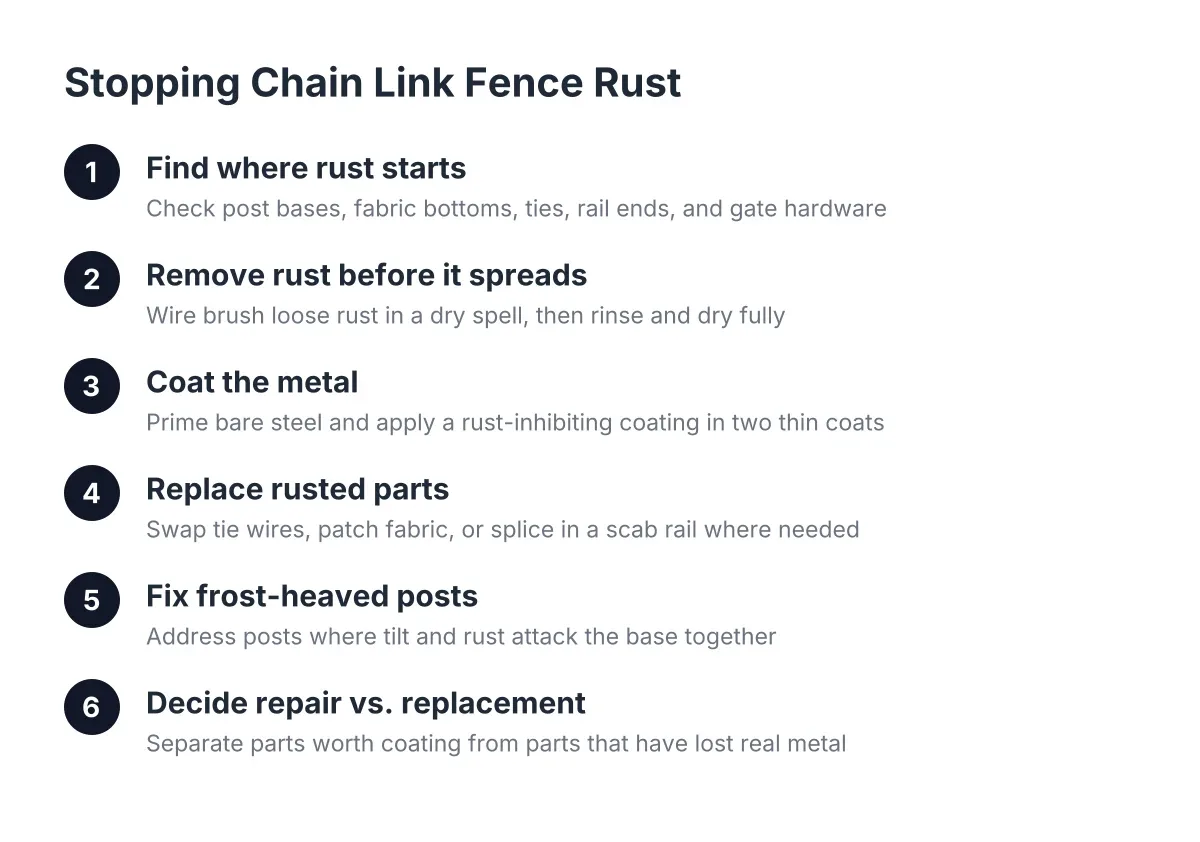
- Fix it before it spreads. One leaning post pulls on the rail, the rail pulls on the next post, and the fabric sags along the whole run. The cost of chain link fence repair climbs with every season you wait.
- Time it with the ground. Post work needs workable soil. Booking repairs for the thaw-to-freeze window, instead of demanding a mid-winter dig, keeps the job simpler and the price lower.
- Bundle the small stuff. If you need a post reset anyway, have the loose fabric re-stretched and the worn gate hinge swapped in the same visit. One trip costs less than three.
- Compare two or three quotes on scope. Make sure each quote covers the same work, especially footing depth. Then pick based on who explained the job best, not just the lowest line.
- Clear snow off the fence line. Heavy snow load shoved against panels and gates by plows or shovels bends rails and racks gates. Piling snow somewhere else is free prevention.
Cost Questions People Ask
Is it cheaper to repair a chain link fence or replace it?
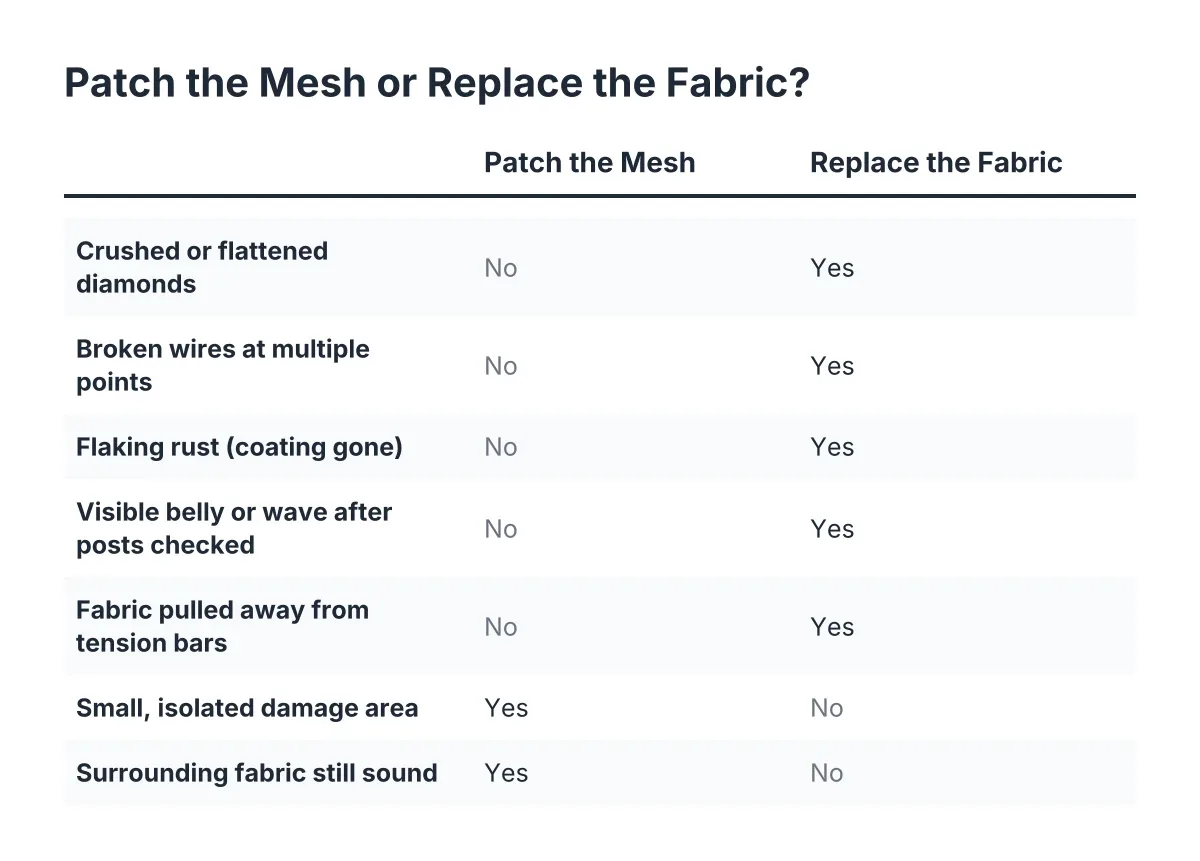
Repair wins when the damage is limited to a section and the rest of the posts are sound. Replacement starts to make sense when most posts have heaved, the fabric is rusted through along the whole run, or you would be repairing the same fence every year. A straightforward way to decide: if more than a few posts per stretch have failed, ask for a fence replacement quote alongside the repair quote and compare.
Why does post repair cost more than fabric repair?
Fabric work happens above ground. Post work means digging out a concrete footing, often one the frost has gripped or lifted, then setting a new post in a deeper hole and letting the concrete cure. The digging is the cost. That is also why a repair done to proper depth costs more than a quick reset but holds through more winters.
Can chain link fence repair happen in winter in Anchorage?
Some of it can. Fabric patches, rail swaps, and gate hardware fixes do not need open ground. Post and footing work is harder once the ground freezes, and forcing it raises the price. If your posts are failing in fall, getting them set before freeze-up is the cheaper path. If winter has already arrived, a temporary patch now and post work at thaw is often the smarter budget move.
Will insurance cover my fence repair?
Sometimes, depending on your policy and the cause. Sudden damage from a fallen tree or a vehicle is more likely to qualify than gradual wear or frost heave, which most policies treat as maintenance. Check your policy, document the damage with photos and dates, and get a written estimate before you file. Your insurer will want the same breakdown a good quote already includes.
The Bottom Line
The price of repairing a chain link fence in Anchorage comes down to what broke, how many posts are involved, and whether the fix accounts for the ground that moves here every winter. Count your leaning posts, take photos, and get two or three written quotes that spell out footing depth and scope. Compare the work being priced, not just the totals, and you will land on a fair number.
If you need chain link fence repair, Anchorage Fence Co can help.
Prefer to talk it through? Call (907) 312-2862 — a quick call is usually the fastest way to get a straight answer for your situation.