Anchorage Fence Height and Setback Rules Before You Build a Wood Fence
You picked your fence. Now you need to make sure it can legally go where you want it, as tall as you want it. Anchorage fence height setback rules decide both, and they trip up more wood fence projects than frost heave does. A fence set too tall in a front yard, or too close to a corner sightline, can trigger a complaint, a stop order, or a tear-out after the posts are already set in concrete. That is wasted money on a project you budgeted carefully. This guide walks through how height limits and setbacks work in the Municipality of Anchorage, what changes on corner lots and large parcels, and how to verify your plan before the auger hits the ground in 2026.
One note up front: zoning rules change, and lots vary. Treat this as a planning guide, then confirm the specifics for your parcel with the Municipality of Anchorage before you dig.
Fence Height and Setback Rules: Why They Matter More Than Material Choice
Most homeowners spend weeks comparing cedar against chain link and pricing 6×8 wood fence panels cheap enough to fit the budget. Almost nobody spends an hour checking where that fence can legally stand. That is backwards, because the rules control the project.
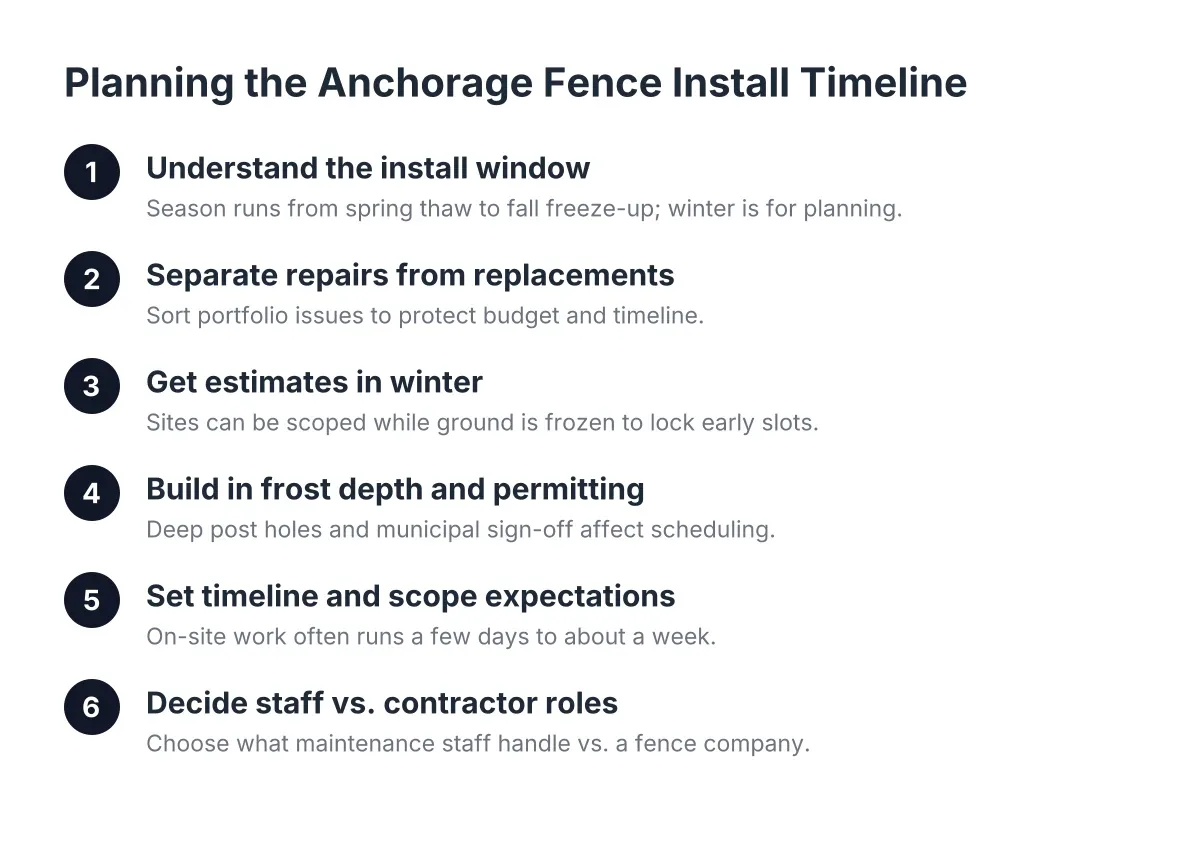
Here is the problem in plain terms. If your fence violates a height limit or sits inside a required sight triangle at a corner, the fix is not a stain touch-up. It is pulling posts that were set deep for frost protection, cutting panels down, or moving the whole run. In Anchorage, where posts go deep and the install season is short, a redo can push your project into next year.
The good news is that understanding fence height and setback rules is learnable in an afternoon. The rest of this guide gives you the framework, so your conversation with a fence company or the municipality starts from solid ground.
Anchorage Fence Height Setback Basics: What the Code Allows
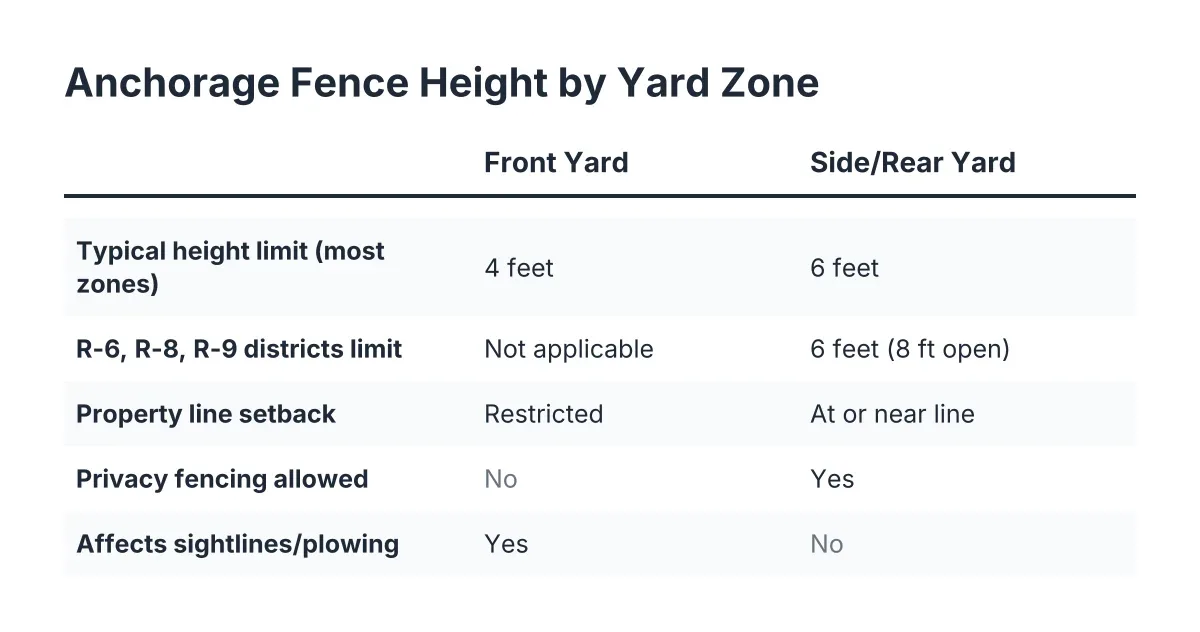
The core rule is simple: front yards get short fences, side and rear yards get taller ones. According to the Municipality of Anchorage, the municipal code sets front-yard residential fence height limits at 4 feet in most zones. That limit rises to 6 feet in the R-6, R-8, and R-9 districts, or 8 feet there if the fence does not obscure sightlines, like chain link.
Why the split? Front-yard fences affect driver visibility, snow plowing sightlines, and the look of the street. Side and rear fences mostly affect you and your neighbor. So the code keeps front fences low and open, and gives you more room in back.
For a typical in-town Anchorage lot, that usually means:
- Front yard: plan around a 4-foot limit for solid fencing in most residential zones.
- Side and rear yards: taller privacy fencing is generally allowed, commonly in the 6-foot range for a solid cedar fence.
- Corner lots: expect extra restrictions near the intersection, covered below.
- Open fencing: non-sight-obscuring styles like chain link may get more height allowance in some districts than solid panels.
Setbacks work differently than many people expect. A fence is not a house; in most residential situations you can build a fence at or near the property line rather than holding it back the way a structure must be. The catch is that "near the property line" only works if you actually know where the property line is. That is where most disputes start, and it is the subject of its own section below.
The phrase "fence height setback rules" covers two separate questions. Height asks how tall the fence can be in each yard zone. Setback asks how far from lines, corners, and easements it must sit. You need a clean answer to both before ordering material.
What Are the Laws Regarding Fences in Alaska?
Alaska fence law is mostly local, not statewide. Height limits, sight triangles, and permit triggers come from your municipality or borough, which is why Anchorage rules differ from Wasilla or Meadow Lakes rules. The state does not hand you one uniform fence code; your parcel's zoning district does most of the talking.
Beyond zoning, two other layers can apply. First, platted easements on your lot, usually for utilities or drainage, can restrict where posts go even when zoning allows the fence. A fence built inside a utility easement can be removed at your cost if the utility needs access. Second, private covenants and HOA rules can be stricter than the municipality. An HOA can cap your fence at a lower height, dictate the finished side, or require specific materials, and the city will not referee that for you.
For acreage owners in Knik-Fairview, Wasilla, or Meadow Lakes, the picture shifts again. You are outside the Municipality of Anchorage, under Mat-Su Borough rules, and often with fewer restrictions on perimeter and pasture fencing. However, fewer rules does not mean no rules. Section line easements, road rights-of-way, and recorded easements still cut across large parcels, and a half-mile fence run built on the wrong line is an expensive mistake to walk back.
Front Yard, Side Yard, and Corner Lot Fence Height and Setback Rules
The same fence design can be legal on one edge of your lot and a violation on another. Walk your property with the zones in mind before you finalize a layout.
Front yards and street-facing runs
The front yard is the most restricted zone. In most Anchorage residential districts, plan around the 4-foot limit for solid fencing along the street side. If privacy toward the street is the whole point of your project, talk through options before committing: a lower solid fence with plantings behind it, an open-style fence at greater height where the district allows it, or starting the tall privacy section at the front building line instead of the sidewalk.
Side and rear yards
Side and rear yards are where a standard 6-foot cedar privacy fence usually lives. This is also where the practical questions take over from the legal ones. Which direction does the finished side face? Convention and many HOA rules put the smooth picket side toward the neighbor or street and the rail side toward your own yard. Posts typically hide behind the panel from the finished side, which also matters if your HOA inspects from the street.
Corner lots and sight triangles
Corner lots carry a second front yard in the eyes of the code, and they add sight triangle rules near the intersection. A sight triangle is the zone where drivers need to see cross traffic, so solid fencing above a low height is restricted there even if the rest of your side yard allows 6 feet. If you own a corner lot, sketch the intersection area first and plan the tall fencing to start beyond it. This is the single most common surprise in the fence height and setback rules conversation, and it is cheaper to catch on paper than after post holes are drilled.
Is an 8-Foot Privacy Fence Too High?
An 8-foot solid privacy fence exceeds the standard residential height allowance in most Anchorage zones, so for a typical lot the practical answer is yes, it is too high without special approval. According to the Municipality of Anchorage, even the districts with more generous limits allow 8 feet only for non-sight-obscuring fencing such as chain link.
That said, there are legitimate reasons people ask. A downhill lot facing a raised road, a neighbor's second-story deck, or highway noise can make 6 feet feel inadequate. In those cases, the path is usually one of three things: an open-style taller fence where the district allows it, a variance request through the municipality, or a 6-foot fence paired with trees or grade changes that do the extra screening work.
There is also a structural trade-off worth naming. Every added foot of solid fence is more sail area for wind and more surface for snow load to push against. Taller solid panels in Anchorage need deeper, heavier post footings to resist both wind and frost heave, which raises cost per linear foot faster than the height increase suggests. Sometimes the fence you are allowed to build is also the fence that holds up best.
Setbacks, Property Lines, and Easements on Large Parcels
Setback mistakes on a city lot cost you a panel or two. On acreage, they can cost you a season. Suppose a hobby-farm owner in Knik-Fairview plans 1,200 feet of wood perimeter fence to contain goats before winter. If the line they fence to is off by even a few feet, and it crosses a section line easement or a neighbor's corner, they could be looking at relocating hundreds of feet of posts set deep against frost heave. In that scenario, a few hundred dollars spent confirming corners up front protects a five-figure project.
Here is a practical sequence before any long run goes in:
- Pull your plat. Your recorded plat shows lot dimensions, easements, and rights-of-way. Most are available through the municipality or borough records.
- Find your corners. Look for existing survey monuments, usually rebar with a cap. On older in-town Anchorage lots and on undeveloped acreage, they may be buried or missing.
- Decide if you need a surveyor. If corners are missing, the fence runs long, or the neighbor relationship is uncertain, hire one. A fence built on a guessed line is a liability, not an asset.
- Mark easements on the ground. Flag utility and drainage easements so the post layout avoids them, or so you accept the removal risk knowingly.
- Call for utility locates. Deep post holes and buried lines do not mix. Get locates before any digging, every time.
In addition, talk to the neighbor on any shared line before you build. Alaska neighbors generally sort fence placement out informally, but a five-minute conversation beats a boundary dispute. If you want the fence exactly on the line, some owners put that agreement in writing.
What Permits Do You Need for Wood Fence Installation in Anchorage?
Most standard residential fences in Anchorage do not require a full building permit, but that is not the same as having no rules to meet. The fence still must comply with zoning height limits, sight triangles, and easements, and taller or unusual fences can trigger review. Verify your specific situation with the Municipality of Anchorage before building, because permit triggers depend on height, location, and zone.
A useful habit: even when no permit is required, sketch a simple site plan anyway. Draw the lot, the house, the proposed fence line, gate locations, and distances to property lines and the street corner. That sketch does three jobs. It forces you to confront the fence height and setback rules on paper, it makes your fence estimate conversation faster and more accurate, and it gives you a record if a question ever comes up later.
For Mat-Su parcels in Wasilla or Meadow Lakes, check with the borough rather than assuming Anchorage rules apply. Agricultural and perimeter fencing on large parcels often faces fewer restrictions, but easements and rights-of-way still govern placement.
How the Rules Shape Your Budget and Layout
Height and setback rules feed directly into the numbers you are trying to pin down before requesting quotes. Three effects show up on nearly every project.
First, the front-yard height limit can split one fence into two designs. A 4-foot picket or chain link section along the street plus a 6-foot cedar privacy fence in back prices differently than one uniform fence. For context on the material side, Angi reports that chain link fencing averages $1,300 to $3,540 in total cost, compared to $1,790 to $4,560 for a similar-sized wood fence, and that wood typically runs 20% to 30% more than comparable chain link. Those are national averages, not Anchorage quotes, but the relationship between the materials holds: mixing a lower-cost open fence out front with wood privacy in back can stretch a fixed budget.
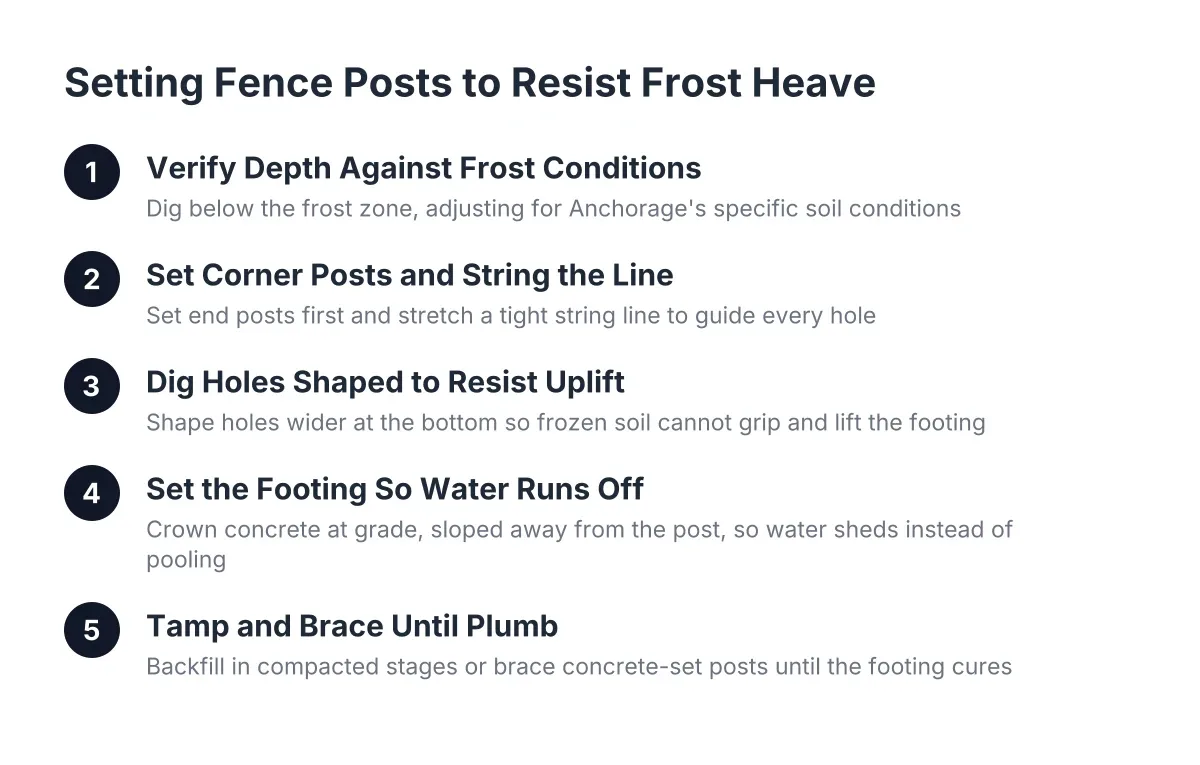
Second, Anchorage ground conditions raise the floor on post work no matter what height you build. PermitsGuide.com notes that Anchorage's building code amendment sets minimum exterior footing depth at 42 inches below finished grade as a frost-protection standard. Fence posts are not foundations and are not always held to that figure, but it tells you how seriously this ground treats anything set in it. Deep posts cost more than shallow ones, and that cost does not shrink because the fence above them is short.
Third, layout details the rules force on you, like stepping a fence down near a corner or jogging around an easement, add cut panels, extra posts, and labor. On any run with cut sections, a careful installer places shortened panels in the least visible stretch and keeps full panels where you see them daily. Slopes add their own geometry; steep grades can force shorter post spacing so rails seat properly, which means more posts per 100 feet than a flat-lot estimate assumes. These are the line items that make two quotes for "the same fence" differ, so ask each fence installer to walk you through them rather than typing another fence installer near me search when the first number surprises you.
A Pre-Build Checklist for 2026 Projects
Before you schedule wood fence installation or order material, run this list. It takes an afternoon and protects the whole budget.
- Confirm your zoning district and its fence height limits with the Municipality of Anchorage, or the Mat-Su Borough for Wasilla, Knik-Fairview, and Meadow Lakes parcels.
- Identify every front yard your lot has. Corner lots usually have two.
- Mark any sight triangle at intersections and keep tall solid fencing out of it.
- Locate property corners; hire a surveyor if they are missing or the run is long.
- Flag easements and rights-of-way from your plat before laying out post lines.
- Check HOA covenants for stricter height, style, or finished-side rules.
- Order utility locates before any digging.
- Sketch a site plan with heights labeled by section, and bring it to every fence estimate conversation.
- Decide gate locations now; gates near driveways and corners face the same sightline logic as fence panels.
Therefore, by the time a crew shows up, every question that could stop the job has already been answered on paper.
Where a Fence Company Fits Into the Compliance Work
You can do most of this homework yourself, and as a spec-driven planner you probably will. Still, an experienced local crew adds value at specific points. They have laid out corner-lot fences around sight triangles before, they know how deep posts need to go to sit still through freeze-thaw cycles, and they can tell you when a layout you drew will fight the slope or the easement on the ground.
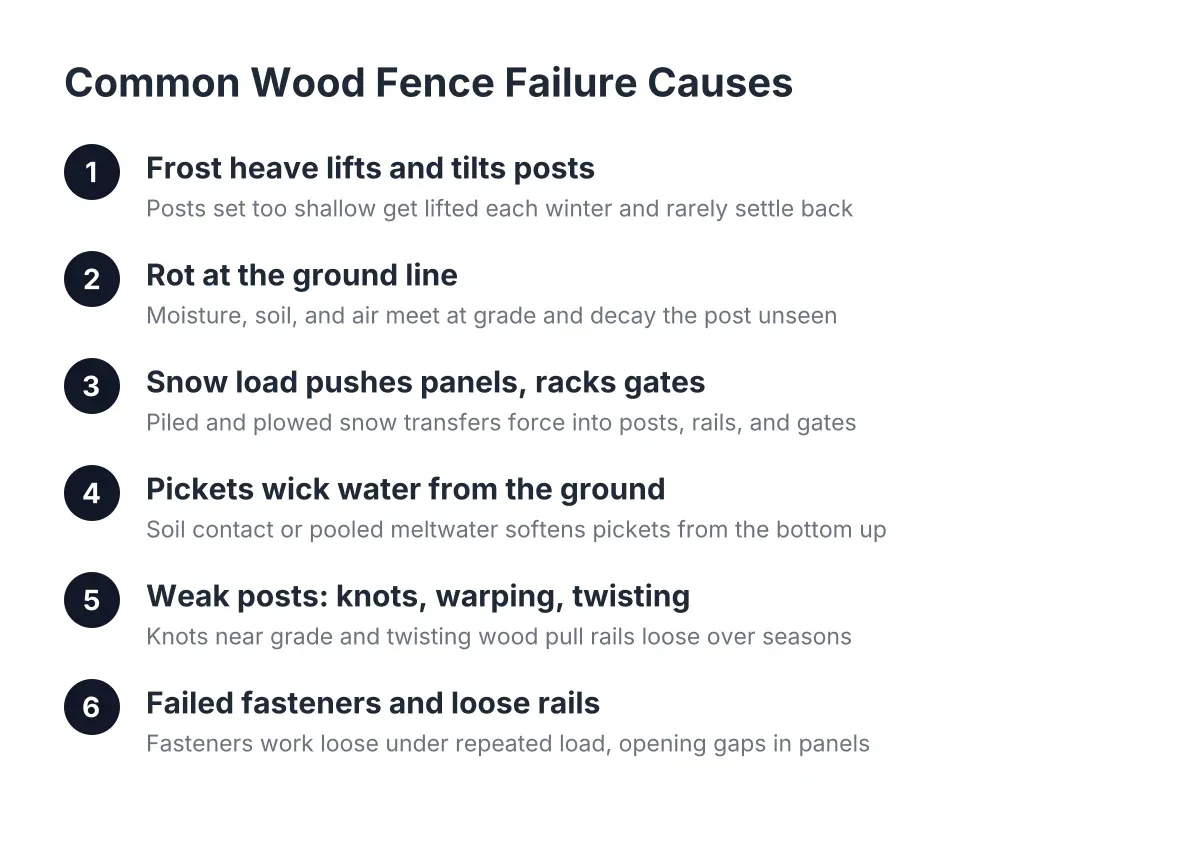
A fence that meets the fence height and setback rules on paper still has to survive the ground it stands in. Frost heave, snow load against panels, and a short install season are the other half of planning a wood fence here, and they are covered in the companion guides on frost line depth and installation timelines. For boundary disputes, variances, or anything involving a recorded easement, bring in a surveyor or the municipality directly rather than relying on anyone's best guess, including a contractor's.
Get the rules settled first. Everything after that, from material choice to the fence estimate, gets easier and more accurate.
If you need wood fence installation, Anchorage Fence Co can help.
Prefer to talk it through? Call (907) 312-2862 — a quick call is usually the fastest way to get a straight answer for your situation.