Fence Company Terms Explained: A Plain-English Glossary
If you are getting fence quotes in Anchorage and keep hitting words like "frost line," "stringer," or "post setting," this fence company glossary is for you. It explains the terms you will see on a fence estimate in plain English, so you can read a quote line by line and know what you are paying for. Use it to talk with any installer on equal footing, compare bids fairly, and spot gaps before the digging starts. No jargon survives past the first sentence of each entry.
- Fence Post: the upright that holds everything up
- Frost Line: how deep the ground freezes
- Frost Heave: ground movement that tilts posts
- Post Setting: how posts get anchored in the ground
- Footing: the concrete base under a post
- Fence Panel: a pre-built section of fence
- Stringer (Rail): the horizontal backbone of a wood fence
- Picket: the vertical boards you actually see
- Gauge: how thick chain link wire is
- Mesh Size: the size of chain link openings
- Privacy Fence: a fence you cannot see through
- Ornamental Fence: decorative metal fencing
- Gate Hardware: hinges, latches, and closers
- Snow Load: the weight of snow against a fence
- Linear Foot: how fence length gets measured and priced
- Fence Estimate: the written quote for your project
- Property Line Survey: proof of where your fence can go
- Utility Locate: marking buried lines before digging
Posts, Footings, and Anchorage Ground
These are the terms that matter most in Anchorage, because the ground here moves. A fence that looks great in June can lean by April if the posts were not set for local conditions. This section explains what happens below the surface in a fence company glossary.
Fence Post
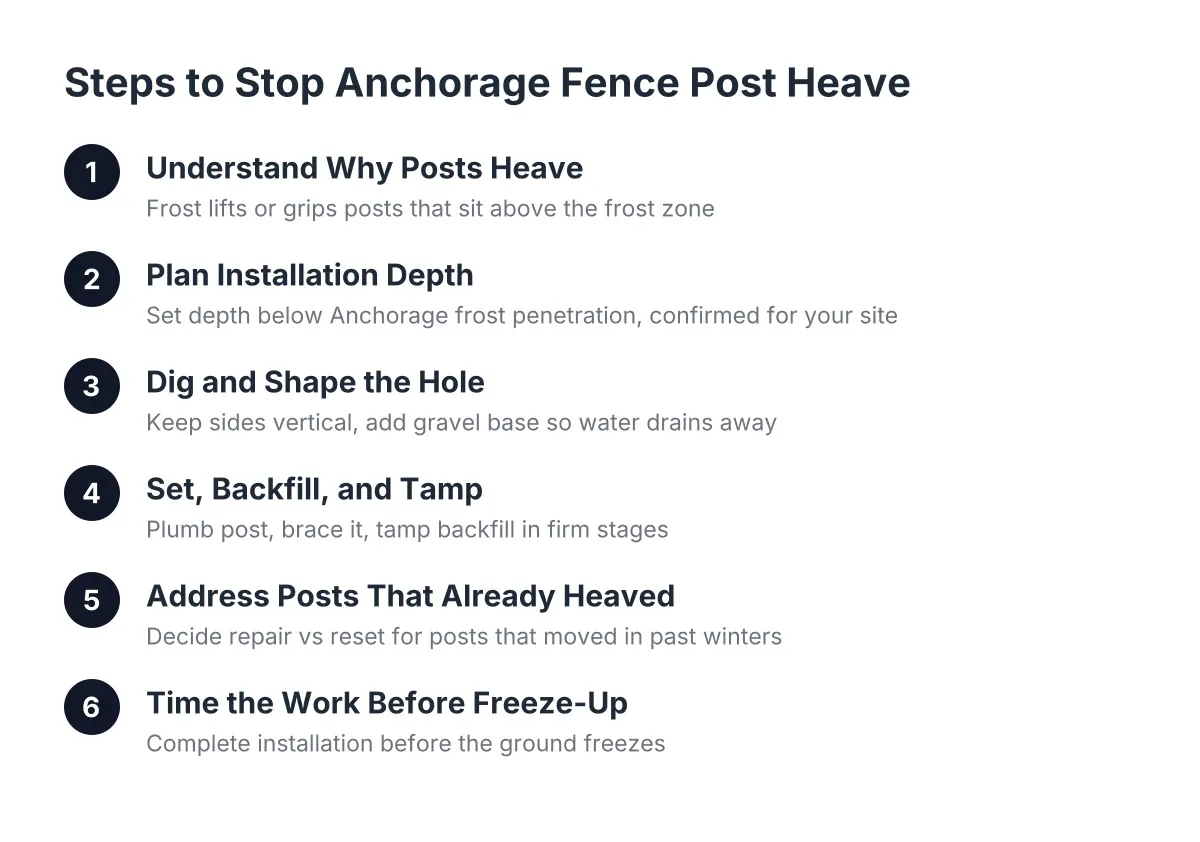
A fence post is the vertical support that carries the weight of the fence and holds it upright against wind, snow, and time. Posts are the structural skeleton; panels, pickets, and gates all hang off them. When a fence fails in Anchorage, the posts are usually the reason, either because they rotted, rusted, or heaved out of the ground. Ask any installer how they set fence posts for frost heave before you compare anything else on the quote.
Frost Line
The frost line is the depth to which the ground freezes in winter. Posts set above the frost line can be gripped by freezing soil and pushed upward over the years. In Anchorage, the frost line sits deeper than in most of the lower 48, which means more digging and more material per post. Exact depths vary by lot and soil, so treat the frost line as a planning condition to discuss, not a single number.
Frost Heave
Frost heave is the upward movement of soil when water in the ground freezes and expands. It is the main reason fences in Alaska lean, tilt, or pop posts after a few winters. A fence built for frost heave uses deeper post setting and footings shaped so freezing soil cannot grab and lift them. If an installer never mentions frost heave, that is a red flag in this climate.
Post Setting
Post setting means the method used to anchor fence posts in the ground, such as concrete, gravel, or driven posts. The right method depends on soil, drainage, and fence type; chain link and cedar fences often call for different approaches. Post setting is where a cheap bid usually cuts corners, because the work is invisible once the fence is up. Ask how deep the posts go and what goes in the hole.
Footing
A footing is the base, usually concrete, poured around or under a fence post to anchor it. A good footing spreads the load and resists the grip of freezing soil. Footings shaped wider at the bottom resist frost heave better than ones that flare at the top. On a quote, footing details tell you whether the installer is building for Anchorage ground or for a milder climate.
Fence Parts and Materials: A Company Glossary Resource
Every quote names parts of the fence itself. Here is what those words mean.
Fence Panel
A fence panel is a pre-built section of fencing that spans from one post to the next. Panels speed up installation but need solid posts to hang on, and tall solid panels catch wind and hold snow against their base. Panel style drives much of the look and the price, so make sure your quote names the exact panel type.
Stringer (Rail)
A stringer, also called a rail, is the horizontal board that runs between posts on a wood fence and supports the pickets. Most wood fences use two or three stringers per section. Sagging stringers are a common wood fence repair, especially on older in-town Anchorage lots where fences have seen decades of freeze-thaw cycles. More stringers usually means a stiffer, longer-lasting fence.
Picket
A picket is one of the vertical boards fastened to the stringers on a wood fence. Picket spacing decides how much privacy you get; boards butted tight make a privacy fence, while gaps give a more open look. Cedar pickets are popular here because cedar resists rot and handles wet shoulder seasons well. Replacing broken pickets is one of the simplest and cheapest fence repair jobs.
Gauge
Gauge is the measure of chain link wire thickness, and lower numbers mean thicker, stronger wire. A thicker gauge costs more but stands up better to snow load, pets, and plow berms pushed against the fence line. When two chain link fence quotes differ in price, gauge is one of the first specs to compare. The number should appear on your written estimate.
Mesh Size
Mesh size is the width of the diamond-shaped openings in chain link fabric. Smaller mesh is stronger and harder to climb, which matters for commercial fence installation and for keeping small pets in. Larger mesh uses less wire and costs less. Mesh size and gauge together define what a chain link fence can handle.
Privacy Fence
A privacy fence is a solid fence, usually six feet or taller, built so neighbors and passersby cannot see through it. In Anchorage, privacy fences are often cedar, built with tight picket spacing. Because the surface is solid, a privacy fence takes the full push of wind and drifted snow, so post setting matters even more. Expect a privacy fence to cost more per foot than open styles.
Ornamental Fence
An ornamental fence is a decorative metal fence, often made of steel or aluminum with vertical pickets, built to look like traditional wrought iron. Ornamental and iron fencing gives security and curb appeal without blocking the view. The open design sheds wind and snow better than solid panels. It sits at the higher end of material cost, so quotes should spell out the metal and the coating.
Gates, Snow, and Seasonal Realities
Alaska adds its own vocabulary to fencing. These terms explain why timing and weather show up in your conversation with a fence company, and why a good Anchorage installer plans installs around frozen ground and short daylight.
Gate Hardware
Gate hardware means the hinges, latches, drop rods, and closers that make a gate work. Gates take more abuse than any other part of a fence because they move, and cheap hardware is the first thing to fail. In winter, ice and settling can throw a gate out of alignment, which is a common fence repair call. A detailed quote for gate installation should name the hardware, not just say "gate included."
Snow Load
Snow load is the weight of accumulated snow pressing down on or against a structure. For fences, the problem is snow drifted or plowed against panels and gates for months at a time. Solid privacy panels take more snow load than open chain link or ornamental fence styles. Plan gate swing and fence placement around where snow gets pushed on your lot.
Linear Foot
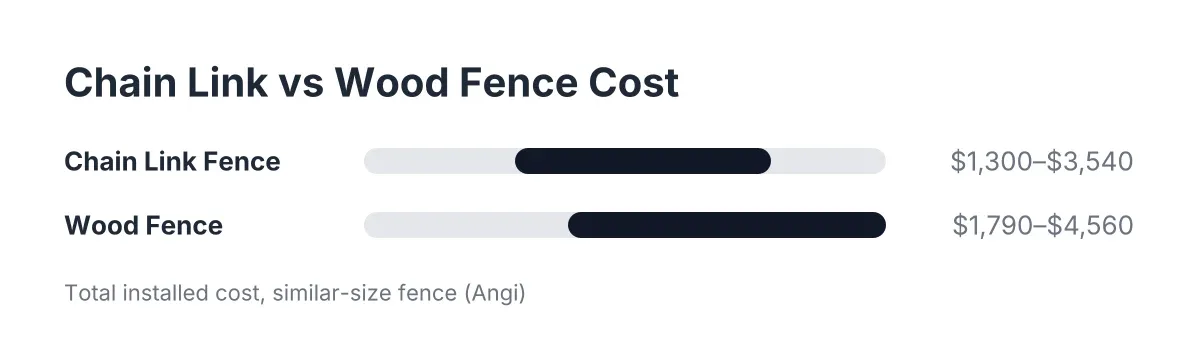
A linear foot is a straight-line measure of fence length, and it is the unit most fence pricing is based on. A 100-foot fence line is 100 linear feet regardless of height, though height and style change the price per foot. Knowing your rough footage before you call makes every estimate conversation faster. For how footage, materials, and site conditions combine into a price, see this guide on fence installation cost.
Paperwork and Planning
Fence Estimate
A fence estimate is a written quote listing the fence type, length, height, materials, and labor for your project. A good estimate names specifics: post depth, gauge or lumber grade, gate hardware, and who hauls away the old fence on a fence replacement. Vague one-line estimates make bids impossible to compare. Ask for everything in writing before anyone digs.
Property Line Survey
A property line survey is a professional map showing the legal boundaries of your lot. Building a fence even a foot over the line can mean tearing it out later, at your cost. Older in-town Anchorage lots and newer subdivisions in places like Eagle River and Wasilla can both have boundary surprises. Confirm your lines before you sign off on post locations.
Utility Locate
A utility locate is the process of marking buried gas, power, water, and communication lines before any digging starts. Fence posts in Anchorage go deep, which makes locates non-negotiable. The marking service is free in most areas and takes a few days, so build it into your timeline. Any installer who shrugs off locates is not one you want digging on your property.
Using These Terms
You now have the working vocabulary to read a fence quote line by line and ask the questions that separate a careful bid from a vague one. That is the whole point of this glossary for fence company professionals and homeowners alike: when someone says "posts set below the frost line with proper footings," you know what they mean and why it matters here. Keep it handy when the estimates start coming in.
If you need fence installation, Anchorage Fence Co can help.
Prefer to talk it through? Call (907) 312-2862 — a quick call is usually the fastest way to get a straight answer for your situation.