Compare Chain Link, Wood, and Ornamental Fences for Anchorage Properties
If you manage rentals in Anchorage or own acreage out toward Wasilla, picking a fence comes down to one question: what holds up here? Before you call a contractor, it helps to understand the differences when you compare chain link vs wood, along with ornamental options. Each one handles frost heave, snow load, and daily wear differently. This list breaks down the trade-offs so you can match the fence to the property, not the other way around.
Alaska ground conditions change the math. A fence style that works fine in a mild climate can lean, sag, or pop its posts after two or three freeze-thaw cycles here. So every comparison below starts with the same filter: how does this material handle Anchorage weather, and what will it cost you over time, not just on install day.
1. Compare Chain Link and Wood on Upfront Cost First
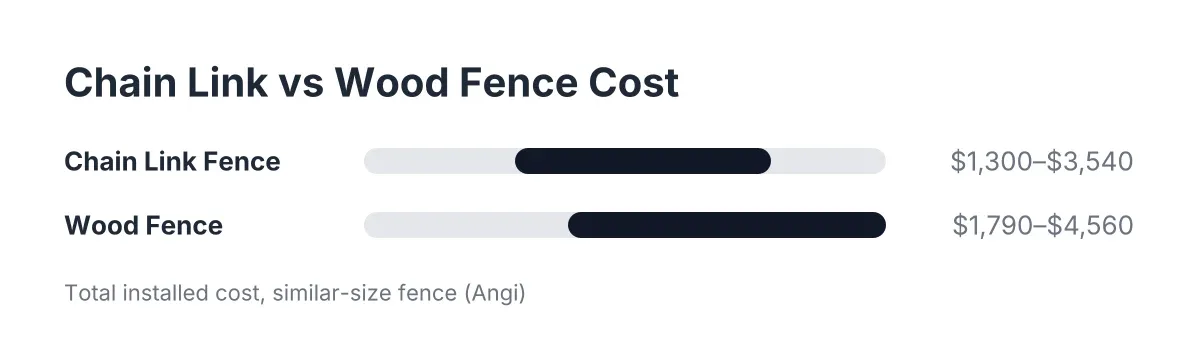
Chain link wins on upfront cost, and the gap is real. According to Angi, chain link fencing averages $1,300 to $3,540 in total cost, while a wood fence of similar size runs $1,790 to $4,560. Angi also notes a wood fence typically costs 20% to 30% more than a comparably sized chain-link fence.
For a property manager covering several buildings, that gap multiplies fast. Suppose you manage four rental properties and each needs a perimeter section replaced. In that scenario, choosing chain link over cedar across the portfolio could keep the total project in a different budget tier entirely.
However, upfront cost is only one line on the spreadsheet. The sections below cover where wood earns its premium and where it does not.
2. Weigh Durability Against Anchorage Frost Heave
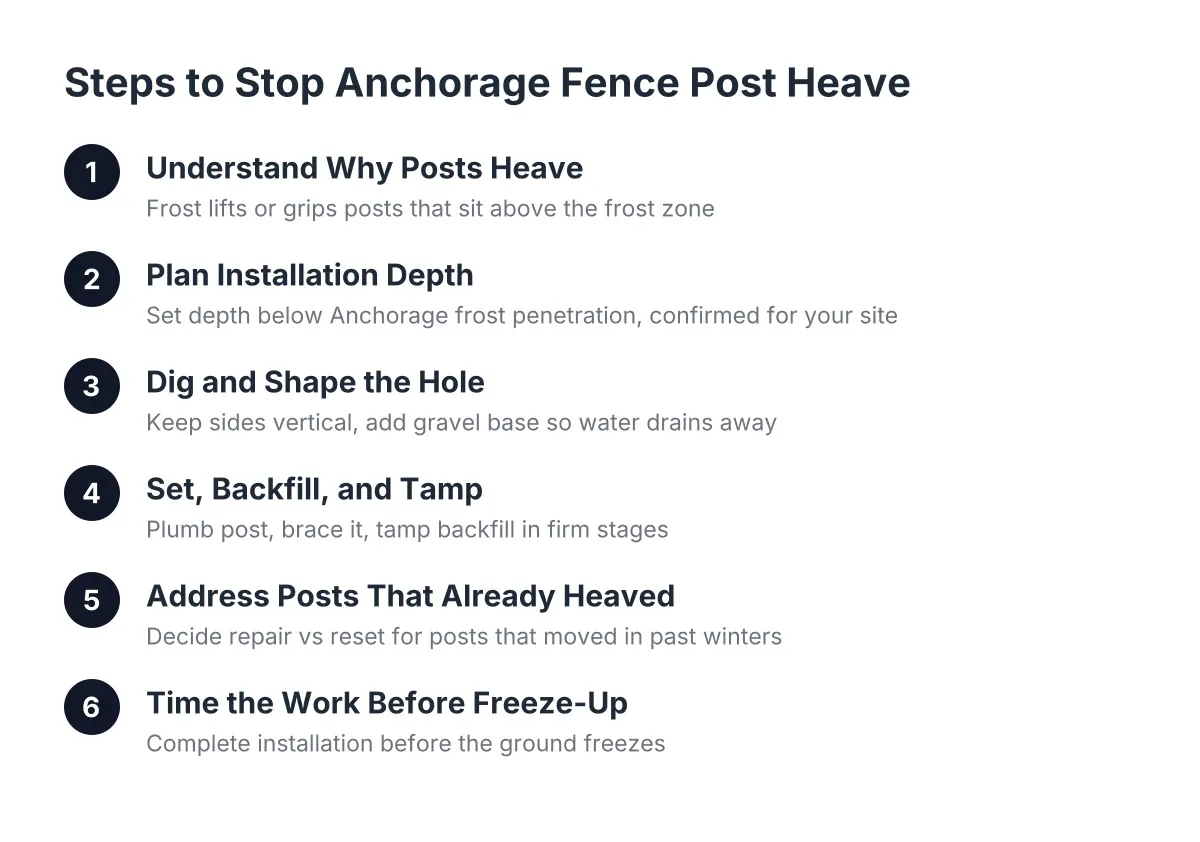
Frost heave is the quiet fence killer in Southcentral Alaska. Seasonal freezing and thawing move posts and footings, and a fence is only as straight as the posts holding it. Chain link handles this movement better because the mesh flexes; a heaved post shows as a slight lean, not a cracked panel.
Wood fences are stiffer, so post movement shows up faster as racked panels, popped pickets, and gates that stop latching. In addition, wood posts can rot at the ground line over years of wet freeze-thaw cycles, which is why many fence repair calls start with a leaning cedar fence and end with new posts.
Either material can last in Anchorage if the posts are set below frost depth before the ground freezes. That is an installation question as much as a material question, and it is worth asking any fence contractor exactly how they set posts for local conditions.
3. Factor in Snow Load and Wind Before You Pick Panels
Heavy, prolonged snow against a fence is a structural load, not a cosmetic issue. A solid wood privacy fence catches wind and holds plowed or drifted snow against its panels all winter. Over several seasons, that pressure loosens rails and stresses posts.
Chain link lets wind and blowing snow pass through, which is one reason it shows up on so many commercial perimeters in Anchorage. Ornamental metal fence panels sit in the middle: open enough to shed wind, rigid enough to resist bending under a snow berm.
For example, think about where your snow goes. If a plow pushes snow against the same fence line every winter, an open fence style there will save you repair calls by March.
4. Match Maintenance to How Much Attention You Can Give It
Chain link asks for the least from you. Galvanized or vinyl-coated mesh does not need staining, sealing, or repainting, and a damaged section can often be repaired without replacing the whole run. For a property manager fielding tenant complaints across multiple sites, that low-touch profile is the main argument for chain link.
Cedar needs care on a schedule. Plan on cleaning and re-staining every few years to keep moisture out of the boards. Skip that, and the fence grays, cups, and loosens faster, especially on the weather side.
Ornamental fence maintenance lands between the two. Quality powder-coated metal fence panels resist rust for years, but scratches and chips need touch-up before corrosion starts, and gate hinges need seasonal attention in freeze-thaw country.
5. Judge Privacy and Appearance Honestly
This is where wood earns its higher price. Nothing else gives full visual privacy like a solid cedar fence, and for in-town Anchorage lots with close neighbors, that is often the whole point. Custom styles such as board-on-board or horizontal designs cost more because they genuinely take more material and labor than a flat privacy fence, not because of markup.
Chain link offers no privacy on its own, though privacy slats can close some of the gap. It reads as practical, not decorative, which matters for curb appeal on a rental you want to lease quickly.
Ornamental metal fencing looks finished and formal without blocking the view. It suits front yards, entries, and commercial frontage where you want a defined boundary that still shows the property.
6. Know the Anchorage Height Rules Before You Choose a Style
Local code shapes your options before style does. The Municipality of Anchorage sets front-yard residential fence height limits at 4 feet in most zones, rising to 6 feet in R-6, R-8, and R-9 districts, or 8 feet there for non-sight-obscuring fencing like chain link.
That last detail matters when you compare chain link with wood for a tall perimeter. In those districts, an open chain link fence can legally go taller than a solid privacy fence in the same spot. Therefore, if your goal is maximum height for security or animal containment, the open material may be the only way to get it.
Rules vary by zone and lot, and corner lots have sight-line requirements of their own. Confirm the limits for your specific parcel before you order materials, or ask your fence contractor to verify during the estimate.
7. Think in Linear Feet if You Own Acreage
Material choice scales differently on large parcels. According to HomeGuide, a chain-link fence costs $10 to $40 per linear foot installed on average, roughly $1,500 to $6,000 total for a 150-foot run. Now stretch that math across a property line in Knik-Fairview or Meadow Lakes that runs over a thousand feet.
At that footage, the per-foot difference between chain link and cedar becomes the whole decision. Say an acreage owner near Wasilla needs to contain livestock and mark a boundary before winter. In that scenario, a practical approach is field-grade chain link or wood rail on the long runs, with cedar or ornamental fencing reserved for the short stretch near the house.
Chain link is not a niche choice, either. The Freedonia Group forecasts US demand for chain link fencing to grow 1.0% per year to 225 million linear feet, which keeps parts and repair materials easy to source.
8. Compare Chain Link and Wood for Rental and Commercial Wear
Tenant traffic is its own weather. Gates slam, kids climb, cars clip corners, and dogs test every weak point. When you compare chain link and wood under that kind of daily use, chain link usually gives a property manager fewer callbacks; bent mesh or a sprung gate is a contained repair, while a kicked-out wood panel often reveals rot or loose rails behind it.
Commercial-grade chain link uses heavier framework and fittings than the residential version, and the fabric attaches to the pipe with ties sized to the framework itself. In other words, there is a real difference between a backyard-grade fence and one specified for a parking lot or dumpster enclosure. Ask for commercial-grade scope when the job is commercial; do not accept a residential spec for an apartment perimeter.
Wood still has a place at rentals. A cedar privacy fence between units or along a street-facing side improves how the property shows and can support rents. Just budget for the staining cycle, or the fence becomes next year's complaint.
9. Do Not Let the Cheapest Bid Decide for You
The lowest bid often costs the most over a decade. A fence with shallow posts or undersized framework can need rebuilding years before a properly installed one, and the second install erases everything you saved on the first. This is a pattern Anchorage fence companies see constantly on repair calls: the fence failed because the posts did, not because the material was wrong.
Instead of comparing bids on price alone, compare them on scope. A detailed fence estimate makes that possible. Useful questions for any fence company, whether you are an acreage owner or a property manager vetting fence contractors in Anchorage:
- How deep do you set fence posts, and how do you account for frost heave?
- What gauge and framework are you quoting, residential or commercial grade?
- How do you handle gate installation so gates still latch after ground movement?
- Can repairs preserve existing concrete footings to lower the cost of a future fence replacement?
- What does the install season look like, and can posts go in before freeze-up?
That last question matters more here than almost anywhere. Anchorage's install season is short, and digging below the frost line gets harder as fall goes on.
10. A Quick Decision Guide for 2026 Projects
Here is the short version for planning a 2026 fence installation:
- Choose chain link for budget, long runs, commercial perimeters, snow and wind exposure, and low maintenance across multiple properties.
- Choose a cedar or wood fence for privacy, appearance, and close-neighbor lots, and accept a staining schedule as part of the cost.
- Choose an ornamental fence for curb appeal, entries, and frontage where you want a durable metal fence without blocking sightlines.
- Mix materials on large parcels: economical fencing on the long boundary, better-looking fencing where people actually see it.
One honest limitation: no comparison chart replaces a site visit. Soil, drainage, slope, and zoning vary lot by lot in Anchorage, and the right answer on paper can be the wrong answer on your ground. When you have narrowed it down, walk the line with a local contractor who builds for frost heave and snow load, and let the site confirm the choice.
If you need ornamental and iron fence installation, Anchorage Fence Co can help.
Prefer to talk it through? Call (907) 312-2862 — a quick call is usually the fastest way to get a straight answer for your situation.